Drone Volt’s Hercules 100 lifts 100kg: How aluminium shapes the heavy-lift drone
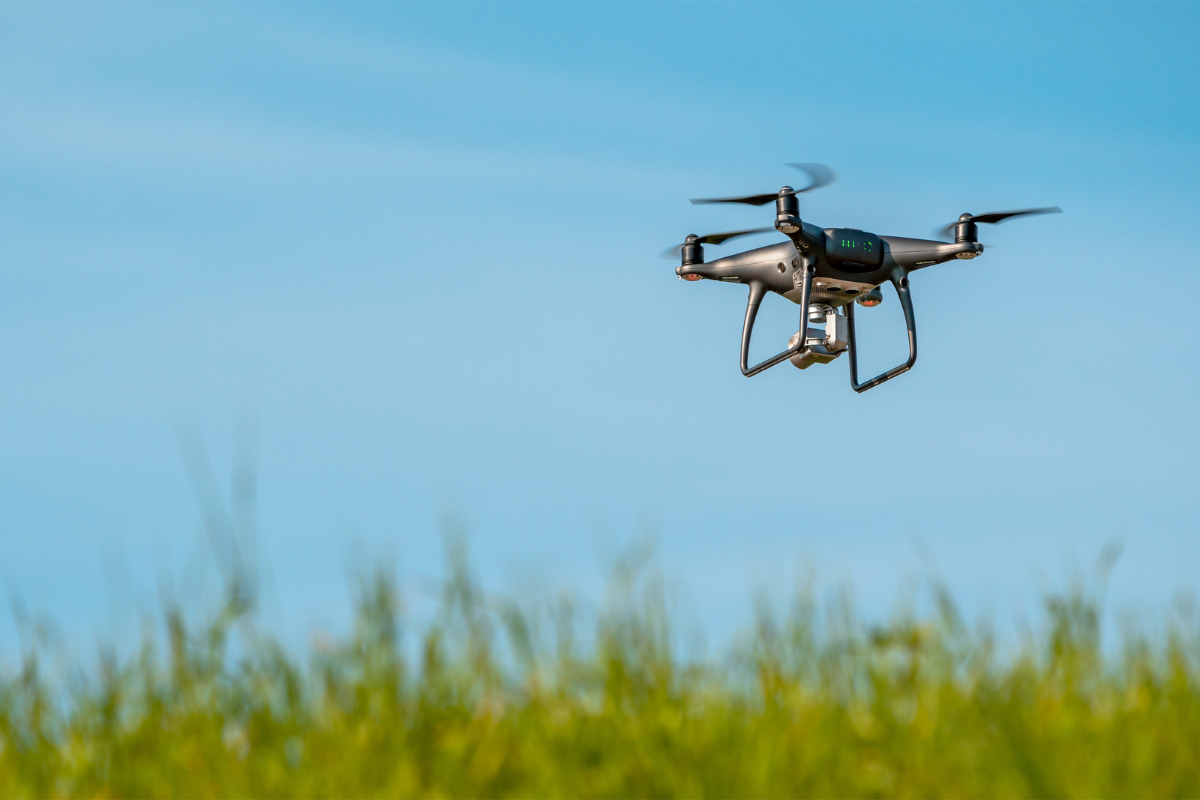
Stock image for referential purposes only
France-headquartered Drone Volt has unveiled its Hercules 100 heavy-lift cargo drone, combining an aluminium-and-carbon chassis with a payload capacity of up to 100 kilogrammes (kg). Introduced in flight at the UAV Show in Bordeaux on October 9, 2026, the foldable octocopter is designed for industrial logistics, civil protection, firefighting and defence. Designed and assembled in France, the aircraft marks the company’s move from the 25 kilogrammes class to a 100 kilogrammes payload platform.
Aluminium and carbon highlight the design
The Hercules 100 has a maximum take-off weight of 197 kg. It weighs 52 kg without batteries and 97 kg with its battery pack, leaving capacity for a full 100 kg payload. Its chassis combines aluminium and carbon fibre, with a wheelbase of 3,300 mm. When folded, the drone measures 1,660 × 1,060 × 720 mm and can fit inside a pick-up truck.
Drone Volt has previously used an aluminium-and-carbon combination in its Hercules range. Launched in 2018, the Hercules 20 was rated for a 25 kg payload and featured anodised aluminium fasteners with an all-carbon frame.
To know the global aluminium casting demand forecast, explore our report "Global Aluminium Casting Market 2026-2032: Plant Economics, Alloy Segmentation, Pricing Intelligence, Supply Chain Analysis & Strategic Recommendations"
Flight capability and operational equipment
The eight-rotor configuration provides motor redundancy, while triple-redundant flight control, high-precision RTK GPS navigation, forward obstacle-avoidance radar and terrain following support its operation. Two high-voltage 24S solid-state batteries enable flights of up to 30 minutes with a 100 kg payload. The maximum mission speed is 36 km/h, and the control range is 5–10 km. Actual endurance depends on payload and operating conditions. An optional tethered ground station can provide unlimited endurance.
Available equipment includes an automated winch rated for up to 80 kg, a certified hook with a 30-metre sling listed at up to 1,500 kg, and a remotely triggered dropper rated at 250 kg. These are accessory capacities; the aircraft’s payload remains capped at 100 kg. A three-axis floodlight, loudspeaker, and optical and thermal camera are also offered.
Explore trade opportunities for aluminium chassis extrusion and more on AL Biz
Commercial operations still depend on approvals
Drone Volt is targeting civil protection, heavy logistics, firefighting and defence. Chief Executive Officer Marc Courcelle said the aircraft “opens up a new field of applications for cargo transport by drone”.
The company is developing its first concepts of operations (CONOPS) and assessing them through the SORA methodology ahead of future operational authorisations. It aims to provide a complete cargo-drone solution covering the aircraft, equipment, operational expertise and regulatory support.
Commercial operations will depend on the required authorisations, which are still being prepared. Drone Volt has not yet announced pricing or delivery dates.
Unlock key insights from industry experts on aluminium's applications in end-use with our magazine - End-user Revolution: Aluminium’s Impact on Modern Living
Grow with
AL Circle