

AL Circle analysis: Germany’s aluminium trade surplus, Novelis’ US expansion, Asia’s EV demand & India’s underutilised downstream capacity
Aluminium’s next growth phase is increasingly being shaped by downstream processing, supply-chain resilience and demand from specialised applications. Germany continues to generate a substantial trade surplus in flat-rolled products despite a shrinking primary aluminium base, while North America is investing in recycling and rolling. Across Asia, new manufacturing capabilities and growing demand from electric vehicles, railways and batteries are creating further opportunities. However, declining exports, underutilised capacity and uneven profitability show that investment alone does not guarantee success. For industry leaders, the challenge is to identify where demand is shifting, develop products that meet customer requirements and ensure that new investments translate into sustainable...
AL Circle Analysis: From Guinea to Gulf, how bauxite, tariffs and logistics redraw aluminium map
Aluminium markets in late 2026 are being shaped by more than the headline LME aluminium price. Bauxite security, alumina availability, geopolitical disruptions, tariff negotiations, logistics diversification and regional premiums are increasingly determining where metal moves and what buyers pay. From RUSAL reassessing Caribbean assets and Vedanta securing Odisha bauxite to Brazil extending mine life and EGA rebuilding its Guinea supply chain, producers are strengthening control over critical raw materials. At the same time, the US remains heavily dependent on imported bauxite and alumina, while Europe and Asia are experiencing sharply different premium dynamics. These developments point to a market where physical availability is becoming a regional factor even as aluminium itself remains...
Grow with
AL Circle

Shandong Group to build an integrated aluminium park in Saudi – is the kingdom next bet for China after Indonesia?
China has long capped its domestic primary aluminium production at 45 million tonnes, a ceiling designed to curb industrial emissions and contain environmental risk. In 2025, it finished the year with 88.2 million tonnes of alumina and around 44 million tonnes of primary aluminium, in line with the industry’s two-to-one production ratio. But as that cap presses tighter, Chinese companies are not slowing down. Instead, they are shifting strategy - pushing capital, technology and industrial muscle overseas so that aluminium keeps flowing, even if it is increasingly produced on other people’s soil. And in this expanding map, Indonesia has already become the central pillar, while China’s projects in Saudi Arabia - only a handful tied to aluminium so far - leave open the question of whether...

India: Imported aluminium scrap prices gain on strong LME, buyers adopt wait-and-watch approach
India's imported aluminium scrap prices rose in the week ended 6 January, supported by selective buying and stronger global aluminium sentiment. BigMint assessed Middle East-origin Tense (8-9 per cent) at USD 1,940 per tonne, up USD 10 per tonne w-o-w, while Middle East-origin Extrusion 6063 jumped USD 115 per tonne to USD 2,785per tonne, led by improved interest in higher-grade material. Explore- Most accurate data to drive business decisions with 50+ reports across the value chain Meanwhile, UK-origin Zorba 95 per 5 increased by USD 60 per tonne to USD 2,380per tonne, and US-origin Tense (6-7 per cent) rose USD 20 per tonne to USD 2,045per tonne. Prices of US-origin Taint Tabor HRB (3 per cent) climbed USD 40 per tonne to USD 2,305 per tonne, while UK-origin Wheel scrap gained USD 35...

Aluminium packaging consumption hit 18.5MT in 2024 - but with 2025 tariffs in place, how has the year played out, and what comes next?
Aluminium packaging didn’t arrive in the sustainability conversation by chance. Over time, it has developed into one of the most important pillars of modern sustainable packaging. Light, durable and recyclable, it sits at the centre of food, beverage and pharmaceutical supply chains. Its strongest advantage is protection. Aluminium shields products from light, oxygen, moisture and contaminants, helping preserve quality and extend shelf life. Because it can be recycled repeatedly without losing integrity, it consumes far less energy than primary production and reduces greenhouse gas emissions. As consumers shift toward greener choices, aluminium has gradually become a foundation of the circular economy, closely aligned with global sustainability ambitions. When policy collides with cost...

LME aluminium contract crosses $3000/t as supply deficit deepens with China’s 45-MT cap, smelter cuts, and US tariffs
Tightened supply outlook and long-term demand bets have taken the three-month LME aluminium contract to USD 3,015.50 per tonne for the first time in more than three years, as of Friday, January 2, 2026. Perhaps, this is the beginning of price rally as projected by many market analysts for 2026. China’s self-imposed 45-million-tonne cap on primary aluminium production, trade restrictions driven by tariffs, and smelter shutdowns caused by prolonged energy crises have constrained global supply of the metal. Meanwhile, demand remains resilient, creating a widening gap that has set the stage for a price surge. Global deficit outlook strengthens price momentum Market intelligence projects a global deficit of around 2 million tonnes in 2026, sending the aluminium prices to an average of USD...

CBAM begins in January 2026, but aluminium supply disruptions may stay muted through Q1. What shifts from April?
Image for reference only The European Union’s (EU’s) much-talked-about regulatory framework is finally in full action. The Emissions Trading System (ETS) and the Carbon Border Adjustment Mechanism (CBAM) are fruits of the Fit for 55 package introduced on July 14, 2021, aligned with the United Nations’ Sustainable Development Goals, especially SDG 12 on responsible consumption and production, which played an equally notable role in shaping carbon-emission curtailment policies. ETS has been proactively adopted by emission-heavy industries since 2005, whereas CBAM’s transitional phase was first introduced on October 1, 2023. Explore- Most accurate data to drive business decisions with our upcoming Global Aluminium Industry Outlook 2026 report across the value chain The sustainability agenda...

WEEKLY: China's alumina output edges down, stocks continue to climb
During the December 26-January 1 week, the 44 Chinese alumina refiners under Mysteel's regular tracking produced 1.83 million tonnes of metallurgical-grade alumina, down marginally by 0.5 per cent from the previous week, according to Mysteel's weekly survey. Explore- Most accurate data to drive business decisions with 50+ reports across the value chain The modest decline in output was largely the result of short-term maintenance stoppages at two refiners in Southwest China's Guizhou province, the survey found. One refiner began a week's maintenance on a calcinator from last Tuesday, while another launched routine maintenance early last week that is expected to last a fortnight. However, the slight production drop did little to ease the oversupply situation in the spot alumina market, as...

China’s alumina and aluminium output move in tandem at 88MTand 44MT - is the country limiting alumina to track 45MT aluminium cap?
China’s alumina story in 2025 was not just about how much was produced, but about how carefully the system was managed. China ended the year with 88.2 million tonnes of alumina and 44 million tonnes of primary aluminium, based on the industry’s two-to-one rule of production ratio. It sits close to the national cap of 45 million tonnes aluminium production, without pushing beyond it. What mattered was the balance. Refineries kept running, smelters stayed within limits, and extra material was directed to where it was needed - either into domestic supply or into export markets. Alumina output rose 8.2 per cent from 2024, aluminium increased by around 2 per cent, and yet oversupply never really built up. Instead of chasing volume for its own sake, China used alumina production to keep the...

2025 recap: The year-long run of major aluminium extrusion projects
As 2025 has made an exit with 2026 endeavours coming into practice, the aluminium extrusion market witnessed a steady Y-o-Y growth. The global demand approximately reached 34.3 million tonnes in 2024 , against almost 49.9 million tonnes of annual installed capacity. Accounting for about two-thirds of global extrusion output, China dominates the industry. Globally, there has been an increased shift of extruders towards green billets and recycled or post-consumer scrap billets, while simultaneously investing in larger extrusion presses. The industry comprises over 1,600 extrusion companies worldwide . According to the data analysis by AL Circle , the transport and industrial sectors saw the steepest growths in aluminium extrusion demand, of 4.74 and 4.54 per cent, respectively . It...
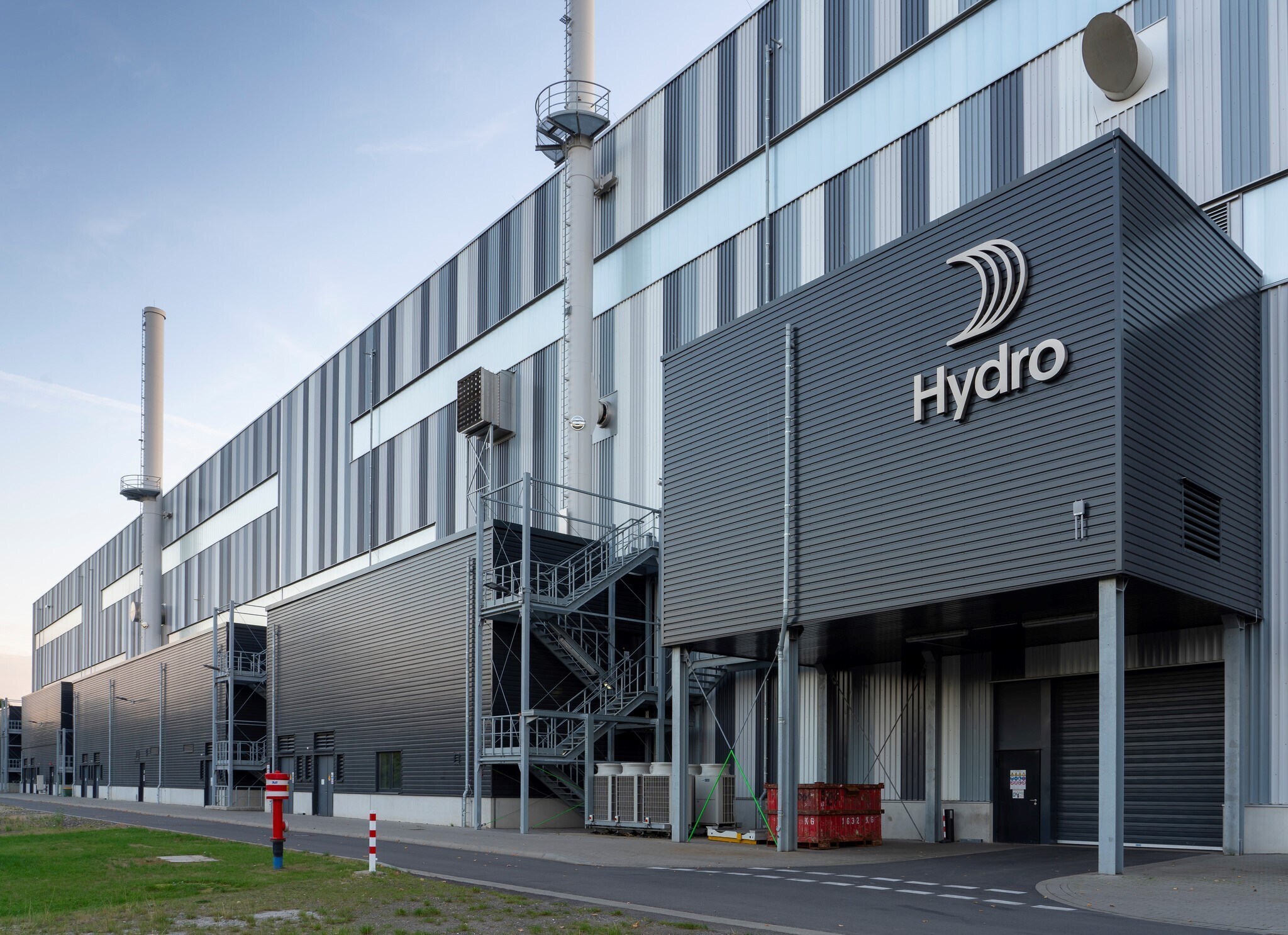
Between cycles and transition: Norsk Hydro tests investors' patience
The share price of Norsk Hydro ASA has settled into a narrow trading range, reflecting the sheer tension in the market over the short-term volatility in the aluminium market and the company’s efforts in the energy transition. However, after a few consecutive sessions of subdued trade, the stock appears a bit stable, which is neither decisively bullish nor overtly fragile. This has triggered debate on whether the current scenario represents consolidation ahead of recovery or a pause before renewed weakness. However, the sentiment around the Norwegian aluminium producer is somewhat balanced at this hour, and trading over recent days has been confined to a narrow corridor, highlighting hesitation rather than conviction. Short-term traders remain focused on aluminium prices, developments in...

LME throwback 2025: Aluminium vs copper price and inventory movement
When we look back at 2025, we will remember aluminium as the metal that cracked under policy pressure long before demand fundamentals forced anyone’s hand. On the other hand, if aluminium was the year’s political barometer, copper was its economic score. By late 2025, the LME had become a battlefield where two of the world’s most essential non-ferrous metals, aluminium and copper, told different yet intimately connected stories about supply stress, geopolitical friction, climate transition demand, and human cost. While both aluminium and copper ended the year with double-digit gains, the path they took could not have been more different. Must read: Key industry individuals share their thoughts on the trending topics Aluminium’s arc in 2025 was subtle From the outset, prices were on a...

The other side of energy transition with rising solar waste – how circular economy matters
Who knew renewable energy, particularly solar, which itself is a cornerstone of the global energy transition and the most effective pathway to sustainability would trigger hazardous waste generation concern? The irony is hard to miss that as the world ramps up the share of renewable power in energy mix by deploying more of solar panels and wind turbines to chase sustainability goals, the risk of creating a new waste crisis grows. While more solar capacity is in line to be deployed, accounting for 80 per cent of the estimated 4,600 GW of new renewable capacity between 2025 and 2030, the International Renewable Energy Agency (IRENA) estimates around 1.7-8 million tonnes of waste to be generated from PV modules by 2030, and that by 2050, is expected to soar to between 60 and 78 million...

India’s aluminium wire rod demand to grow at 5.93% CAGR by 2030, with new expansion plans ahead
Across modern power systems, one of the important product is aluminium wire rods. Their growth mirrors the expansion of electricity networks around the world. Global aluminium wire rod usage has increased from 7.6 million tonnes in 2020 to about 8 million tonnes in 2023, to 8.16 million tonnes in 2024 and 8.32 million tonnes in 2025. The global wire and cable market, valued at USD 191.6 billion in 2022, is projected to grow at a CAGR of 6.30 per cent from 2023 to 2032. Much of this momentum is tied to transmission and distribution. Over seven decades, aluminium cables and conductors have taken the place of copper as the main carrier of electricity. Today, bare conductors account for 70 - 75 per cent of the aluminium used in cable and conductor applications, with insulated cables forming...

Low-carbon aluminium and the automotive sector: 2025 saw a transition built in tandem
The global aluminium industry in 2025 entered into a new era where carbon metrics are becoming just as important as cost and quality of the product. With new pricing benchmarks for low-emission products and the increasing impact of regulations like the EU’s Carbon Border Adjustment Mechanism (CBAM), low-carbon aluminium is facing a rising demand across sectors, but especially within the automobile industry. In 2026 and beyond, the rising demand for low-carbon aluminium will become a clearly defined and rise as a valuable segment, driven by unique price signals, market incentives and compliance needs. Recycled aluminium consumption in automotive sector In 2024, the global automotive industry, which includes passenger cars, commercial vehicles and motorcycles, recorded a total recycled or...

India: Domestic aluminium market posts weekly gains tracking strong global cues
India's domestic aluminium prices recorded notable week-on-week gains, supported by upward price revisions from primary producers following a rise in LME and MCX aluminium prices and renewed global supply concerns. The increase came despite comfortable domestic availability and only a gradual improvement in downstream demand, underscoring the dominant influence of global market cues on prices during the week. BigMint's assessment showed India's domestic P1020 ingot (99.7 per cent) prices rising by INR 5,000 per tonne w-o-w to INR 292,000 per tonne ex-Delhi NCR, while Mumbai ex-works prices gained by INR 12,000 per tonne to INR 301,000 per tonne amid firm global market cues. Explore- Most accurate data to drive business decisions with 50+ reports across the value chain How did Indian and...

WEEKLY: China's spot alumina market remains oversupplied
According to Mysteel's weekly survey, total smelter-grade alumina output among the 44 Chinese alumina refiners under Mysteel tracking ticked up marginally by 0.2 per cent on a week to 1.84 million tonnes during the December 19-25 week. During the same week, the average capacity utilisation rate across the same 44 producers rose slightly to 85.14 per cent, up 0.14 percentage points from the previous week. The increase stemmed from the fact that many producers maintained relatively high operating rates while engaged in price negotiations for next year's long-term contracts, market sources learned. Some talks were deadlocked, with alumina producers on the verge of losses holding firm on prices while primary aluminium smelters pushed for lower procurement prices. Explore- Most accurate data...

Europe’s primary aluminium output rose only 0.9% in 2025 - are CBAM and policy pressures steering the shift toward 51% recycling?
Just like the US, Europe appears to be reshaping its aluminium strategy - and scrap is steadily gaining the upper hand. With recycling crossing the 50 per cent mark in 2025, the balance of the industry is shifting away from primary aluminium and moving toward secondary metal. That trend is also visible in the production numbers. Primary aluminium production across Europe, including Russia reached 6.4 million tonnes between January and November 2025. That’s only slightly higher than the 6.38 million tonnes recorded in 2024 and 6.1 million tonnes in 2023, in the same period, working out to growth of about 0.9 per cent in 2025 after a stronger 3.8 per cent growth the year before. During 2025, output moved up in stages - 1.72 million tonnes in the first quarter, 1.74 million tonnes in the...

RUSAL: the En+ KraMZ collaboration and other landmarks throughout 2025
As 2025 is about to wind up, United Company RUSAL secures an extension of the sales agreement with the En+ associate KraMZ Ltd. The global aluminium producer, RUSAL, has achieved milestones, securing several partnerships as well as shareholding throughout the year. These endeavours, despite geopolitical challenges and tariff obstacles, were achieved and have been marked throughout the 2025 calendar. Image for referential purposes only Explore- Most accurate data to drive business decisions with 50+ reports across the value chain En+ associate KraMZ Ltd to continue the RUSAL partnership United Company RUSAL has extended an existing aluminium sales contract with En+ associate KraMZ Ltd in 2026. Under this agreement, RUSAL’s subsidiary JSC UC RUSAL TH is to supply primary aluminium of...

WEEKLY: China's coking coal output declines amid mine halts
The daily raw coal output of the 523 Chinese coking coal mines under Mysteel's tracking fell by 2.78 per cent from a week prior to reach an average of 1.87 million tonnes/day during December 18-24, nearing a two-month low. In parallel, their daily washed coal production over the same week also logged a 2.36 per cent on-week decline to average 739,600 tonnes per day. During the survey week, more coking coal miners joined the ranks of conducting maintenance stoppages, because they had exhausted their production quotas for this year and chose to suspend operations amid authorities' strict crackdown on overproduction activities beyond licensed capacities, Mysteel learned from sources. Explore- Most accurate data to drive business decisions with 50+ reports across the value chain For instance,...

