Adv
LANGUAGES
English
Hindi
Spanish
French
German
Chinese_Simplified
Chinese_Traditional
Japanese
Russian
Arabic
Portuguese
Bengali
Italian
Dutch
Greek
Korean
Turkish
Vietnamese
Hebrew
Polish
Ukrainian
Indonesian
Thai
Swedish
Romanian
Hungarian
Czech
Finnish
Danish
Filipino
Malay
Swahili
Tamil
Telugu
Gujarati
Marathi
Kannada
Malayalam
Punjabi
Urdu
AL CIRCLE

Thailand demonstrates aluminium export resilience; remains hopeful amidst CBAM challenges
EDITED BY : 7MINS READ

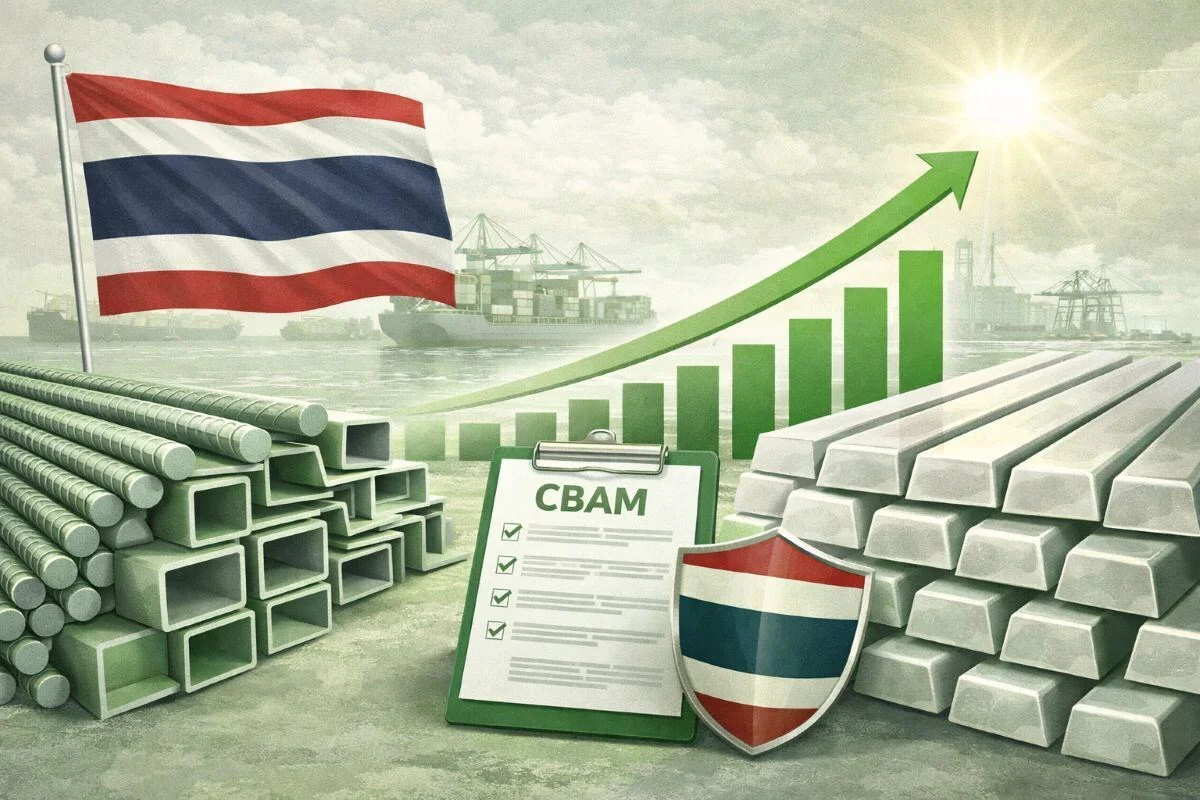
Thailand Faces CBAM
Image for representational purposes only

The European Union’s (EU) policy of Carbon Border Adjustment Mechanism (CBAM), imposing “carbon-leakage” charges on cement, iron and steel, aluminium, fertilisers, electricity and hydrogen imported into the EU, has raised concerns among the European and exporting countries. Thailand, however, emerges with remarkable resilience under the CBAM regulations. Its industrial carbon-intensive goods export to the EU has surged drastically in the first 10 months of 2025.  

{alcircleadd}

Thailand’s metal export containing aluminium, steel and iron had initially hit a slump during the CBAM transitional phase of 2023-2025. Despite the carbon emissions roadblock, the country made a fast recovery, and the aluminium, steel and iron export saw a steep hike by 54.71 per cent, rising from 0.29 per cent and capturing 0.42 per cent share of the EU's CBAM market. Out of this, steel and iron occupy 85 per cent, and aluminium, a modest share of over 15 per cent. 

Also read: CBAM begins in January 2026, but aluminium supply disruptions may stay muted through Q1. What shifts from April?

Role of aluminium in Thailand’s export to the EU

Thailand exports various categories of aluminium products to the EU, viz., wire (3.9 per cent), bars, rods and profiles (5.65 per cent), foil (7.33 per cent), and unwrought aluminium (24.06 per cent). Aluminium exports to the EU in January-October 2025 were valued at USD 56.47 million.

The 2023-2025 YTD September aluminium export trend shows a stark decline in Thailand shipments to the EU, falling from 8,281 tonnes in 2023 to 4,383 tonnes in 2024 and further to 3,728 tonnes in 2025. This suggests an approximate drop of 55 per cent. Some of the responsible factors may be the raised compliance costs for SMEs, alongside global scrap flow shifts and EU energy-driven import preferences.

Hence, there is a possibility that exports in the steel and iron sectors have ramped up, contributing largely to the 2025 metal export hike.  

Unlock full access - sign up for Free
Key benefits
... and so much more!
Last updated on : 07 JANUARY 2026
Adv
Adv
Adv
Adv
Adv
Adv
Adv
EDITED BY : 7MINS READ

Responses

Adv
Adv
Adv
Loading...
Adv
Adv
Adv
Loading...
Reports VIEW ALL
Loading...
Loading...
Business Leads VIEW ON AL BIZ
Loading...
Adv
Adv
Would you like to be
featured with us?
Loading...

AL Circle News App

AL Biz App

A proud
ASI member
© 2026 AL Circle. All rights reserved. AL Circle is not responsible for content from external sources.