CBAM begins in January 2026, but aluminium supply disruptions may stay muted through Q1. What shifts from April?
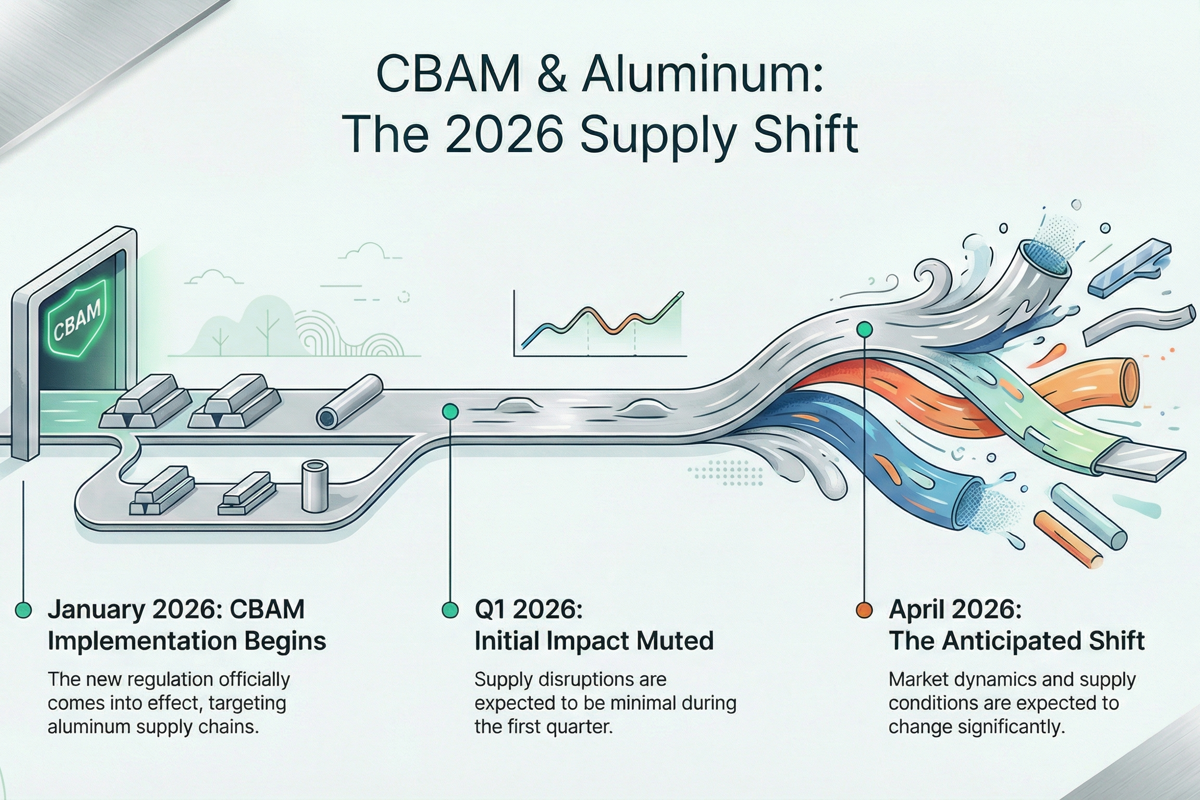
The European Union’s (EU’s) much-talked-about regulatory framework is finally in full action. The Emissions Trading System (ETS) and the Carbon Border Adjustment Mechanism (CBAM) are fruits of the Fit for 55 package introduced on July 14, 2021, aligned with the United Nations’ Sustainable Development Goals, especially SDG 12 on responsible consumption and production, which played an equally notable role in shaping carbon-emission curtailment policies. ETS has been proactively adopted by emission-heavy industries since 2005, whereas CBAM’s transitional phase was first introduced on October 1, 2023.
Explore- Most accurate data to drive business decisions with our upcoming Global Aluminium Industry Outlook 2026 report across the value chain
The sustainability agenda has aimed to level the playing field for EU industries by pricing carbon on certain imported goods – aluminium, cement and steel among them – to prevent companies from shifting production to jurisdictions with weaker climate rules, a phenomenon known as carbon leakage.
Unlock full access – sign up for FREE.
Key benefits
100 MW solar power plant: A promise for Bahrain’s future in renewable energy
Next articleTop 15 downstream aluminium players move into ASI-certified league in 2025
Grow with
AL Circle