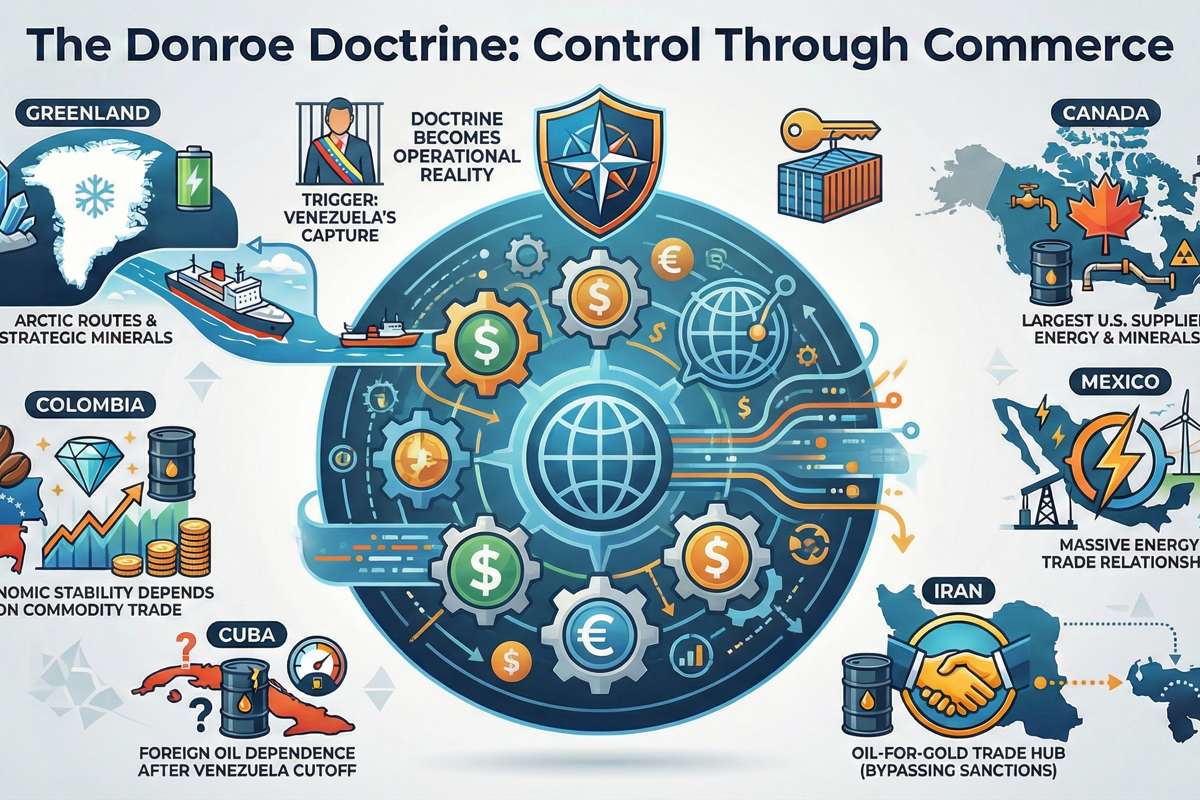
Trump’s foreign policy is now openly borrowing from the 1823 Monroe Doctrine, re-packaged as the “Donroe Doctrine” — a doctrine that signals Washington’s intent to dominate the Western Hemisphere not only militarily, but commercially. With Nicolás Maduro dragged out of Caracas, this rebranding suddenly feels operational rather than rhetorical.
From the Arctic to the Caribbean, governments are suddenly scanning their coastlines, their oil fields and their shipping lanes with fresh anxiety.
The United States already operates the Pituffik Space Base in Greenland, but Trump has made it clear that partial presence is no longer enough.
"We need Greenland from the standpoint of national security,” he told journalists, mentioning the region was "covered with Russian and Chinese ships all over the place."
Does it seem the only viable reason behind the threat?
Climate change has turned Greenland into a geological jackpot. As glaciers retreat, vast deposits of lithium, rare earth elements, oil, gas and gemstones are becoming increasingly accessible. What is disastrous for global climate stability is quietly transforming the island into a future mining frontier.
Trade is the silent driver. Greenland sits astride emerging Arctic shipping lanes that could soon rival traditional routes via Suez or Panama. Control over Greenland is not just about missiles and radars — it is about owning a new maritime corridor and the minerals that will feed electric vehicles, defence hardware and green energy infrastructure.
Greenland's Prime Minister Jens Frederik Nielsen responded to Trump by describing the notion of US control over the island as a “fantasy”.
"No more pressure. No more insinuations. No more fantasies of annexation. We are open to dialogue. We are open to discussions. But this must happen through the proper channels and with respect for international law," he said.
Meanwhile, Denmark's Prime Minister Mette Frederiksen had said, “the US has no right to annex any of the three nations in the Danish kingdom”.
Explore- Most accurate data to drive business decisions with our Outlook 2026 insights across the value chain
Washington has avoided spelling out a Cuba strategy, but Trump has hinted that force will not be necessary because Havana is already economically cornered.
He has now demanded that Cuba "make a deal" or suffer the consequences — a warning directly tied to the termination of Venezuelan oil flows.
The shift followed the dramatic seizure of Nicolás Maduro on 3 January.
"Cuba lived, for many years, on large amounts of OIL and MONEY from Venezuela. In return, Cuba provided 'Security Services' for the last two Venezuelan dictators, BUT NOT ANYMORE!" Trump posted on Truth Social on Sunday.
It kept reading as "THERE WILL BE NO MORE OIL OR MONEY GOING TO CUBA - ZERO! I strongly suggest they make a deal, BEFORE IT IS TOO LATE."
For Cuba, this is not ideological warfare but an energy crisis. Venezuelan crude has been the backbone of its power generation. Without it, imports spike, blackouts deepen and foreign trade becomes harder to finance.
Iran’s alliance with Venezuela has long been commercial as much as political. Caracas functioned as a conduit for Iranian oil-for-gold deals, allowing Tehran to keep exports moving despite sanctions. Iran is rich in natural resources, primarily known for vast reserves of oil (reserve estimates at 208 to 209 billion barrels) and natural gas, holding some of the world's largest deposits, making petroleum a crucial part of its revenue.
With Venezuela now forcibly removed from Tehran’s supply chain, those murky trade routes face disruption. The concern in Tehran is not just political isolation but the tightening of commodity trade corridors that keep its oil moving and its hard currency flowing.
Explore- Most accurate data to drive business decisions with 50+ reports across the value chain
After Maduro’s arrest, Bogotá quietly feared that proximity could turn into vulnerability. Colombia’s leadership reportedly worried it might be next on Washington’s pressure list.
A direct conversation with Trump appears to have paused that anxiety — at least for now.
For Colombia, the fear is collateral damage. Its oil exports, coal shipments and agricultural trade all depend on predictable relations with Washington. Any hint of military pressure risks spooking investors and insurers who underwrite its commodity flows.
Mexico has not been singled out publicly, but it sits on the largest energy trade relationship in the Western Hemisphere. It supplies crude to US refineries and depends on US demand for its manufacturing exports.
After Venezuela, the worry in Mexico City is whether “energy leverage” becomes the new diplomatic tool — tariffs one week, pipeline politics the next. Mexico and the US have a massive, deeply integrated trade relationship, the first remaining the latter's first or second trade partner for decades now. Key traded goods include vehicles, machinery, electronics, medical devices, energy (oil, gas) among others.
Don't miss out- Buyers are looking for your products on our B2B platform
Trump has repeatedly joked that Canada should become the 51st state and has floated the idea of annexation. Trump even pledged to protect Canada with the US ‘Golden Dome’ missile defence shield if its northern neighbour joined the country.
Despite repeated threats, Canadian Prime Minister Carney has been clear with Trump that Canada has no interest in joining the US.
Trump has not brought up Canada since Maduro's capture.
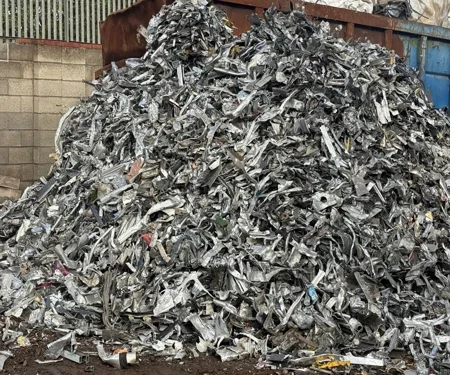
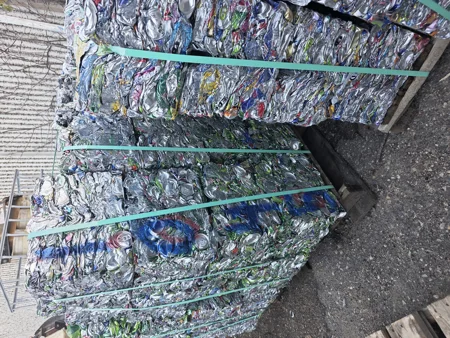
Still, behind the smiles lies a hard reality. Canada is the US’s biggest supplier of aluminium, crude oil, uranium and critical minerals. The idea that sovereignty could be wrapped in security guarantees is unsettling for a country whose resource exports underpin its economy.
Trump earlier argued that the United States should control the Panama Canal for strategic reasons.
In March, he claimed the U.S. had effectively reclaimed influence after securing control in a company operating near the canal.
The other side: Panama's government pushed back, with Panama's president, José Raúl Mulino, accusing Trump of "lying."
The canal is not just a waterway. It is the spinal cord of global trade. Control over its ports, terminals or operating firms translates directly into influence over shipping costs, delivery times and energy cargo flows between Asia, the Americas and Europe.
What links Greenland’s lithium, Cuba’s oil lifeline, Iran’s ghost fleets and Panama’s canal is not military ideology but trade control. Post-Venezuela, the Donroe Doctrine is starting to look less like a slogan and more like a commodity strategy — one that ties sovereignty to who controls the ships, the barrels and the minerals.
Seven countries are not trembling because of tanks on their borders. They are watching their reserves, ports and trade routes, wondering which of them might be labelled ‘national security’ next.
Must read: Key industry individuals share their thoughts on the trending topics












_md.webp)