Australia targets to achieve secured critical minerals supply chain with $1.2B stockpile
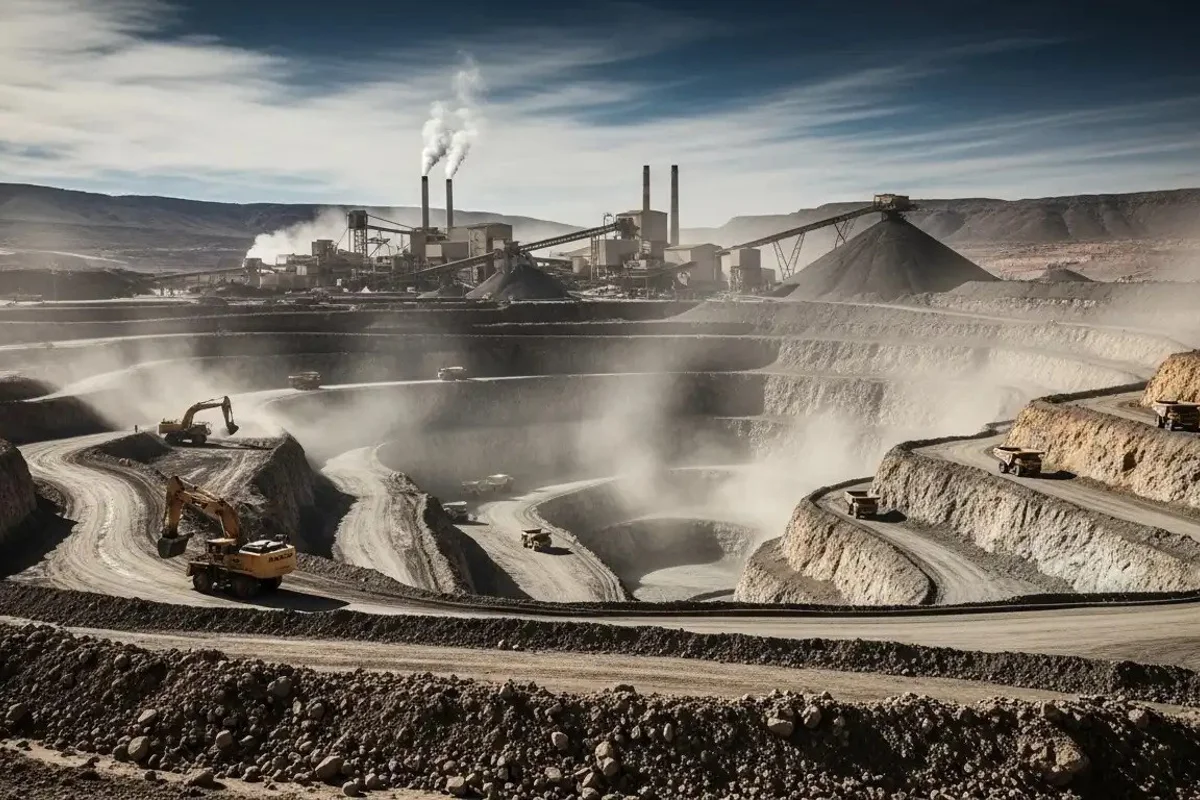
Australia has adopted a more assertive stance in the global contest for strategic resources, announcing plans to establish a national stockpile of critical minerals. According to a report on January 13, the federal government confirmed that it would commit AUD 1.2 billion (USD 805 million) to purchase and hold key minerals from domestic producers, in a bid to shore up defence preparedness, support advanced manufacturing, and lessen exposure to China’s dominance of the sector.
The announcement was made jointly by Treasurer Jim Chalmers, Resources Minister Madeleine King and Trade Minister Don Farrell.
Also read: Post-Venezuela’s capture, 7 countries tremble, fearing for their independence and their reserves
The prime materials of the reserves will be rare-earth elements, antimony and gallium, which are crucial everywhere, from fighter aircraft and medical imaging equipment to semiconductors, telecommunications and energy-efficient lighting. Officials said the initiative would reinforce Australia’s standing as a reliable supplier at a time when demand for such minerals is accelerating, and supply risks are growing.
Critical minerals have become an increasingly potent lever in international trade and security. China has had the strongest grip in the world on processing and supplying of critical minerals, so much so that it could influence the global trade dynamics by restricting exports during periods of diplomatic strain, notably affecting countries like Japan amid tensions over Taiwan.
Australia intends to maintain a stockpile to counter the Chinese influence and build a strong domestic inventory. Chalmers described the development as “another important step in Australia leading on critical minerals globally,” placing the nation at the centre of reliable supply chains for international partners.
To know aluminium market outlook, prebook our report: Global Aluminium Industry Outlook 2026 at a special price
Markets reacted swiftly to the announcement. Shares in Lynas Rare Earths, the only significant producer of separated rare-earth materials outside China, climbed 6.5 per cent, while Larvotto Resources rose 8.8 per cent. Larvotto is developing the Hillgrove project in New South Wales, expected to become one of the world’s largest antimony mines.
Larvotto’s chief executive, Ron Meeks, welcomed the policy, noting that the company is forecast to supply around 7 per cent of global antimony output once production begins in August. He said the inclusion of antimony in the reserve sent a strong signal of government support for strategically important minerals.
Beyond individual companies, the stockpile is expected to underpin a broader pipeline of critical minerals developments valued at roughly AUD13 billion ( USD 8.7 billion). This follows last year’s landmark agreement between Australia and the United States aimed at expanding mining and processing capacity for rare earths and other essential materials, in part to counter China’s entrenched position.
A central feature of the reserve will be its role in stabilising prices. The government intends to establish a floor price for selected minerals, protecting Australian producers from sharp swings driven by surges of low-cost supply from overseas. To do this, Canberra will rely on purchasing agreements, contracts for difference and a dedicated AUD 185 million ( USD 125 million) stockpile fund.
Must read: Key industry individuals share their thoughts on the trending topics
King said the model would allow the government to buy minerals at guaranteed rates, encouraging investment while reducing risk. If prices rise in the future, she added, taxpayers could benefit through the on-selling of stockpiled material, allowing the public to share in the upside of stronger markets.
While the reserve is primarily focused on domestic security, it is also framed as a tool of international cooperation. Officials indicated that portions of the stockpile could be made available to allies facing supply disruptions, particularly in defence and high-technology sectors. With some of the world’s largest rare-earth reserves, Australia is well placed to play such a role, with companies such as Lynas and Arafura Minerals likely to benefit from long-term off-take agreements.
Chalmers is expected to promote the initiative in discussions with finance ministers from the G7, as well as counterparts from India, Mexico and South Korea. The government views the stockpile as a means to strengthen trade ties and provide predictability at a time when clean energy, advanced manufacturing, and military modernisation are driving unprecedented demand for critical minerals.
Don't miss out- Buyers are looking for your products on our B2B platform
Legislation enabling the scheme is due to be introduced later this year, granting the government authority to strike off-take deals with miners and manage the reserve through the Export Finance Agency and the industry department. Although the stockpile was initially slated for mid-2026, officials now expect it to be operational by the end of this year.
Industry groups have broadly endorsed the move. Tania Constable, chief executive of the Minerals Council of Australia, said the reserve would strengthen the competitiveness of the mining sector while ensuring reliable access to materials vital for defence and technology.
Taken together, the AUD 1.2 billion (USD 805 million) programme indicates a more assertive approach by Australia to safeguarding resources that are increasingly central to economic resilience and national security. With a combination of market support, strategic storage and international engagement, Canberra is betting that critical minerals will be as important to future influence as traditional commodities once were.

Post-Venezuela’s capture, 7 countries tremble, fearing for their independence and their reserves
Next articleScatec's 1.95 GW Egyptian solar farm to deliver 6,000 GWh of clean energy annually
Grow with
AL Circle