Epsilon gets $15.2m boost to build India's indigenous graphite anode supply chain
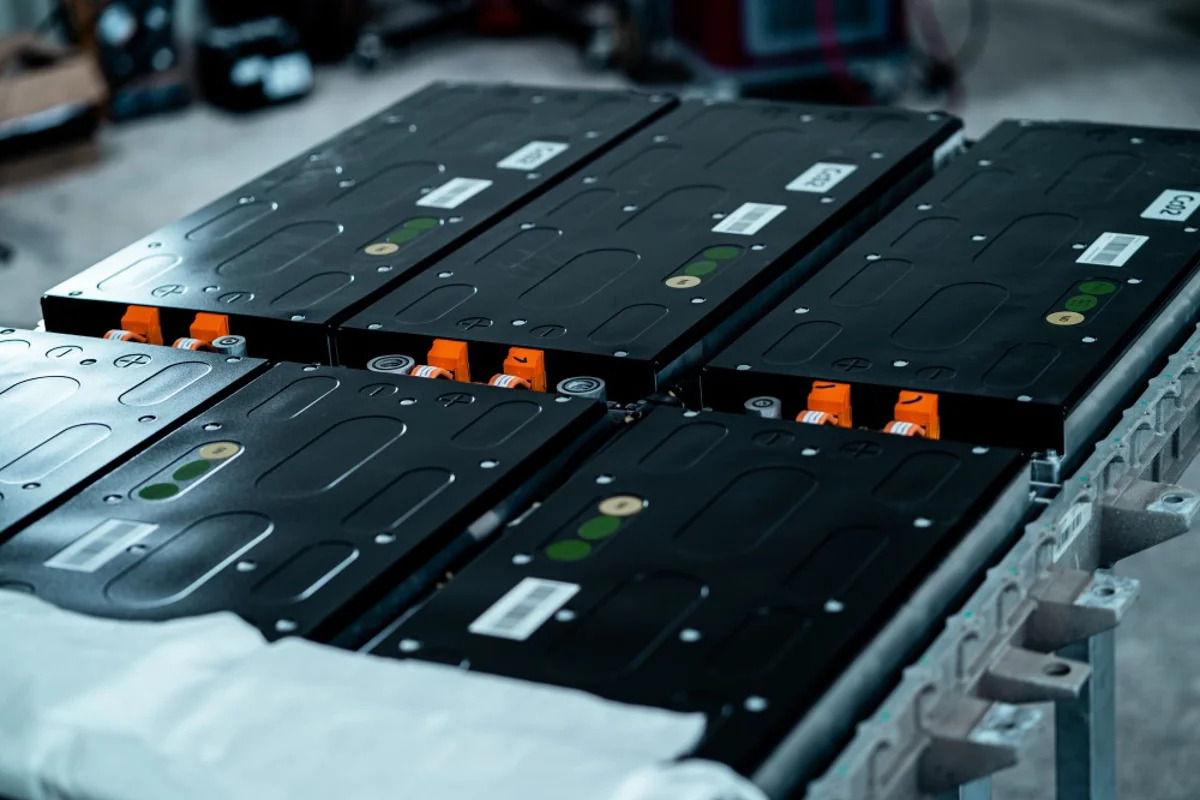
Stock image for referential purposes only
Epsilon Advanced Materials has secured INR 1,450 million (USD 15.24 million) in government CAPEX support under India's Electronics Components Manufacturing Scheme, strengthening plans to scale domestic graphite anode production for batteries.
India's push to build a self-reliant battery materials supply chain has received a fresh boost after Epsilon Advanced Materials secured government approval for its graphite anode material project under the Electronics Components Manufacturing Scheme (ECMS).
The company has been approved for INR 1,450 million (USD 15.24 million) in capital expenditure support, equivalent to 25 per cent of the project's total capital investment, from the Ministry of Electronics and Information Technology (MeitY).
The approval is particularly significant because Epsilon is the only company approved for anode-material manufacturing in this tranche of ECMS projects.
The support is intended to help Epsilon strengthen its indigenous graphite anode technology, expand manufacturing capacity and build a domestic supply chain for a material that is essential to lithium-ion batteries.
To learn about the market potential of aluminium dross, explore "ALuminium Dross Processing: Generation, Recovery & Strategic Roadmap"
Building India's domestic battery materials chain
Graphite anode materials are a critical component of lithium-ion cells and are required across applications ranging from electric vehicles and energy storage to consumer electronics.
Epsilon's project is aimed at developing large-scale manufacturing capabilities for graphite anode materials in India, with a focus on indigenous technology and domestic value addition.
The company said the project approval strengthens its efforts to establish a “Swadeshi” battery materials supply chain, potentially reducing India's dependence on imported critical battery inputs.
Vikram Handa, Managing Director of Epsilon Group, said the ECMS approval recognises the company's efforts to develop domestic graphite anode technology and manufacturing capabilities.
“Building a resilient battery ecosystem requires ownership of technology, intellectual property, R&D and process knowhow”, he said.
Handa added that the government support would accelerate the company's scale-up and strengthen India's domestic battery materials value chain.
The initiative also aligns with the government's broader Atmanirbhar Bharat strategy, which seeks to increase domestic manufacturing capabilities and reduce dependence on imported critical materials.
Epsilon targets 30,000 tonnes by 2028
Epsilon has already commissioned EAM-ONE, described by the company as India's first graphite anode material customer qualification plant, at Vijayanagar in Karnataka.
The facility is being used to support customer qualification and the development of Epsilon's graphite anode materials as the company moves towards commercial-scale production.
Epsilon plans to scale its graphite anode manufacturing capacity to 30,000 tonnes per year by 2028, followed by a second phase that would take total capacity to 100,000 tonnes per year.
The planned expansion would give India a substantially larger domestic source of graphite anode material as demand for batteries grows across transportation, energy storage and electronics.
To explore trade opportunities of aluminium consumables, visit AL Biz
Technology and intellectual property at the centre
The company has capabilities spanning material development, process optimisation and electrochemical validation, including testing in coin-cell, pouch-cell and multi-layer pouch-cell formats.
Its intellectual property portfolio currently includes 43 filed patents covering process, product and equipment technologies.
Epsilon plans to develop another 50 intellectual-property assets by 2030, according to the company.
That focus is important because building a domestic battery supply chain involves more than simply installing manufacturing capacity. Control over material formulations, production processes and related intellectual property can determine how much value is retained domestically and how competitive Indian producers can become internationally.
ECMS expands critical electronics manufacturing
The scheme has so far approved 106 projects across 30 product categories, representing total investment of INR 695.48 billion (USD 7.31 billion) and projected production of INR 5,340 billion (USD 56.12 billion).
Epsilon's project stands out within the latest tranche because of its focus on anode materials, linking the electronics manufacturing programme with India's emerging battery and electric-mobility ecosystem.
The company sees the project as part of a broader effort to create an integrated and competitive advanced battery materials industry in India.
Unlock key insights from leading companies and experts across the aluminium ecosystem with our e-Magazine - Mine to Market: Aluminium Producers & Manufacturers 2026
5 Mt by 2030: India’s green hydrogen investment pipeline expands from Gujarat to Odisha
Next articleAlcoa to build 100t gallium facility at Wagerup alumina refinery with $174m Pentagon support
Grow with
AL Circle