Aluminium Dross Processing: A Global Review
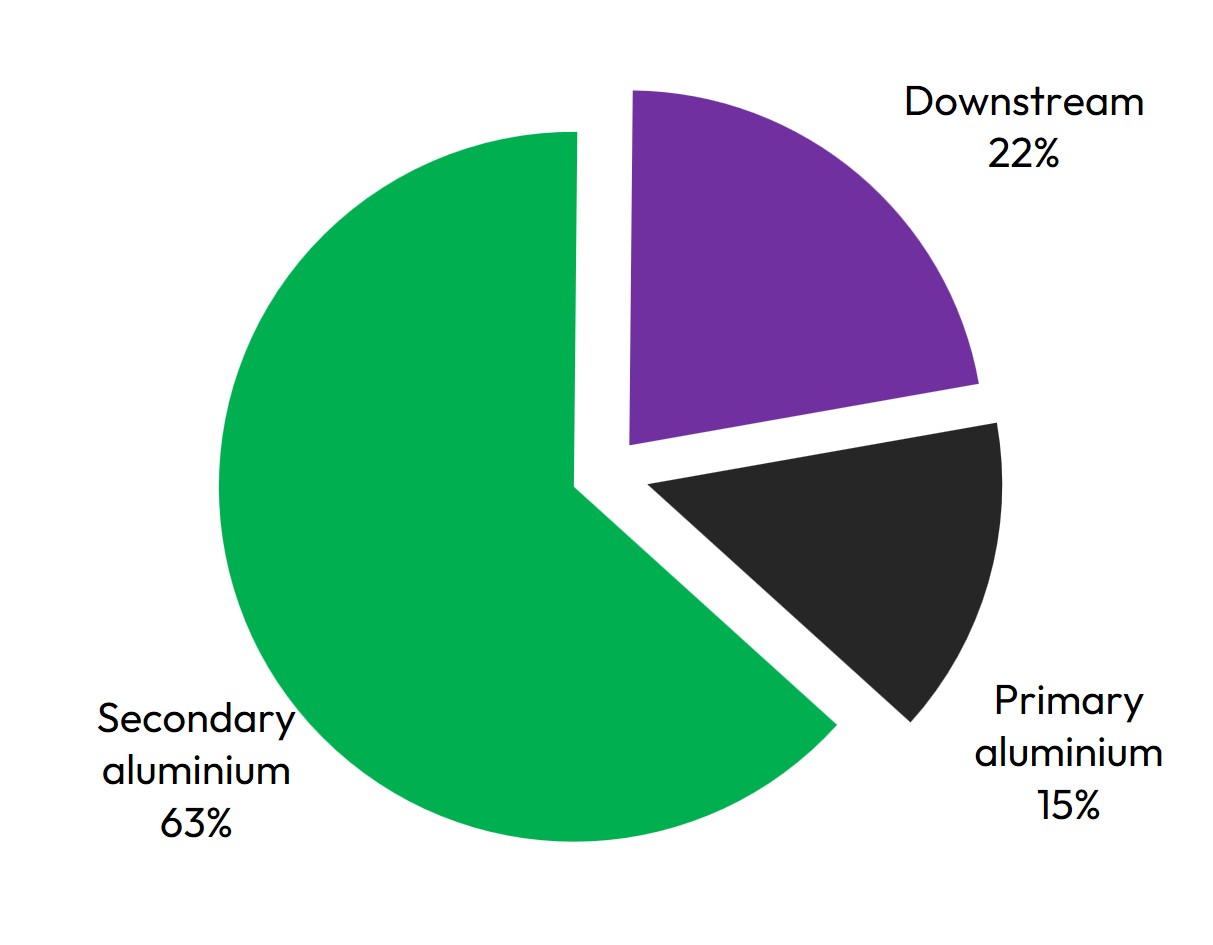
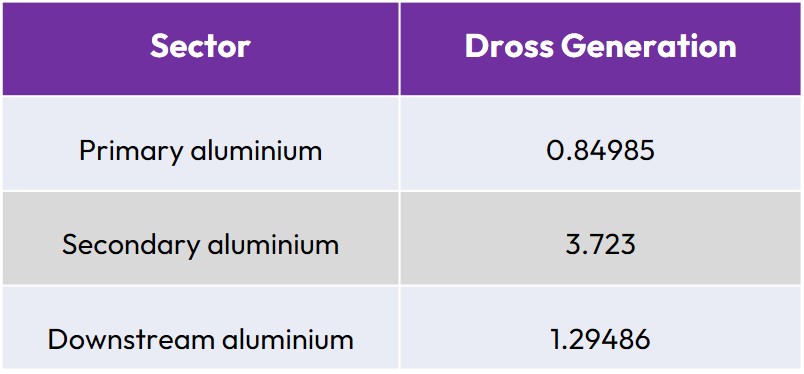
Aluminium dross is no longer just a waste-management issue. As primary aluminium production, secondary recycling and downstream processing expand, dross generation is becoming a serious cost, compliance and recovery challenge for recyclers, smelters, casthouses, foundries and downstream manufacturers. In 2025, secondary aluminium production alone generated 63 per cent of total dross worldwide, followed by the downstream sector accounting for 22 per cent and primary aluminium 15 per cent.
Dross Generation By Sector, 2025 (in %)
Source: AL Circle Research
Why industry stakeholders cannot ignore aluminium dross anymore
The aluminium industry is accelerating its transition towards recycling-led and low-carbon production models. While this to lower the carbon footprint in the environment, on the way comes a growing operational challenge, including increasing volumes of black dross, salt slag and complex residue streams generated across the aluminium value chain. In the absence of adequate treatment and recovery infrastructure, the industry risks transforming a circular-economy opportunity into a larger waste-management and compliance concern.
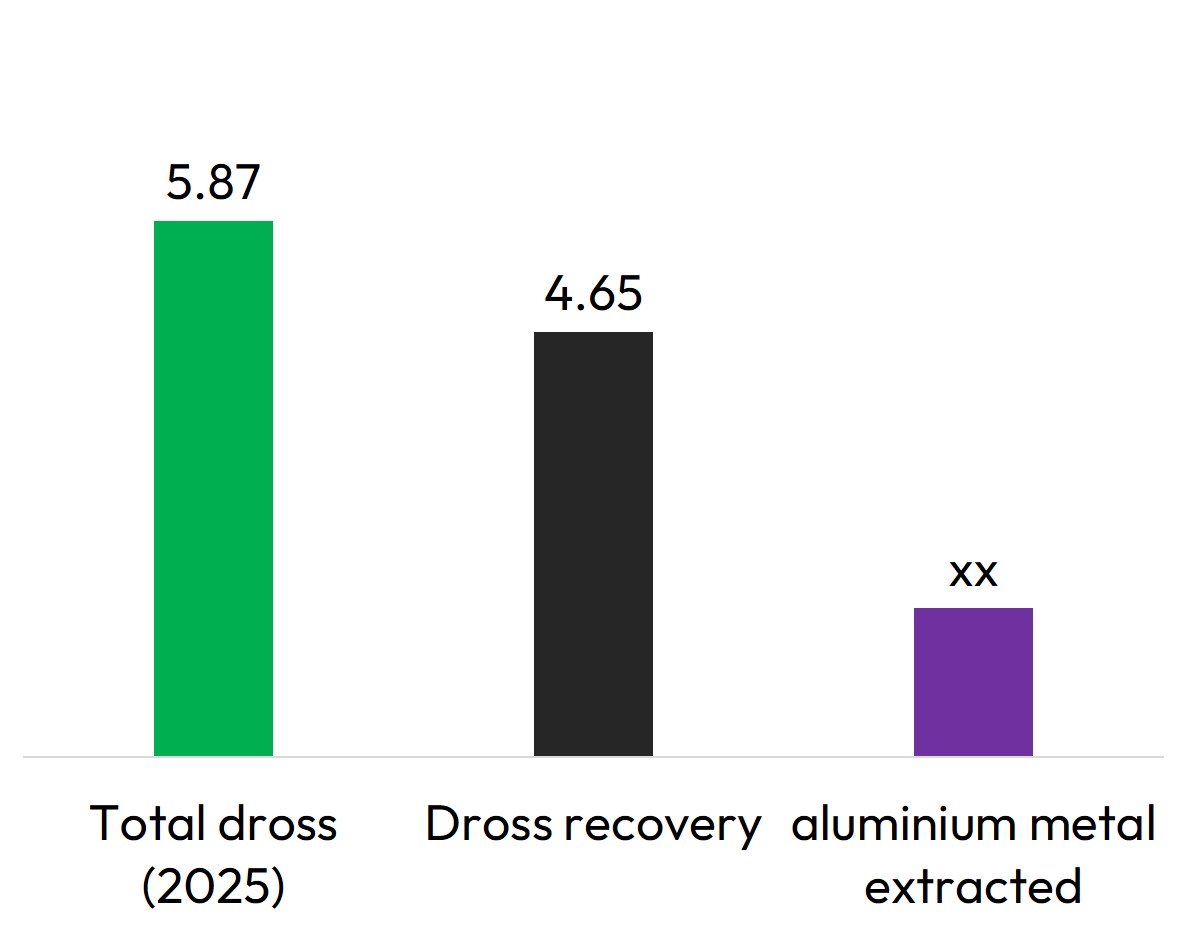
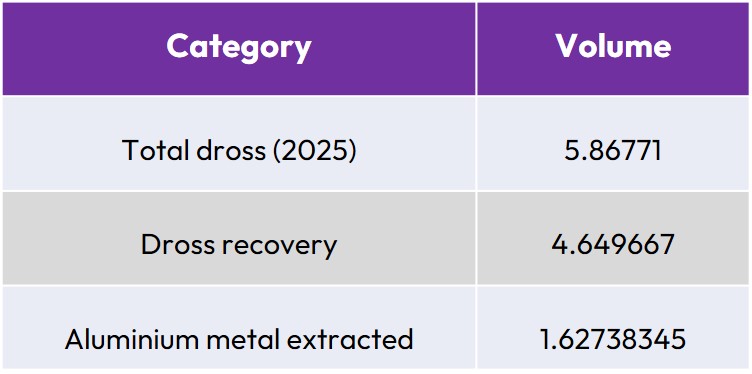
Global aluminium dross generation, recovery &
metal extraction, 2025 (in million tonnes)
Source: AL Circle Research
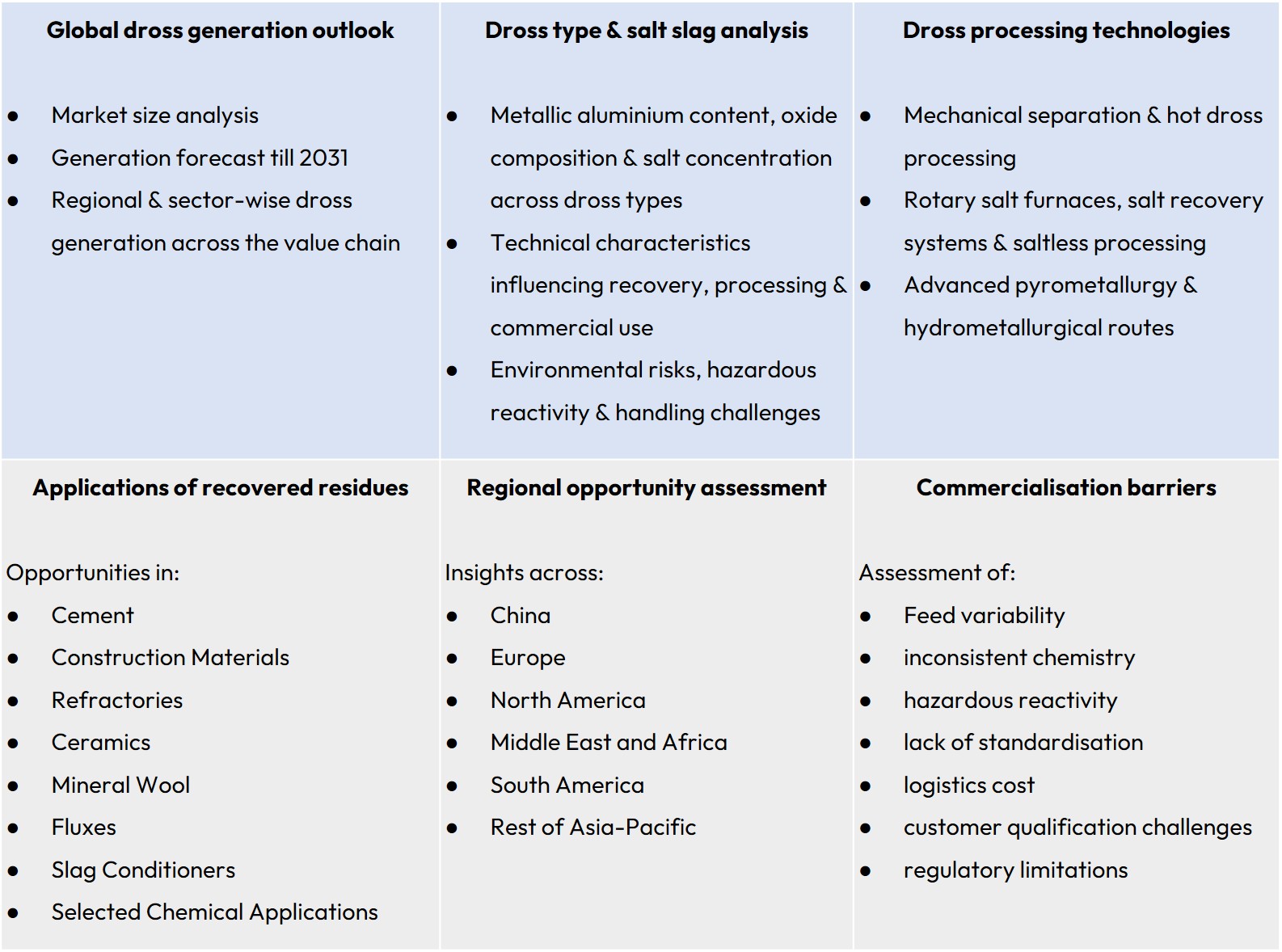
Strategic insights into the evolving economics of aluminium dross recovery, commercially viable processing technologies, regional market developments and emerging residue utilisation pathways have been drafted in this report. It further evaluates how recovered dross materials are being positioned across cement, construction, refractories, ceramics, flux recovery and speciality industrial applications.
Critical market insights shaping the future of aluminium dross
Strategic areas analysed in the report
Who can benefit most from this study?
1. Aluminium smelters & casthouses for improving metal recovery and reducing disposal losses
2. Secondary aluminium recyclers handling black dross, salt slag & mixed scrap residues
3. Dross processing companies who are evaluating technology routes, recovery models & residue offtake opportunities
4. Furnace and recycling technology providers targeting aluminium recovery & salt slag treatment
5. Cement, refractory & ceramic producers exploring alternative alumina-bearing raw materials
6. Investors, consultants & policymakers tracking circular aluminium, waste valorisation and low-carbon materials
7. Procurement, strategy, sustainability & operations teams working across aluminium recycling and downstream manufacturing
How this strategic industry assessment was developed
Our study on Aluminium Dross Processing: A Global Review adopts a comprehensive and structured approach to assess the key aspects of aluminium dross generation, processing technologies, recovery rates, and emerging sustainability innovations. The research was carried out through a multi-faceted methodology, detailed as follows:
Methodology
Methodology
Our study on Aluminium Dross Processing: A Global Review adopts a comprehensive and structured approach to assess the key aspects of aluminium dross generation, processing technologies, recovery rates, and emerging sustainability innovations. The research was carried out through a multi-faceted methodology, detailed as follows:
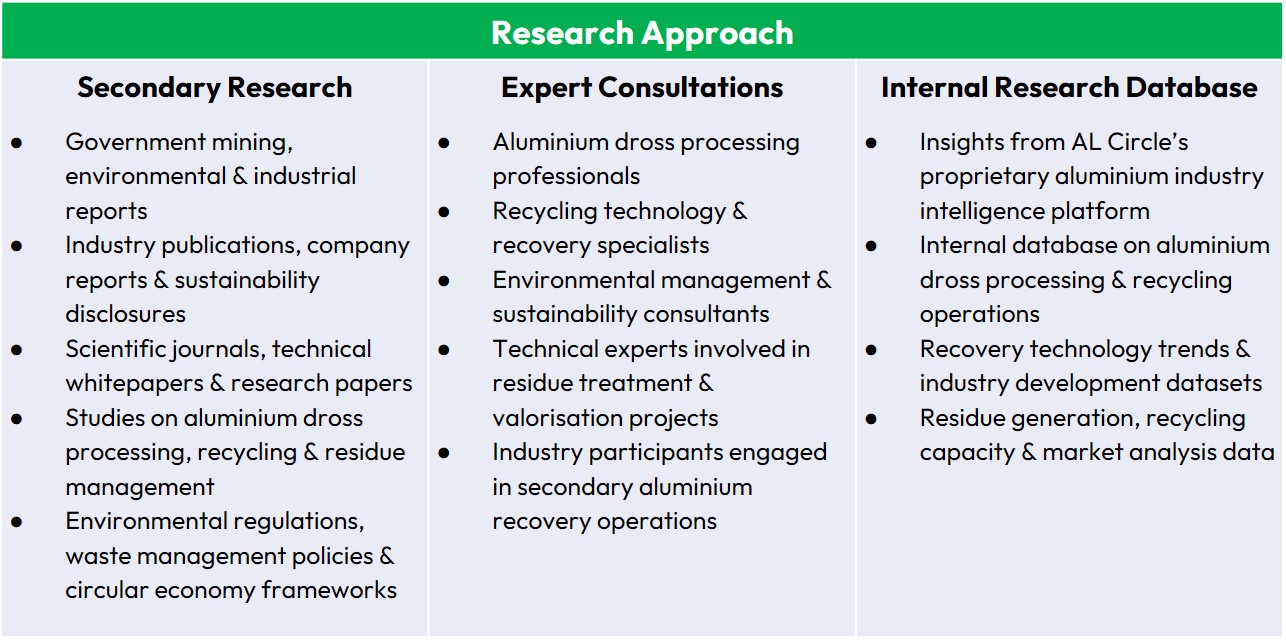
1. Research Approach
The study was conducted through extensive secondary research, supplemented by expert consultations, and structured into the following components:
- Secondary Research: A thorough review of publicly available resources, including government reports, industry publications, company reports, sustainability disclosures, scientific journals, and technical whitepapers.
- Expert Consultations: Formal discussions were held with industry experts and technical specialists in aluminium dross processing, recycling technology development, and environmental management to validate and enrich the findings.
- Internal Research Database: Insights were also drawn from AL Circle’s proprietary aluminium industry research platform and online knowledge services.
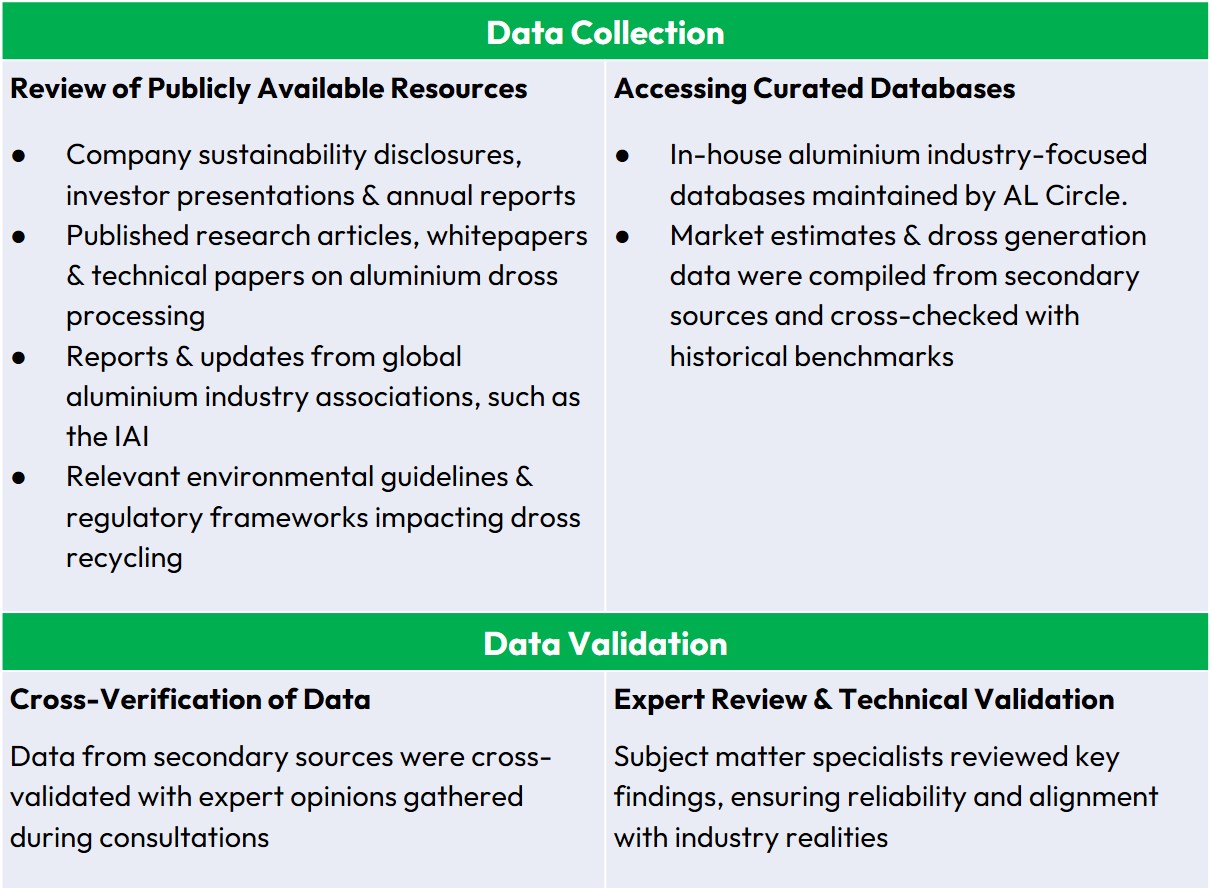
2. Data Collection
Data for this report were collected through multiple channels to ensure a comprehensive analysis:
a. Reviewing Publicly Available Resources:
- Company sustainability disclosures, investor presentations, and annual reports.
- Published research articles, whitepapers, and technical papers on aluminium dross processing.
- Reports and updates from global aluminium industry associations, such as the International Aluminium Institute (IAI).
- Relevant environmental guidelines and regulatory frameworks impacting dross recycling.
b. Accessing Curated Databases:
- In-house aluminium industry-focused databases maintained by AL Circle.
- Market estimates and dross generation data were compiled from secondary sources and cross-checked with historical benchmarks.
3. Data Validation
To ensure the accuracy and credibility of the data and insights:
- Cross-Referencing: Data from secondary sources were cross-validated with expert opinions gathered during consultations.
- Expert Review: Subject matter specialists reviewed key findings, ensuring reliability and alignment with industry realities.
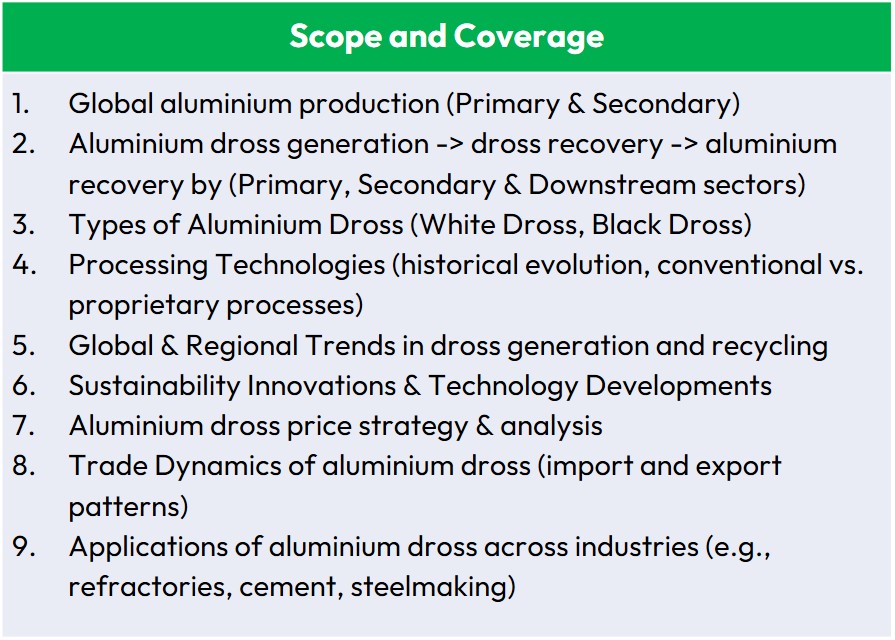
4. Scope and Coverage
The report covers:
- Global aluminium production (Primary & Secondary)
- Aluminium dross generation -> dross recovery -> aluminium recovery by (Primary, Secondary & Downstream sectors)
- Types of Aluminium Dross (White Dross, Black Dross)
- Processing Technologies (historical evolution, conventional vs. proprietary processes)
- Global and Regional Trends in dross generation and recycling
- Sustainability Innovations and Technology Developments
- Case Studies of companies and pilot projects
- Trade Dynamics of aluminium dross (import and export patterns)
- Applications of aluminium dross across industries (e.g., refractories, cement, steelmaking)
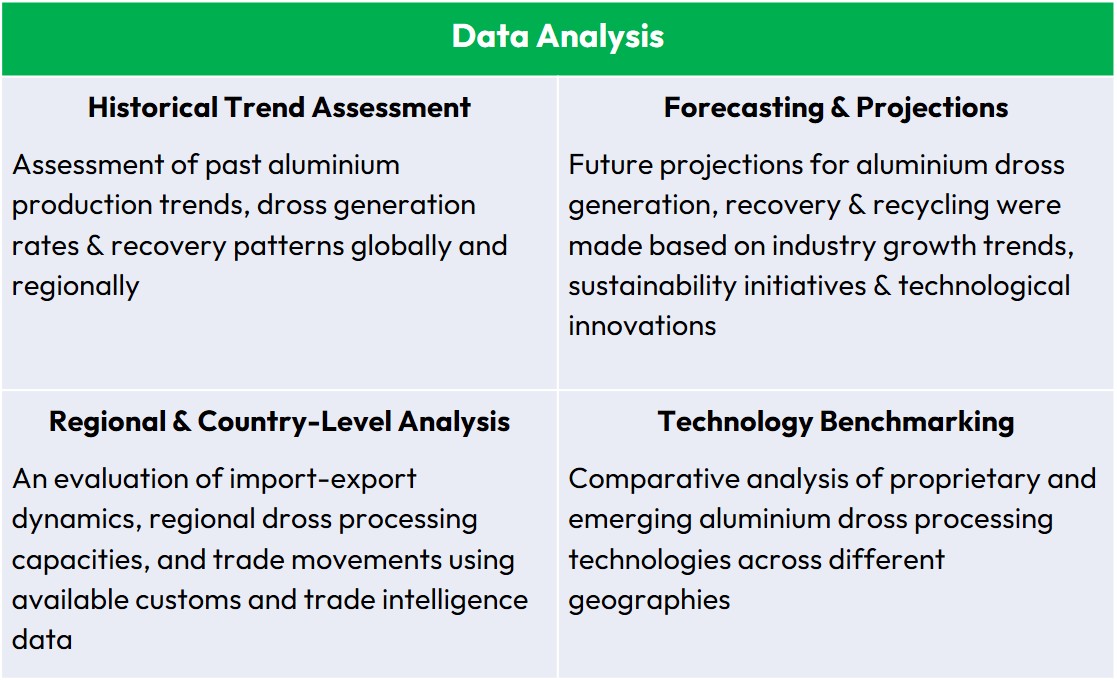
5. Data Analysis
The collected information was systematically analysed using robust methodologies, including historical review, forecasting, and regional comparison, to derive meaningful insights:
- Historical Data Review: Assessment of past aluminium production trends, dross generation rates, and recovery patterns globally and regionally.
- Forecasting and Projections: Future projections for aluminium dross generation, recovery, and recycling were made based on industry growth trends, sustainability initiatives, and technological innovations.
- Regional Trade and Recovery Analysis: An evaluation of import-export dynamics, regional dross processing capacities, and trade movements using available customs and trade intelligence data.
- Technology Benchmarking: Comparative analysis of proprietary and emerging aluminium dross processing technologies across different geographies.
At the final stage of the research process, findings were consolidated to prepare the final report. Emphasis was placed on providing practical insights into technological developments, sustainability initiatives, and future outlooks within the aluminium dross processing industry.
Looking for the latest updates on Europe’s aluminium recycling industry? Click here
Client Testimonials
"AL Circle’s report 'Aluminium Dross Processing: A Global Review' sets a new benchmark in industry insight, offering a comprehensive and forward-thinking roadmap for transforming aluminium dross from waste into value. As a company dedicated to sustainable dross recycling, we at Taha Corp commend the report’s depth, clarity, and global perspective. It addresses in depth one of the aluminium industry’s most pressing by-product challenges, with detailed coverage of technological innovations, regional dynamics, and best practices. More than just a report, it is an invaluable reference for stakeholders seeking to align profitability with environmental responsibility and shape the future of responsible aluminium dross processing."
- Graham Bruce, Director Global Business Development, TAHA Corp.
TOC
Sector: Executive summary
Sector: Introduction
Sector: Aluminium Dross: Process and Processing Technologies
Sector: Commercial Applications of Recovered Dross and Residues
Sector: Aluminium dross generation & Forecast (2026-2036)
Sector: Aluminium Dross Recycling: A Global Perspective, 2025 (in million tonnes)
Sector: Aluminium Dross Price Benchmark (as of Dec 2025)
Sector: Trade dynamics
Sector: Efficient dross recovery and utilisation technologies
Sector: Competitive and Supplier Landscape
Sector: Environmental, Social and Governance, Regulation and Circular Economy Drivers

Study Period
2021-2032
Historical Data
2020-2025
Base Year
2025
No of Pages
89
Price
$ 999

Our Clients
and ...

