Critical Minerals
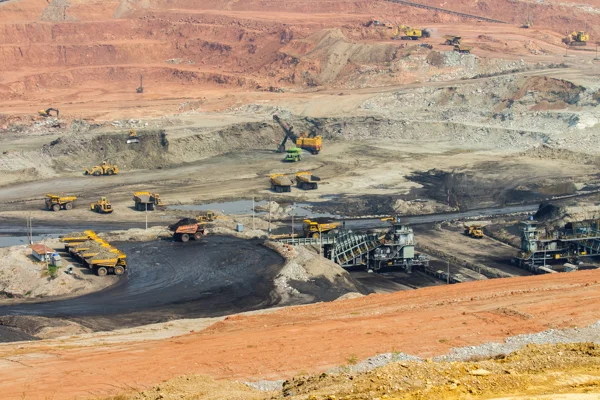
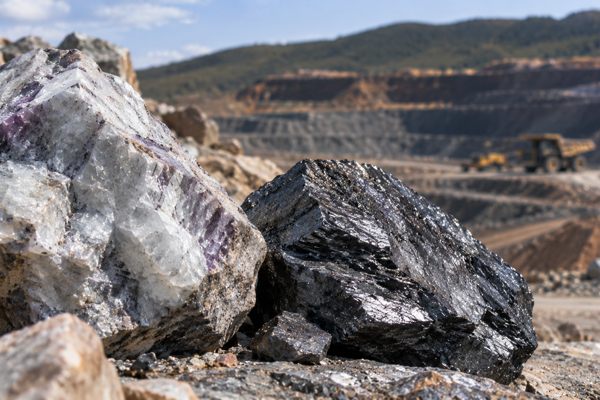
Atlas Metals terminates UPSA acquisition as lithium and graphite deals take priority
Atlas Metals Group plc has terminated its proposed acquisition of Universal Pozzolanic Silica Alumina Ltd (UPSA), ending a transaction first announced in June 2025, as the company shifts its acquisition focus towards lithium and graphite assets in Africa and South America. The natural resources and energy company said the decision followed recent due diligence difficulties and actions by UPSA representatives that it believes materially changed the merits and viability of the transaction. Atlas Metals is also seeking to recover material amounts owed to it by UPSA. The proposed acquisition was initially announced on June 17, 2025, with the signing of a conditional share purchase agreement (SPA) disclosed on September 10, 2025. However, the company has now decided to terminate the agreement,...
From raw resources to battery-ready materials: Australia's downstream ambitions take shape
Australia could turn more of its aluminium and copper resources into higher-value battery components, with a new report from national science agency CSIRO identifying opportunities to strengthen the country's domestic battery manufacturing capabilities. The report, The Future of Australian Battery Manufacturing: Cell Cans and Current Collector Foils, examines how Australia could use its existing industrial expertise, materials and manufacturing capabilities to produce key components for lithium-ion and emerging sodium-ion batteries. Rather than focusing solely on the country's critical mineral resources, the analysis explores practical ways to move further downstream and capture more value through local manufacturing. The opportunity comes as global demand for batteries continues to grow,...
Grow with
AL Circle
Price
→Events

International Critical Minerals Expo & Summit IV
Mining & Critical Minerals India Conference and Exhibition
Indonesia Critical Minerals Conference & Expo 2026
International Critical Minerals Expo & Summit IV
Mining & Critical Minerals India Conference and Exhibition
Indonesia Critical Minerals Conference & Expo 2026
Business Cards
A report that reveals where the aluminium casting industry is heading and how businesses can act.
LEARN MORE
A report that reveals where the aluminium casting industry is heading and how businesses can act.
LEARN MOREAL Circle Analysis: Scrap in EU, Thailand, 25%Trimet CO₂ cut, India’s 16.3tCO2 gap draw aluminium supply chain
AL Circle Analysis: 278% China-US FRP rise, $692m Germany-France FRP trade, India’s 300m-can gap draw aluminium map
AL Circle Analysis: Alumina prices fall 22%, Ghana advances bauxite projects & global aluminium production rises 2.1%
Global alumina production remains below 2025 levels despite a Q3 rebound, reaching 114 million tonnes in 9M2026
Germany-France aluminium FRP trade 2026 at $692m: Two-way exchange of coil, sheet, foil and high-value products
News

Tesla’s Optimus needs a brain, a battery and a whole lot of aluminium
Tesla's ambitions for its Optimus humanoid robot extend well beyond factory automation, with the company envisioning a future in which robots could support vehicle servicing, logistics and even last-mile delivery. However, turning that vision into a commercially viable product will require more than advances in artificial intelligence and robotics. It will also depend on access to aluminium, critical minerals and the downstream manufacturing capabilities needed to produce increasingly sophisticated hardware at scale. Tesla has already taken an important step towards that ambition. On October 21, 2026, the company announced that Optimus production had begun on its high-volume manufacturing line in Fremont, California. Tesla described the units coming off the line as its first...
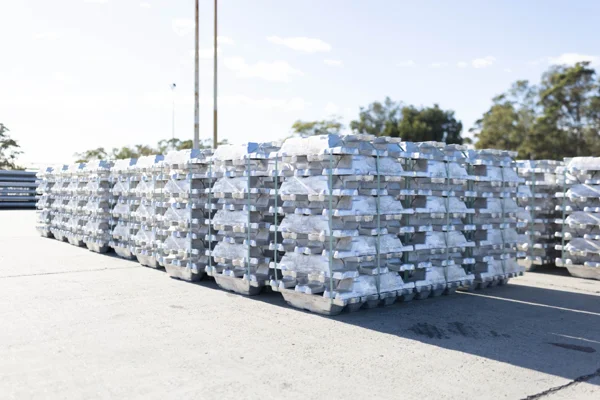
Aluminium Council calls for bauxite, alumina and aluminium to join critical minerals list
Bauxite, alumina and aluminium should be added to Australia's Critical Minerals List to bring Australia into line with its key strategic partners and protect one of the few complete industrial value chains the country has, a new report released today by the Australian Aluminium Council finds. The report, “Securing Australia's Aluminium Advantage”, finds the US, the UK, the European Union, Canada and South Korea already recognise aluminium or its value chain as critical, and Japan lists bauxite. Australia produces nearly a quarter of the world's bauxite and is the world's largest alumina exporter, but none of the three is on Australia's Critical Minerals List. Aluminium is recognised only on the Government's separate Strategic Materials List – but which does not align with that of our key...
Australia to prioritise critical minerals refining and European market in updated strategy
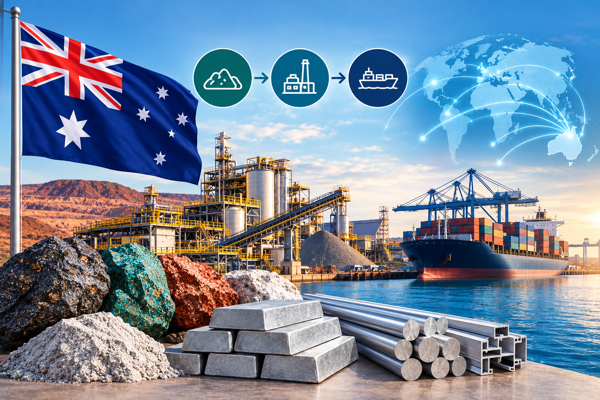
Australia plans to give greater attention to critical minerals refining and processing under an updated strategy, as competition for investment grows and concerns over supply chains continue. Resources Minister Madeleine King said the revised strategy would guide the industry's next stage of development, with a focus on creating greater economic and strategic value from critical minerals. She said Australia would prioritise processing activities where it already has, or could develop, a competitive advantage. Australia is a major supplier of critical minerals, including rare earths used in defence and renewable energy. However, China dominates the refining stage of the supply chain. Western countries are seeking to expand their own processing capabilities and diversify supplies of...
Malaysia’s rare earths balancing act: Raw exports or a homegrown processing industry?
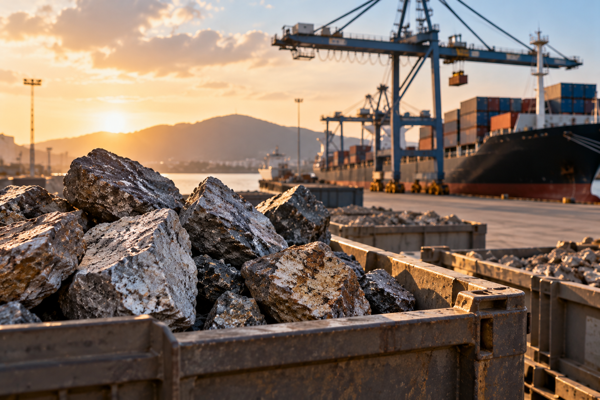
Malaysia has opened a limited route for raw rare earths exports while pursuing a broader ambition to develop domestic processing capabilities, highlighting the challenge of attracting international investment without giving up opportunities to create more value locally. The country has approved its first application to export unprocessed rare earths under a revised regulatory framework, with the shipment authorised for research and development purposes. Malaysia’s Department of Mineral and Geoscience granted the approval, according to the Ministry of Natural Resources and Environmental Sustainability, which confirmed the decision in response to a Bloomberg query. The ministry did not identify the applicant or disclose further details. The approval follows new guidelines issued earlier in...
MRD’s 94.9% gallium recovery puts bauxite back in the critical minerals spotlight
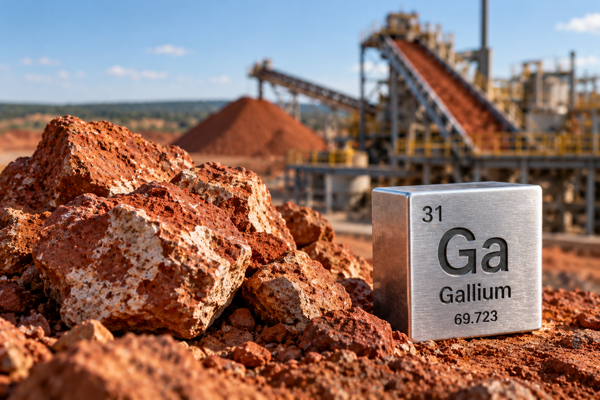
Mount Ridley Mines has reported 94.9 per cent gallium recovery from a third-party bauxite sample using its patent-pending Selectro process, alongside recoveries of 92 per cent aluminium and 97 per cent iron in a single low-temperature leach. The test also produced a silica-rich residue instead of conventional red mud, highlighting the technology’s potential to recover multiple metals from bauxite through one processing route. The sample was provided by Australian Silica Quartz Group from its Darling Range bauxite project in Western Australia. It comprised material collected from 16 vacuum drill samples across four holes at the Athena and Ceres prospects. Containing 80 parts per million of gallium, the sample yielded an extraction rate of 94.9 per cent into solution. Mount Ridley said this...

Mount Ridley Mines files second Selectro patent to target industrial metals recovery
Australia’s Mount Ridley Mines is expanding its Selectro processing technology beyond critical minerals, with a second provisional patent application targeting industrial feedstocks such as bauxite and potentially opening new licensing and partnership opportunities. Mount Ridley Mines Ltd (ASX: MRD) has lodged a second provisional patent application for its proprietary Selectro hydrometallurgical technology, seeking to protect an adapted version of the process designed to recover metals from industrial feedstocks. Filed on October 15 2026, with IP Australia through its wholly owned subsidiary, Mount Ridley Tech, the application follows the company's initial Selectro patent filing in August 2026. The new application covers an adaptation of the technology in which the reagent molecule has...














Blog
LATEST POSTS





Turn marketplace visibility into more relevant buyer enquiries.
View Priority Plans
Turn marketplace visibility into more relevant buyer enquiries.
View Priority Plans
