Malaysia’s rare earths balancing act: Raw exports or a homegrown processing industry?
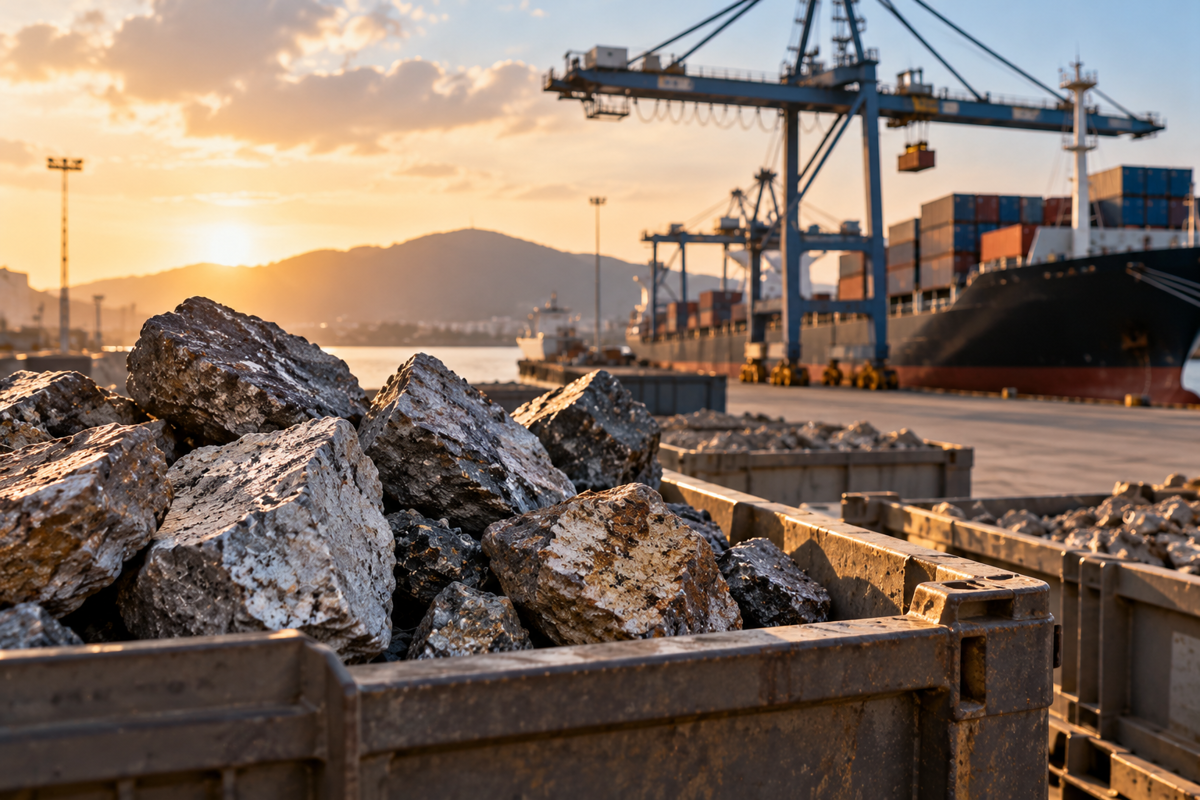
The image used in this article is generated with an AI tool and does not depict any real-time moment.
Malaysia has opened a limited route for raw rare earths exports while pursuing a broader ambition to develop domestic processing capabilities, highlighting the challenge of attracting international investment without giving up opportunities to create more value locally.
The country has approved its first application to export unprocessed rare earths under a revised regulatory framework, with the shipment authorised for research and development purposes. Malaysia’s Department of Mineral and Geoscience granted the approval, according to the Ministry of Natural Resources and Environmental Sustainability, which confirmed the decision in response to a Bloomberg query. The ministry did not identify the applicant or disclose further details.
The approval follows new guidelines issued earlier in October that allow conditional exports of raw rare earths for research, development or processing. The rules ease a moratorium on such exports that had been in place since 2024 but do not establish unrestricted access to overseas markets.
Malaysia has indicated that the success of the framework will be judged by the investments and capabilities it helps develop, rather than the number of export applications approved.
“The guidelines are open to eligible applicants, including foreign companies, subject to compliance with the relevant regulatory requirements,” the ministry said.
It added that the priority was the quality of investments, technology transfer and long-term value creation.
To learn about the market potential of aluminium dross, explore "ALuminium Dross Processing: Generation, Recovery & Strategic Roadmap"
Processing capacity remains a strategic priority
The policy shift comes as Malaysia seeks to strengthen its position in the rare earths supply chain and reduce dependence on processing capacity concentrated in China. Rare earths are used in a range of advanced technologies, including applications important to defence.
Malaysia already hosts Australia’s Lynas Rare Earths, one of the two major rare earths producers outside China identified in the source report. Local conglomerates, including Berjaya Corp, are also exploring projects.
Other international companies are considering opportunities in the country. France’s Carester plans to develop a rare earths separation plant in the northern state of Perak in partnership with Malaysia’s Malaco Mining Group. More than a dozen US companies are also exploring local opportunities, according to the report.
These developments provide context for Malaysia’s emphasis on technology transfer and long-term value creation. Building processing expertise could help the country capture more value from rare earths resources rather than relying solely on exports of unprocessed material.
However, the first export approval does not itself confirm that new investments or processing projects will proceed. The ministry has not disclosed the applicant’s identity, the quantity authorised for export or the specific material involved.
A controlled opening for research and development
The revised rules offer eligible applicants, including foreign companies, a conditional route to export raw rare earths for research and development or processing, provided they meet the relevant regulatory requirements.
The framework therefore creates scope for selected material to move overseas for permitted purposes while Malaysia continues to pursue its domestic industry ambitions.
The key question is how effectively the country can use this limited flexibility to attract technology, develop local expertise and support long-term investment. The first approval marks an initial step in implementing the new rules, but the longer-term impact will depend on the quality of projects and the capabilities they help establish.
To keep your aluminium operations running efficiently, explore essential consumables and connect with global suppliers on AL Biz.
Grow with
AL Circle