
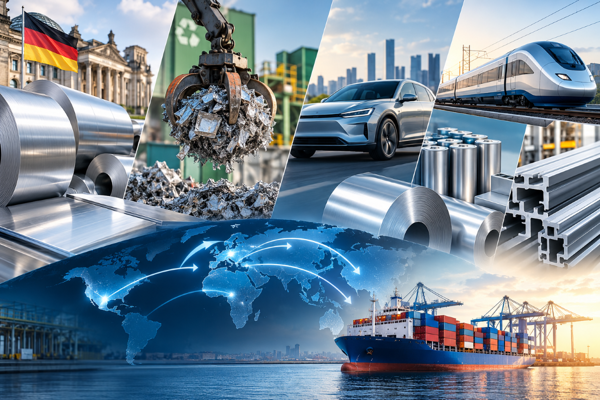
AL Circle analysis: Germany’s aluminium trade surplus, Novelis’ US expansion, Asia’s EV demand & India’s underutilised downstream capacity
Aluminium’s next growth phase is increasingly being shaped by downstream processing, supply-chain resilience and demand from specialised applications. Germany continues to generate a substantial trade surplus in flat-rolled products despite a shrinking primary aluminium base, while North America is investing in recycling and rolling. Across Asia, new manufacturing capabilities and growing demand from electric vehicles, railways and batteries are creating further opportunities. However, declining exports, underutilised capacity and uneven profitability show that investment alone does not guarantee success. For industry leaders, the challenge is to identify where demand is shifting, develop products that meet customer requirements and ensure that new investments translate into sustainable...
AL Circle Analysis: From Guinea to Gulf, how bauxite, tariffs and logistics redraw aluminium map
Aluminium markets in late 2026 are being shaped by more than the headline LME aluminium price. Bauxite security, alumina availability, geopolitical disruptions, tariff negotiations, logistics diversification and regional premiums are increasingly determining where metal moves and what buyers pay. From RUSAL reassessing Caribbean assets and Vedanta securing Odisha bauxite to Brazil extending mine life and EGA rebuilding its Guinea supply chain, producers are strengthening control over critical raw materials. At the same time, the US remains heavily dependent on imported bauxite and alumina, while Europe and Asia are experiencing sharply different premium dynamics. These developments point to a market where physical availability is becoming a regional factor even as aluminium itself remains...
Grow with
AL Circle

Net-zero derailed: BP's fiery oil gambit ignites climate fury, betting big on market comeback
Amid a turbulent market and a rapidly shifting energy landscape, BP (formerly known as British Petroleum) has embarked on a bold strategic pivot that has sent ripples through both the financial and environmental communities. Image for referential purposes only The incident, which caught the eyeballs of climate activists The London-based energy giant, once celebrated for its progressive green ambitions, has decided to reallocate its focus back to its historically profitable oil and gas production. This dramatic turnaround, revealed in the company’s “Reset BP” announcement, comes on the heels of a year marked by staggering share price declines and the desperate hope of reviving investor confidence through increased earnings and boosted shareholder returns. In a move that has sparked fierce...

Constellium posts a 6% drop in revenue on muted aluminium demand. Will its FRP price rise compensate the loss?
Constellium SE, a Paris-based global manufacturer of aluminium rolled products, extruded products, and structural components made from advanced alloys, described 2024 as a challenging year, citing extreme weather conditions and weak demand from end markets as significant operational setbacks. At the end of February 2025, the company reported its financial results, mirroring the prolonged market downturn throughout the year. The company’s revenue saw a hit of 6 per cent compared to the previous year and amounted to $7.3 billion, while its shipments decreased by 4 per cent to 1.4 million tonnes. Consequently, its net income plunged by 61.78 per cent from $157 million in 2023 to $60 million in 2024. Adjusted EBITDA for the whole year was $623 million, down by 5.89 per cent Y-o-Y from $662...

Aluminium giant seeks 14% premium hike in Q2, a surging trend set owing to trade and supply concerns
A leading global aluminium manufacturing giant has recently sought a premium of USD 260 per tonne from Japanese buyers for April-June (Q2) primary metal shipments, which is a notable 14 per cent increase from the current quarter (Q1, 2025). This development is nothing but a ripple effect of the persistent volatility in the primary metals market, a simultaneous event along with geopolitical tensions and production constraints continuing to reshape global supply chains. Image Source: Wikipedia Japan, a major importer of aluminium in Asia, plays a pivotal role in regional price formation. The premiums for primary metal shipments are determined quarterly over the London Metal Exchange cash price (CMAL0), a benchmark that reflects prevailing market conditions. Japanese buyers had agreed to a...

US-Ukraine critical minerals deal: A game-changer or just another diplomatic gamble for the metal industry?
Over the past week, the United States and Ukraine have dominated news headlines — but not for the right reasons. After the US announced its support for Russia in blocking Ukraine's draft resolution at the United Nations, global attention shifted towards the US-Ukraine meeting held on February 28, 2025. However, what followed took an unexpected turn, leaving the world stunned. The meeting, which was meant to be a diplomatic milestone, focused on the Mineral Resources Agreement for joint investment in Ukraine's natural resources - including rare-earth elements – quickly spiralled into a heated exchange between President Donald Trump, Vice President JD Vance, and Ukrainian President Volodymyr Zelensky. The talks that were intended to seal a significant partnership in the mineral and metal...

Major economic uptick: China’s manufacturing PMI rebounds in February powered by the aluminium industry
China's factory activity accelerated in February, fuelled by stronger supply, rising demand, and a rebound in export orders, according to a private-sector survey released Monday. Seasonal factors linked to the holiday period also contributed to the growth. The Caixin/S&P Global manufacturing PMI climbed to 50.8 per cent, up from 50.1 per cent in January, reaching a three-month high and surpassing analysts' expectations of 50.3 per cent, as predicted in a Reuters poll. However, towards the end of December, China's aluminium demand faced a major backlash due to the construction sector's deteriorating market condition. As a result, the government introduced some extensive stimulus measures to help the industry grapple with the ongoing challenges. Spearheaded by the People's Bank of China...

US aluminium production marks a 3.5% M-o-M fall in November 2024 following a rebound in October
According to the US Geological Survey, the United States' primary aluminium production experienced a monthly fall of 2,000 tonnes or 3.51 per cent, following a 4 per cent rebound in the previous month. On an annual calculation, the output marked a sharper decline of 9.8 per cent in November, surpassing the year-on-year fall recorded in October 2024. Data revealed the United States' domestic production of primary aluminium in November 2024 was 55,000 tonnes compared to 57,000 tonnes in October and 61,000 tonnes in November 2023. Thus, the United States cumulative output of primary metal from January to November 2024 amounted to 618,000 tonnes, sharply down by 21.57 per cent from 749,000 tonnes during the corresponding period of the previous year. However, the daily average output in...

China’s renewable energy surges with 356 GW of capacity boost in 2024 – Why is then low-carbon aluminium production lagging?
China continues to spearhead the global transition to renewable energy, achieving remarkable progress in 2024 with an addition of 277 GW of solar and 79 GW of wind capacity — outpacing many other nations. Image source: Freepik These new additions elevated China's total renewable energy capacity (except hydro power) to 1,407 GW, signaling a steady shift towards renewables, with solar power alone contributing 886 GW and wind power accounting for nearly 521 GW. By the end of 2024, China's renewable energy capacity accounted for 15% of the world's total installed capacity for the year alone. The rest of the world added 193 GW of solar photovoltaic capacity in 2024, with the United States contributing 163 GW and India 91 GW. Germany, Japan, Brazil, and Spain followed with additions of 91 GW,...
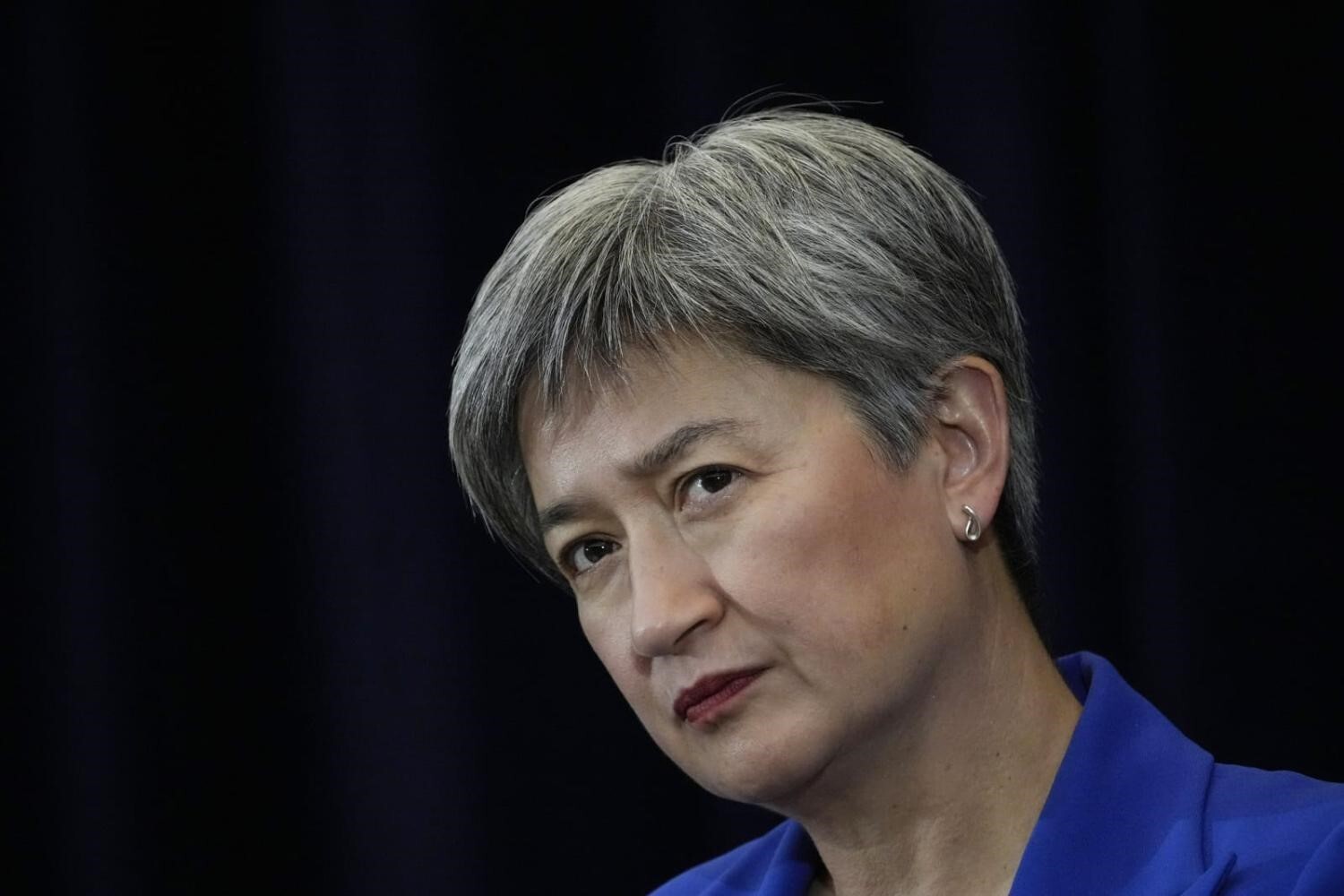
Australia's hopes for US tariff exemptions dim as Foreign Minister Penny Wong calls it a difficult pursuit
From the early-mid month of February 2025, Australia has been actively seeking an exemption from the United States' 25 per cent tariffs on aluminium and steel, claiming the country's contribution to the US domestic market trade surplus as a key justification for securing an exemption. During this process, optimism briefly flickered in the Australian market when US President Donald Trump hinted at a possible reprieve, describing Australia's Prime Minister Anthony Albanese as "a very fine man." The hope was further fuelled following a positive phone call between Albanese and Trump on February 11, where they discussed the Aukus defence pact, critical minerals, and mutual foreign investments. Albanese said after the call, "Our aluminium is a critical input for manufacturing in the United...

Investors call the shots — speculative moves eclipse policy shifts in carbon markets
Policy tweaks have played a major role in the European carbon prices — but in the recent couple of days what seems to be the real driver behind is investor behaviour. As the European Commission tweaks with its Carbon Border Adjustment Mechanism (CBAM), traders and funds are calling the shots, slashing positions in the EU market while doubling down in the UK. Image Source: https://www.worldbank.org/ Investor exodus hits EUAs European carbon allowances (EUAs) fell during the week ending February 28, with December 2025 contracts trading at EURO 72.26 per tonne CO2e (USD 75.19 per tonne CO2e) at 12:45 GMT, down about 4 per cent from the previous week, according to Intercontinental Exchange data. Platts, part of S&P Global Commodity Insights, pegged the December 2025 EUA contract at EURO 72.72...

Government under fire over fresh bout of water supply contamination allegation on Alcoa
The Western Australian government faces mounting pressure to defend its commitment to safeguarding Perth's drinking water following a fresh set of revelations about potential contamination risks linked to Alcoa's mining operations on the city's outskirts. Picture for representational purposes only The US mining giant, long accused of jeopardising water safety, has drawn criticism for failing to adequately restore the Jarrah forest, which it has reportedly cleared at its bauxite mine sites. Over the years, Alcoa's operations have edged close to Serpentine Dam, a critical drinking water source, heightening fears of water quality risks. While there is no evidence that Alcoa's activities have directly impacted Perth's water supply, newly obtained documents are declared to paint a more...

Britain’s path to net zero is furthermore challenging as CCC presents stringent moves
Britain is yet again at a turning point in its climate journey, with the Climate Change Committee (CCC) laying down a bold and urgent roadmap to hit net zero by 2050. The message is clear: ditch fossil fuels, embrace electric vehicles and heat pumps, and rethink diets — all while unlocking new economic opportunities. Ambitious climate targets The CCC’s latest carbon budget doesn’t pull any punches — in its seventh carbon budget, the CCC has outlined the need for Britain to reduce greenhouse gas emissions by 87 per cent compared to 1990 levels by 2040, a crucial step towards meeting its net zero target. This updated goal builds upon Prime Minister Sir Keir Starmer’s pledge at last year’s UN COP29 climate summit, where Britain committed to cutting emissions by 81 per cent by 2035. The...

Four-digit profit from just 10 units of Vedanta’s shares? Discover the mid-term outlook…
There is a projection looming that Vedanta’s share price will jump to a target price of INR 600 (US$6.87) following the group’s demerger plan to be executed by the first quarter of FY2025-26. This estimation will most likely materialise, if not by the end of this year, then within the next two. The projection of INR 600 per unit was initially made by a renowned India-based financial firm , Emkay Global, positioning Vedanta as a favourable investment option for those seeking medium-term returns based on expected balanced growth to be delivered by Vedanta Limited, Vedanta Aluminium, and Vedanta Power. Aligning with this outlook, Money Mint Idea, an IPO and stock market research platform, has also provided a medium-term forecast for Vedanta’s share price, projecting its trajectory up until...

CBAM vs. FTA: India’s balancing act to tackle climate costs and trade deals with EU
India is walking a razor’s edge. On one side, the promise of a Free Trade Agreement (FTA) with the European Union (EU) — a gateway to stronger economic ties. On the other, the looming shadow of the Carbon Border Adjustment Mechanism (CBAM) — the EU’s carbon tariff that threatens to squeeze India’s exports of steel, aluminium, and cement. Image Source: European Council on Foreign Relations While several countries, including China, South Africa, Russia and Brazil, have taken the EU to the World Trade Organisation regarding CBAM, rather commonly known as ‘carbon tax’, India is yet to officially take any step mostly as both the parties are on the path of negotiation for trade tariff exemption. However, India’s Finance Minister, Nirmala Sitharaman, and Commerce and Industry Minister, Piyush...

Century Aluminum in 2024: Steady net sales, increased net income and 5-year high production signal key turning point
Century Aluminum Company, a global primary aluminium producer with operations in the United States and Iceland, has posted about its booming year ended December 31, 2024, with a new 5-year high record production at Sebree, steady net sales, and increased net income amid surging energy costs and raw material prices. Image source: Century Aluminum On February 20, 2025, the company released its financial and operational results attributing all the gains to a nonrecurring benefit from a force majeure settlement, recovery from Hurricane Beryl, improved realised metal prices, and flattering Inflation Reduction Act 45X, which was an Advanced Manufacturing Production Credit to promote US production of critical minerals, including primary aluminium. For the entire year, Century reported its net...

Trump tariffs cause sleepless nights for the food & beverage industry! How will they manage the rising costs?
Donald Trump's 25 per cent tariff on imported aluminium and steel has left many domestic industries worried about price hikes of end products, including the food retail industry, as it is one of the largest consumers of these metals, relying heavily on imports. The local and small companies of soft drinks, beer, and pre-packaged foods are bracing for price rises. Although breweries have yet to receive feedback from can manufacturers on how they expect the tariff to impact aluminium can pricing, they hope for no positive effects. "If everything goes up [to] 25 per cent, that's all the margin for a small business," said Matt Malloy, co-founder of Dorchester Brewing. "It becomes a push, and then it becomes not worth it any longer." Two weeks earlier, a giant like Coca-Cola also warned of...

China market update: Aluminium derivatives pricing trend decoded
Last week’s market has been all about dynamic pricing across the aluminium sector — both for AL as a product and, in turn, for the affected allied industries. The market spots records of resuming downstream production after a prolonged Chinese holiday break. Hence, owing to the growing bullish sentiment in the new-energy auto sector, prices for several key primary commodities (generally termed as primary or raw material) show distinctive trends that market participants should closely monitor. Aluminium: upward momentum with consolidated ranges Aluminium prices have registered a fair increase, with the LME average price rising by 0.46 per cent to USD 2,648 per tonne. In China, the mainstream SHFE price now stands at approximately RMB 20,720 per tonne (USD 2,890 per tonne), marking a 0.56...

A new hero in the AL business — wire rods grasp the global market, India’s notable footprint has not gone unnoticed
Aluminium wire rods may not grab headlines daily, but they are the silent workhorses powering everything from the lights in our homes to the vehicles on the road. These cylindrical rods, celebrated for their high conductivity, strength, and adaptability, are vital to electrical transmission systems, building infrastructure, and manufacturing processes. What makes aluminium wire rods so special? Their excellent conductivity and lightweight properties make them the go-to choice for cable production, overhead power lines, and electrical wiring. Beyond the electrical world, their corrosion resistance and recyclability make them indispensable in the automotive, aerospace, and industrial sectors—helping companies meet their sustainability goals by offering energy-efficient, lightweight...

World primary aluminium production in Jan’25 represents an average of 7-3% rise in major producing regions
The first month of 2025 began with a 2.73 per cent Y-o-Y rise in primary aluminium production but experienced a mild monthly dip, as shown by the International Aluminium Institute data. The annual growth was primarily backed by almost all the major global primary aluminium-producing regions, barring North America and Oceania. However, monthly output was affected by declines of 1,000 tonnes each in Africa and North America. Image source: Freepik According to IAI, the world's primary aluminium production in January 2025 totalled 6.252 million tonnes versus 6.254 million tonnes in December 2024 and 6.086 million tonnes in January 2024. The daily average output was 201,700 tonnes, representing no change from the previous month but a growth of 2.75 per cent Y-o-Y from 196,300 tonnes. Insights...

