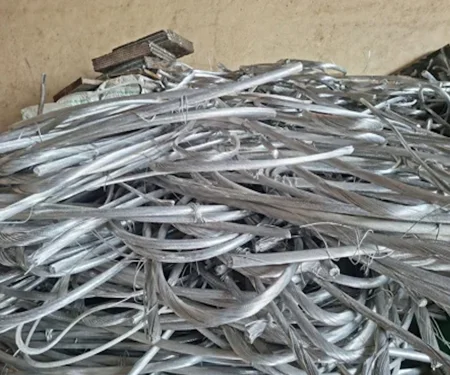
A couple of days after implementing the 25 per cent tariff on all aluminium and steel imports, US President Donald Trump exempted neighbouring nations Canada and Mexico from tariffs, but only for commodities included in the trade agreement of 2019 — the United States-Mexico-Canada Agreement (USMCA). However, the tariff payments made between March 4 and March 6 — when importers had already paid for goods in transit — will not be refunded, according to White House officials.
Image source: https://mr.usembassy.gov/
In a fresh twist, mere hours after threatening to end Canada's exemption, the US has now imposed a staggering 50 per cent tariff just as Canada attempted to negotiate by leveraging energy supply tariffs from them to the US.
Official statements regarding the exemption are 'colourful'. Does that mean 'profane'?
The language used around these tariff decisions has raised eyebrows. Earlier, in a Truth Social post, Trump stated:
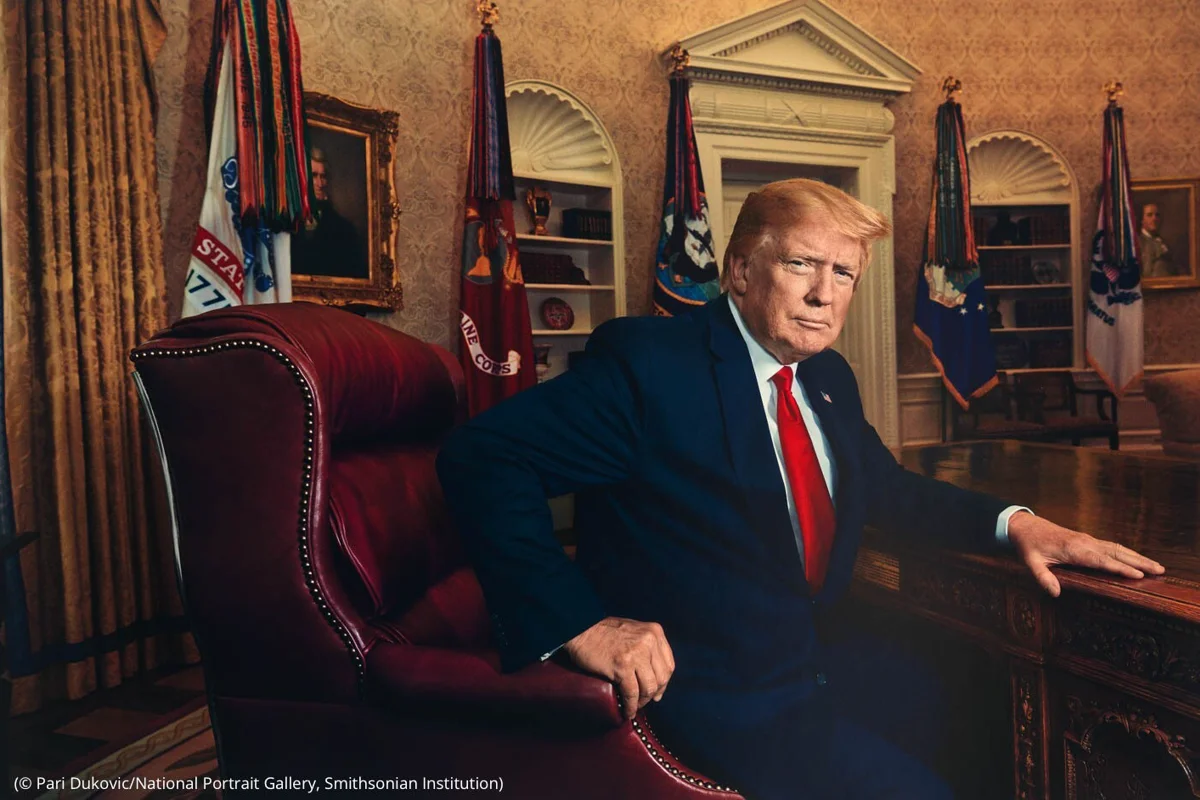
"After speaking with President Claudia Sheinbaum of Mexico, I have agreed that Mexico will not be required to pay tariffs on anything that falls under the USMCA Agreement. This Agreement is until April 2."
He added that this decision was made "out of respect" for Sheinbaum, highlighting the ongoing collaboration between the US and Mexico in tackling undocumented migration and controlling the flow of fentanyl into the US.
In stark contrast, Canadian Prime Minister Justin Trudeau was less optimistic about trade relations. He revealed he had a 'colourful' conversation about tariffs during a phone call with Trump, a discussion reportedly laced with profanities, according to US and Canadian media outlets.
Trudeau acknowledged the likelihood of a trade war persisting despite some targeted relief. "Our goal remains to get these tariffs, all tariffs removed," he asserted.
Sheinbaum, meanwhile, described her call with Trump as "excellent and respectful," reinforcing the shared commitment to combat fentanyl trafficking and gun smuggling.
What role does USMCA play in this?
As with previous disputes, USMCA remains pivotal in determining tariff exclusions and inclusions.
Signed in 2018 and enforced from July 1, 2020, the USMCA replaced the 1994 North American Free Trade Agreement (NAFTA). The agreement allows free trade across North American borders for several commodities, including aluminium — a crucial component for automobile manufacturing.
This time, however, despite exempting Canada and Mexico from steel and aluminium tariffs, the classification of eligible imports remains contentious.
Tariff exempted, but how much of a relief is it, really?
The business community is already feeling the pinch. Gregory Brown, head of BenLee, a trailer manufacturing company, said he had adjusted prices multiple times over the past five weeks due to Trump's policies, which also include an upcoming order expanding steel and aluminium tariffs.
Remi Trombly, owner of Trombly's Tackle Box, highlighted how tariffs will drive up costs for both US-made goods and items shipped through the US into Canada.
As a small business owner, Trombly has long prioritised supporting other Canadian enterprises. However, he noted an emerging trend of companies sidestepping tariffs altogether.
"I had a supplier literally call me 15 minutes ago who is setting up a warehouse in Canada to bring products from Europe, bypassing US tariffs. Hopefully, this will create more Canadian jobs," Trombly said.
Despite such workarounds, price increases appear inevitable. Trombly confirmed he has been in close contact with his suppliers, all of whom are bracing for further economic turbulence.
Share market has taken a stark hit
US stock markets nosedived on Monday as persistent tariff conflicts and fears of a federal government shutdown stoked recession concerns.
The sharp selloff from the previous week intensified, with all three major indexes posting heavy losses. The S&P 500 has now slumped over 8 per cent from its February 19 peak, while the Nasdaq Composite has officially entered correction territory, having fallen more than 10 per cent from its December high.
Economic uncertainty, trade tensions, and looming recession fears have triggered a wave of selloffs, erasing trillions in market value.
Automakers and boat manufacturers retaliate
The on-again, off-again nature of US tariffs on Mexican and Canadian goods — now back on for Canada at a whopping 50 per cent — has left Canadian businesses reeling.
Chris Meyer, a sales consultant for Crate's Lake Country Boats in Orillia, described the situation as an economic "perfect storm."
"We have a weak Canadian dollar. We have costly manufacturing. We have a 10 per cent luxury tax on boats (for US-manufactured boats newer than 2018). We have 13 per cent HST, and now a 50 per cent tariff," Meyer explained.
With the 50 per cent tariff set to take effect from March 12, Meyer predicted catastrophic consequences for the boating industry.
Crate sells American-made boats like regals, cruiser yachts, and pursuit boats ranging from CAD 100,000 to CAD 3 million.
A CAD 500,000 boat already costs CAD 621,500 (with CAD 50,000 in luxury tax and 13 per cent HST) — not including tariffs. The new 50 per cent tariff will apply to both boat components, such as aluminium, and the finished boat itself at the border.
"No new boats from America will ever come up here again as long as these tariffs exist," Meyer lamented.
The automotive sector faces a similarly bleak outlook. According to Automotive News, many US auto parts suppliers may shift production outside the US if tariffs persist.
A survey found that over 80 per cent of American suppliers believe tariffs on Mexico will harm their business, while more than two-thirds expressed similar concerns about Canadian tariffs.
Nearly 25 per cent of suppliers said they would cut or delay investments if tariffs lasted just one month. Alarmingly, almost half said they would slash US jobs if the tariffs remained for six months.
Trade impact has ignited since January. What’s next?
Recognising the mounting pressure, the US Department of Energy (DOE) has unveiled over USD 650 million in grants to support the domestic aluminium sector:
- Century Aluminum will receive up to USD 500 million to build a new primary aluminium smelter to boost production and address energy inefficiencies.
- Constellium has secured USD 75 million to develop a zero-carbon aluminium casting plant, harnessing renewable energy and innovative technology.
- Real Alloy will get USD 67.3 million to construct a zero-waste salt slag recycling facility, promoting a circular economy by reclaiming aluminium from industrial waste.
While these grants signal progress, they don’t resolve the immediate crisis. Building a new smelter takes 2–5 years, and recycling efforts — though energy-efficient — are already operating near capacity in the US. For now, America remains reliant on Canadian aluminium.
The trade landscape tells its own story. Aluminium imports into the US between January 2021 and January 2025 reveal the impact of tariff announcements.
In January 2021, the US imported 380 thousand tonnes of aluminium. The figure climbed to 512 thousand tonnes in 2022, dipped to 468 thousand tonnes in 2023, and fell further to 446 thousand tonnes in 2024, but surged back to 512 thousand tonnes in January 2025 — a clear sign of importers reacting to tariff uncertainty.
The trade storm is far from over yet.












_md.webp)
_md.webp)
_md.webp)