Europe’s aluminium extrusion demand set to grow at 2.42% CAGR through 2035 - Which end-use sectors will drive it?
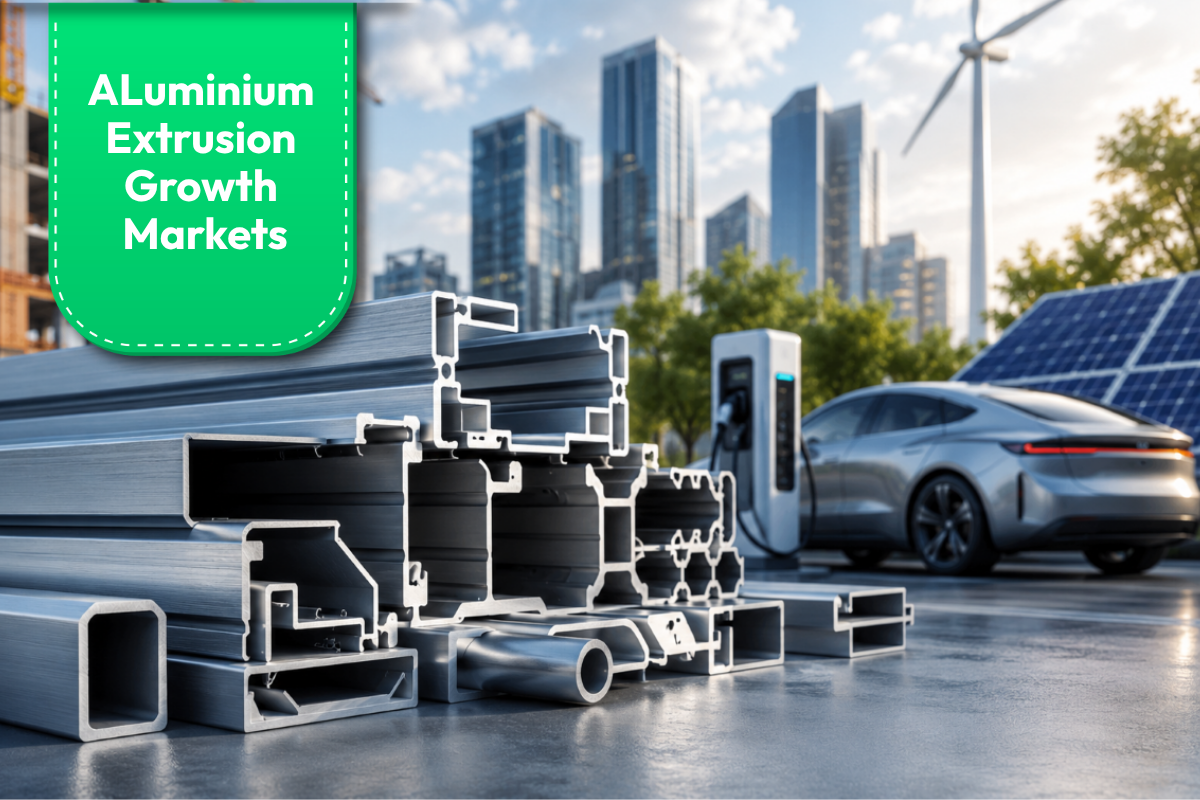
The image used in this article is generated with an AI tool and does not depict any real-time moment
Europe’s aluminium extrusion market is entering a new phase, with demand expected to expand across several key industries. The region accounts for around 10 per cent of global aluminium extrusion usage, making it an important market for producers and suppliers. Electric vehicles, grid investment and construction activity are set to play an important role in shaping demand over the coming years.
Aluminium extrusion usage in Europe is forecast to rise from 3.48 million tonnes in 2025 to 3.56 million tonnes in 2026, an increase of 2.30 per cent. By 2035, usage is projected to increase by 27.01 per cent from 2025 levels. The CAGR for 2025-2035 is expected to be approximately 2.42 per cent. For the exact figures and detailed sector-wise outlook, read our updated aluminium extrusion report - The World of Aluminium Extrusions to 2035 - Demand Forecast | Price Benchmarking | Plant Economics | Strategic Growth Sectors.
Recent figures already point to a change in demand patterns. European extrusion demand improved modestly in H1 2026, with Q2 demand increasing 0.4 per cent year on year following a weaker first quarter. Building and construction and industrial applications provided some support, while automotive extrusion demand continued to benefit from the expansion of battery-electric vehicle production.
Now the question is, from where Europe’s extrusion demand will come as the market moves towards 2035.
Where is the strongest growth coming from?
Transport is emerging as one of the more promising areas for European extruders. Aluminium extrusion usage in the sector is forecast to rise from 970,000 tonnes in 2025 to 1 million tonnes in 2026, an increase of 6.2 per cent. Over 2026-2035, transport extrusion demand is expected to grow at a CAGR of approximately 3.06 per cent.
A major part of this is coming from the automotive industry. As European vehicle production shifts towards electric models, aluminium extrusions are finding applications in lightweight structures, battery systems and thermal-management components. EVs represented around 28 per cent of European vehicle sales in 2025, and this share is expected to rise to 33 per cent in 2026 and more than 90 per cent by 2035.
But can EV growth fully offset weakness in the wider vehicle market? New-car sales are projected to increase only 0.2 per cent in 2026, while LCV sales are expected to decline 0.5 per cent. Competition from Chinese imports and EU tariff measures are also likely to influence production patterns across the region.
To know the global production, demand and consumption forecasts of aluminium extrusions, explore our report "The World of Aluminium Extrusions to 2035 - Demand Forecast | Price Benchmarking | Plant Economics | Strategic Growth Sectors"
Why is the EV transition important for aluminium?
The shift towards electric mobility is not only changing the type of vehicles being produced; it is also changing their material requirements. EU emissions rules call for a 55 per cent reduction in CO2 emissions by 2030, encouraging automakers to adopt lighter vehicle architectures. These can reduce component weight by 20-30 per cent compared with steel and are becoming increasingly relevant for battery enclosures, crash-management structures and busbars.
The scale of the EV opportunity is also growing. European EV production, which exceeded 4 million units in 2024, is projected to reach 8-10 million units by 2030 as per industry sources. Germany is expected to contribute to this expansion, with the VDA forecasting a 30 per cent increase in battery-electric vehicle production to 693,000 units in 2026.

Construction market edges towards improvement
Construction remains Europe’s largest outlet for extruded aluminium. Usage in the sector is expected to decline from 1.52 million tonnes in 2025 to 1.50 million tonnes in 2026, a decrease of 1.3 per cent. By 2035, demand is forecast to rise, representing a CAGR of 1.60 per cent from 2026.
The market is gradually recovering after two years of contraction. Total construction output is projected to grow 2.4 per cent in 2026 and 2.2 per cent in 2027, compared with only 0.3 per cent growth in 2025.
Civil engineering is expected to lead the recovery, with output forecast to increase around 3.3 per cent in 2026. Energy-transition infrastructure, climate-adaptation work and EU-funded projects are expected to support activity. Residential construction, meanwhile, is likely to recover more slowly, with a more meaningful improvement expected from 2027.
Connect with verified aluminium extrusion buyers and suppliers through the AL Biz marketplace.
Could Europe’s ageing buildings become a new opportunity?
The construction story does not end with new buildings. Europe’s ageing building stock is creating a sizeable renovation opportunity, while new commercial developments and the EU Green Deal are supporting demand for aluminium façades, window frames and structural glazing.
Building and construction accounts for more than 40 per cent of European extrusion consumption, while more than 30 per cent of new EU construction projects already specify aluminium extrusions for window and door systems.
This means that even while new residential construction remains under pressure, renovation and greener building requirements can continue to provide a route for aluminium demand.
Electrification is opening another door for extruders
Another demand channel is emerging from the electricity system itself. Aluminium extrusion usage in electrical and electronics applications is forecast to increase from 560,000 tonnes in 2025 to 580,000 tonnes in 2026, representing a 3.6 per cent rise. By 2035, demand is expected to increase at a CAGR of approximately 3.49 per cent from 2026.
The numbers are closely linked to Europe’s infrastructure ambitions. Investment in electricity grids is projected at around USD 1.1 trillion between 2026 and 2035. The EU estimates that approximately EUR 1.2 trillion will be needed by 2040 to integrate around 100 GW of renewable capacity each year and increase electrification of final energy use to 35 per cent by 2030.
For extrusion producers, this could translate into demand for renewable-energy structures, electrical equipment, grid infrastructure and power-distribution applications.
What is happening in industrial applications?
Industrial applications are also expected to add to demand, although on a smaller scale. Usage is forecast to increase from 150,000 tonnes in 2025 to 160,000 tonnes in 2026, a rise of 6.7 per cent. By 2035, demand is projected to reach a CAGR of approximately 1.32 per cent over 2026-2035.
The recovery, however, remains measured. Global industrial and equipment turnover is projected to grow just 2 per cent in real terms in 2026. Germany’s robotics and automation revenues are expected to decline 5 per cent to EUR 14.1 billion, while European construction machinery is forecast to see only a moderate recovery. These conditions are likely to keep near-term extrusion demand from capital-equipment applications relatively restrained.
AL Circle is coming up with a new Magazine "ALuminium’s Frontline: OEM Edition 2026." Feature your brand and opinion in the edition.
Industrial and consumer market
They may not reshape the market on their own, but consumer durables and other applications are adding to the overall demand base.
Consumer-durable extrusion usage is expected to remain at 0.14 million tonnes in both 2025 and 2026, and is estimated to increase 28.6 per cent in 2035.

Other applications are projected to increase from 0.14 million tonnes in 2025 to 0.15 million tonnes in 2026, up 7.1 per cent. By 2035, usage is expected to increase 26.7 per cent from 2026.
Taken together, these trends suggest that Europe’s aluminium extrusion demand through 2035 will be shaped not by a single sector, but by the combined momentum of EVs, construction, electrification and higher-value applications, while producers increasingly compete on efficiency, sustainability and product value.
Note: This is exclusive coverage by AL Circle and may not be reproduced, republished or shared without prior permission.
Bhoruka Extrusions: From Mysore factory to global aluminium-profile markets
Next articlePress Metal’s Q2 profit rises 42% as aluminium market boosts earnings
Grow with
AL Circle