AlCircle News Edited By "Pratyusha Chatterjee"

A writer with 5+ years of experience in the communication industry, Pratyusha Chatterjee has indulged in content from the business, lifestyle, travel industries and more. Apart from news and content, Pratyusha is immensely fond of participating in cultural events and managing them.

Hydro faces aluminium supply disruption with another force majeure declaration as Qatalum terminates agreement
Norsk Hydro has been hit by a second aluminium supply crisis leading to yet another force majeure in just three months after its Qatar joint venture, Qatalum, unexpectedly terminated a long-standing marketing agreement with the Norwegian producer, raising fresh concerns over the company's ability to meet customer commitments. The latest force majeure declaration follows an earlier notice issued in March 2026, when conflict-related disruptions in the Middle East interrupted natural gas supplies to Qatalum, forcing the smelter to initiate a controlled shutdown. Although the plant later secured sufficient gas supplies to maintain operations at around 60 per cent of capacity, Hydro confirmed that the original force majeure remains in effect. Qatalum, one of the Middle East's largest aluminium...

From 99% can recycling to 48% automotive demand: Mapping Germany's secondary aluminium production to consumption economy
Germany's secondary aluminium industry occupies a unique position within the global metals landscape. In a country consuming approximately 2.1 million tonnes of aluminium annually, recycled metal has evolved from a supplementary feedstock into a fundamental pillar of industrial supply. The significance of secondary aluminium extends beyond resource efficiency. Producing aluminium from recycled scrap requires approximately 95 per cent less energy than primary smelting, while reducing associated carbon emissions by nearly 94 per cent. Yet despite these advantages, Germany's recycling ecosystem is going through a period of production volatility, tightening scrap availability and shifting downstream demand patterns. During the opening quarter of 2026, recycled aluminium output stood at...

If India's aluminium volume is booked for the next 5 years, will planned expansions change the scenario?
India's aluminium producers are building smelters, expanding refineries, opening mines and writing investment cheques worth more than INR 640 billion. Yet despite all that activity, the industry faces a rather uncomfortable question: what happens when demand grows faster than capacity can be built? The timing of that question is hard to ignore as domestic aluminium demand is projected to climb from 4.5 million tonnes to 8.3 million tonnes by 2030, while the country is already importing close to 3 million tonnes of aluminium products every year to bridge supply gaps. Industry projections suggest imports could account for nearly 55 per cent of India's requirements in FY2025-26, contributing to a metals trade deficit of roughly USD 3.4 billion, or about INR 300 billion. At first glance, the...

Primary vs recycled AL: Which will dominate as Europe’s automotive sector heads toward yearly 4.2Mt of aluminium demand by 2030?
Europe exports roughly 1 million tonnes of aluminium scrap every year, enough material to potentially reduce the region's primary aluminium imports by nearly 24 per cent if retained and recycled domestically. Yet despite recycled aluminium production already catching up with primary output, the automotive industry continues to include a higher percentage of virgin metal. All at the same time, the region’s automotive industry is entering a period where aluminium procurement strategies are becoming as important as vehicle design itself. Driven by electrification, lightweighting requirements and increasingly stringent sustainability targets, automotive manufacturers are consuming more aluminium than ever before. The transition is, though, far from straightforward. While recycled aluminium...

Europe's 36% BEV surge meets a 42% aluminium consumption share in Q1'26, as China's EV sales slide 21% and the US market shrinks 9%
More than 5.45 million electrified vehicles, including battery electric vehicles (BEVs), plug-in hybrid electric vehicles (PHEVs) and hybrids, were sold across Europe, China and the United States during the first quarter of 2026. While Europe delivered double-digit growth driven by stronger demand in its largest automotive markets, China and the United States recorded declines following changes to incentive programmes. Europe remained the strongest-performing region among the three major markets tracked in the latest EV sales review by PwC. Total EV sales across the European Union, the UK and EFTA countries reached 2.43 million units in Q1 2026, representing a year-on-year increase of 18 per cent. BEV sales rose 26 per cent to 724,000 units, PHEV sales increased 32 per cent to 354,000...

Coal vs renewables: The electricity cost battle influencing aluminium production pattern
For more than a century, aluminium producers have lived by a simple rule of securing the cheapest electricity possible, and everything else becomes manageable. The logic was straightforward. Aluminium smelting is one of the most electricity-intensive industrial processes on earth. Every tonne of primary aluminium requires enormous volumes of power to separate aluminium from alumina through the Hall-Héroult process, a technology that has remained fundamentally unchanged since the late nineteenth century. The industry's fortunes have therefore been determined less by geology and more by what happens on power grids. For decades, coal represented the backbone of global aluminium production. It was abundant, dispatchable and, in many regions, cheap enough to support large-scale smelting...

Hindalco’s FY26: India operations absorb Novelis shock as revenue hits record INR 2.75 trillion
Hindalco Industries closed FY26 with its highest-ever consolidated revenue and EBITDA, but the profit numbers surfaced through the performance report tells a different tale. Consolidated revenue from operations rose 15.28 per cent year-on-year to INR 2.75 trillion, while consolidated EBITDA climbed 7.33 per cent to a record INR 380.97 billion. Yet reported profit after tax fell 16.32 per cent to INR 133.91 billion from INR 160 billion a year ago, after the company absorbed exceptional losses linked largely to the Oswego plant fires at Novelis. The divergence between operational earnings and net profitability defined Hindalco’s FY26. India operations across aluminium upstream, downstream and copper delivered record or near-record performances, while Novelis faced one of its most...

From USD 86 to USD 350: how 6 months reshaped Japan’s aluminium premium to become Asia’s new risk benchmark
Japan’s aluminium premium has climbed from USD 86 per tonne in Q4 2025 to an average USD 351.5 per tonne (ranging between USD 350-353 per tonne) for Q2 2026 shipments, being the steepest quarterly escalation in more than a decade and the highest level since the USD 380-per-tonne settlements recorded in 2015. The recently agreed premium has added more than USD 260 per tonne to Japanese buyers’ physical procurement costs within 6 months, pushing delivered aluminium prices above USD 3,800 per tonne. The scale and speed of the escalation have fundamentally altered the role of the Japan Main Port (MJP) premium, long regarded as Asia’s benchmark for physical aluminium shipments. Historically, the premium largely reflected freight economics, regional demand and availability. In 2026, it has...

What happens to aluminium when supply, energy and carbon collide: A market simultaneously facing scarcity, costs and power risks
The global primary aluminium industry has entered 2026 with a very different market condition from the one that defined the past decade. What was once a story of supply abundance, Chinese expansion and cyclical price swings is now turning into one of scarcity, geopolitical fragmentation and carbon-driven trade barriers. At the same time, emerging supply hubs such as Indonesia and Guinea are grappling with resource protection, infrastructure tailbacks and rising power needs, while supply shocks in Mozambique, Iceland and the downstream sector are constraining the market further. China’s 45 million tonne ceiling has become the market’s hard limit One of the heaviest and most impactful events in the global aluminium market is the enforcement of China’s 45 million tonne primary aluminium...

China’s aluminium overcapacity may become the hidden stabiliser of its renewable power grid
For more than a decade, the phrase “industrial overcapacity” has been shorthand for possible inefficiency in China’s heavy industries — too many smelters, too much idle infrastructure, too much capital trapped in sectors that Beijing has repeatedly tried to rationalise. Aluminium has often sat at the centre of that debate because of its enormous electricity appetite and its strategic importance to manufacturing, transport, defence and energy transition technologies. But a new research is challenging that entire narrative. Instead of treating overcapacity as a burden, the study argues that China’s surplus aluminium-smelting capacity could become a critical flexibility tool for a renewable-heavy electricity system. Excess smelting capacity may function as a seasonal balancing mechanism for...

Here’s why we deduce red mud to be aluminium industry’s next resource frontier
For decades, the aluminium industry has lived with a structural contradiction: for every tonne of alumina produced, it generated up to 1.5 tonnes of highly alkaline waste. That equation has now reached a breaking point. With global alumina output crossing 141 million tonnes in 2023 and 154 million tonnes in 2025, annual bauxite residue generation has already exceeded 175 million tonnes. The cumulative stockpile stands at an estimated 4 billion tonnes, making it one of the largest untapped secondary mineral reserves on the planet. In 2026, that legacy is no longer being managed. It is being mined. Not sustainability alone, but a convergence of economics, regulation, and geopolitics Red mud, long treated as a disposal liability due to its pH of 10-13 and contamination risks, is now being...

Solar subsidies, aluminium shocks, and the 2026 market redone by geopolitical distress
The global energy transition has reached a point where renewable policy and industrial metals are structurally interlocked. With one month into Q2 2026, solar installation subsidies and aluminium supply chains have formed a feedback loop that is actively redoing both markets. Aluminium, long described as ‘congealed electricity,’ sits at the centre of this convergence, with the solar PV sector accounting for around 87 per cent of incremental aluminium demand within renewables. What distinguishes the 2025-2026 phase is not growth, but correction. China’s solar PV subsidy withdrawal, the European Union’s conditional incentives, the US’ tightening domestic rules, and a sudden geopolitical-induced trade disruption in the Middle East have collectively dismantled the assumptions of the previous...
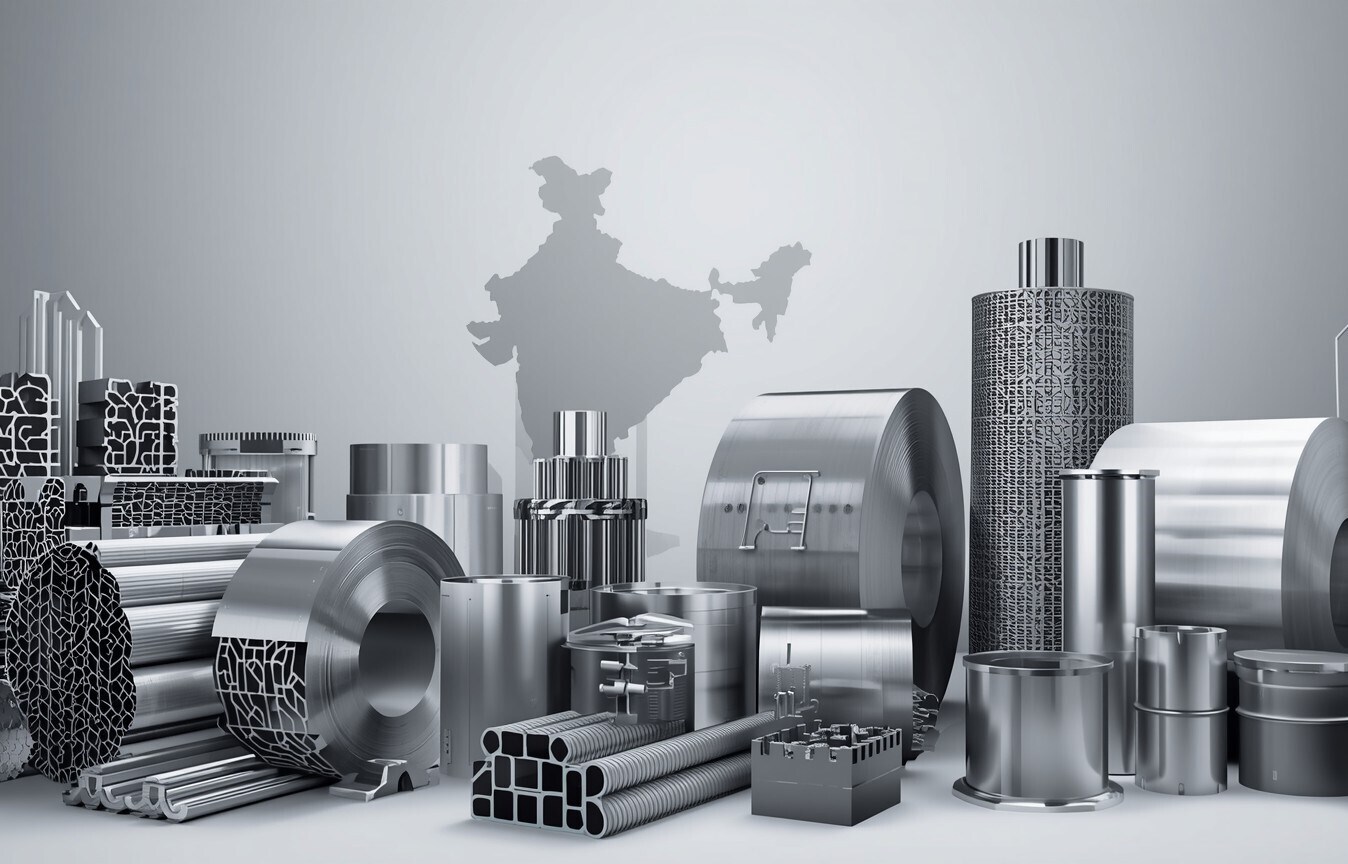
Can India sustain 8.25% aluminium duties when 55% of demand is imported?
India’s aluminium tariff regime, especially now in 2026, has become a regulatory fault line between upstream smelters chasing security, downstream processors absorbing cost pressure, recyclers fighting for cheaper feedstock and the country is trying to balance it all to keep a lid on inflation while building a strategic industrial base. A tariff to protect, but not to simplify At the centre of the debate is India’s differentiated duty structure. Primary aluminium under HS 7601 is charged at 8.25 per cent, scrap under HS 7602 at 2.5 per cent, bars, rods, profiles, plates, sheets and strips at 7.5 per cent, foil at 7.5 per cent-10 per cent, and finished structures and articles at 10 per cent. That means that the duty structure has created a constant friction point, because preferential...

RUSAL’s 2025 profit slump: Future depends on Asia pivot, 2026 war premium, and a fractured aluminium world?
UC RUSAL’s 2025 numbers mirror a year with revenue growth but without any profit growth. The world’s largest aluminium producer outside China lifted revenue 22.6 per cent year-on-year to USD 14.81 billion, helped by a 16.4 per cent rise in sales volumes to 4.49 million tonnes, but the benefit was quickly swallowed by a 32.3 per cent jump in cost of sales to USD 12.254 billion, a sharp rise in finance expenses, and a tougher currency and interest-rate environment. The result was a net loss of USD 455 million, against a profit of USD 803 million in 2024. Revenue rose, but margins broke The most striking feature of RUSAL’s 2025 performance is how quickly operating leverage turned against it. Gross profit fell 9.3 per cent to USD 2.558 billion even as sales expanded, while adjusted EBITDA...

Why the price volatility in the global aluminium UBC scrap market: LME benchmarks and the underlying economic drivers
中文翻译附于新闻末尾,敬请继续阅读。 The global aluminium market is currently transitioning from a century-long reliance on primary smelting to a circular economy model centred on Used Beverage Can (UBC) scrap. This shift is not merely environmental—it is fundamentally economic, driven by the extreme energy intensity of primary production, tightening carbon-linked trade policies, and the financialisation of scrap through the London Metal Exchange (LME). The movement of aluminium UBC scrap prices, once a localised phenomenon, has now evolved into a globally transparent metric shaped by LME benchmarks, regional energy shocks, and the strategic accumulation of low-carbon feedstock by multinational corporations. For the updated global aluminium value-chain 2026 outlook, book our exclusive report “ Global...

Constellium secures multi-year Airbus contract for aluminium alloy extrusions supply
Constellium SE has entered into a multi-year agreement with Airbus for the supply of aluminium alloy extrusions, strengthening its long-standing position in the aerospace supply chain. Under the agreement, Constellium will supply a range of extruded products, including bars and both small and large profiles, manufactured using advanced aluminium alloys. The portfolio includes its proprietary aluminium-lithium solution, Airware®, which is widely used in aerospace applications requiring high strength-to-weight ratios. For the global aluminium value-chain 2026 outlook, book our exclusive report “ Global ALuminium Industry Outlook 2026 " The materials supplied under the contract will be used in structural aircraft components, including fuselage frames and other critical load-bearing parts...

The geography of ‘green’ aluminium: Why location trumps technology
Primary aluminium remains one of the most energy-intensive industrial commodities, consuming 13-15 MWh per tonne and accounting for over 900 TWh of electricity demand globally. When powered by coal, production emits 12–14 tonnes of CO₂ per tonne of aluminium, making electricity sourcing (not smelting technology) the decisive factor in determining carbon intensity. On the production front, geography seems to be dictating emissions far more than incremental efficiency gains in cell design. Smelters powered by hydro or nuclear energy, like those in Norway, Quebec, and Iceland, emit as little as 1-2 tonnes of CO₂ per tonne of aluminium produced. Au contraire, coal-dependent operations across China, India, and Australia routinely exceed 12–16 tonnes. As carbon pricing mechanisms, trade...

Alcoa Corporation announces redemption of full $219M of outstanding 6.1% notes due 2028
Alcoa Corporation has initiated an early debt redemption. The company announced that its wholly owned subsidiary, Alcoa Nederland Holding B.V., has issued a notice to redeem the entire USD 219 million aggregate principal amount of its outstanding 6.125 per cent notes due in 2028. The redemption is scheduled for May 15, 2026. The notes will be redeemed at 100 per cent of the principal amount, along with accrued and unpaid interest up to, but not including, the redemption date. Alcoa confirmed that the transaction will be funded through cash on hand. For the global aluminium value-chain 2026 outlook, book our exclusive report “ Global ALuminium Industry Outlook 2026 " The development comes at a time when Alcoa remains firmly in focus across financial and commodity markets. The company...

