From 99% can recycling to 48% automotive demand: Mapping Germany's secondary aluminium production to consumption economy
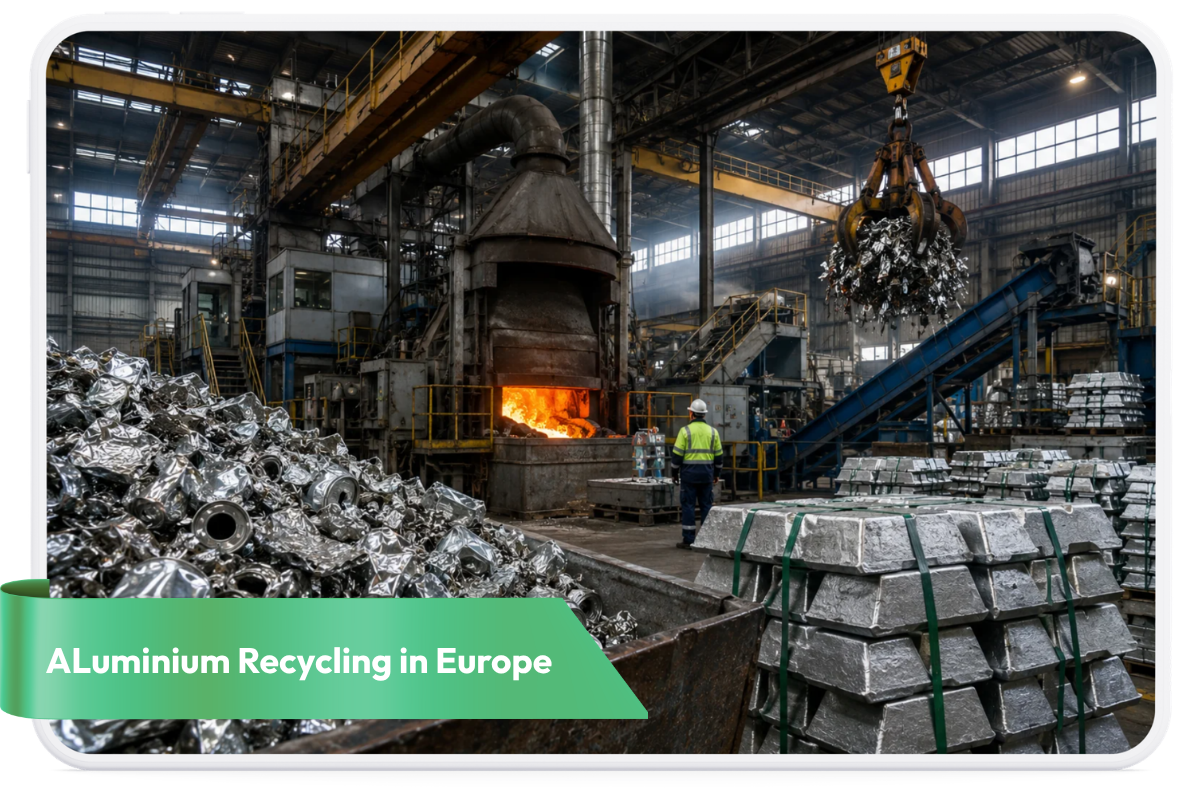
The image(s) used in this article is generated with an AI tool and does not depict any real-time moment
Germany's secondary aluminium industry occupies a unique position within the global metals landscape. In a country consuming approximately 2.1 million tonnes of aluminium annually, recycled metal has evolved from a supplementary feedstock into a fundamental pillar of industrial supply. The significance of secondary aluminium extends beyond resource efficiency. Producing aluminium from recycled scrap requires approximately 95 per cent less energy than primary smelting, while reducing associated carbon emissions by nearly 94 per cent.
Yet despite these advantages, Germany's recycling ecosystem is going through a period of production volatility, tightening scrap availability and shifting downstream demand patterns. During the opening quarter of 2026, recycled aluminium output stood at 684,564 tonnes, while industry surveys indicated that 85 per cent of domestic recyclers were experiencing feedstock shortages. At the same time, European aluminium scrap exports reached 1.2 million tonnes in 2024, intensifying competition for raw material required by Germany's automotive, construction, packaging and engineering sectors.
Secondary aluminium production enters a period of adjustment?
Unlock full access – sign up for FREE.
Key benefits
Schupan Aluminum & Plastic strengthens leadership team with Matt Webster and Kevin Roschek promotions
Next articleSACA, a new coalition, debuts to support growth of recycled aluminium production in the US
Grow with
AL Circle