RUSAL’s 2025 profit slump: Future depends on Asia pivot, 2026 war premium, and a fractured aluminium world?

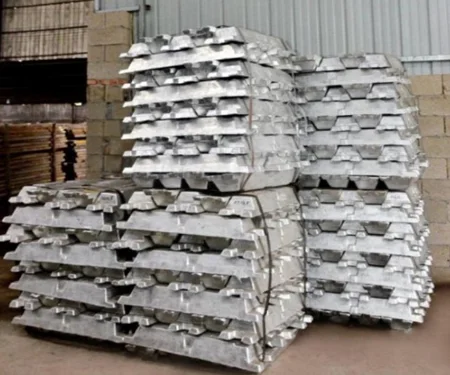
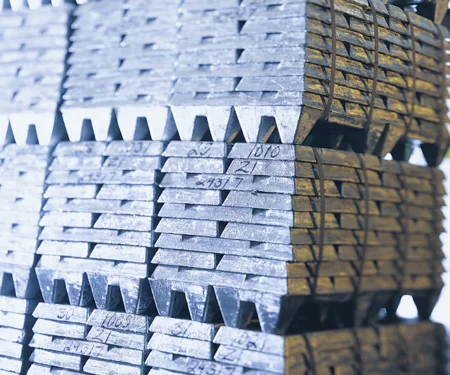
Note: This is a stock image
UC RUSAL’s 2025 numbers mirror a year with revenue growth but without any profit growth. The world’s largest aluminium producer outside China lifted revenue 22.6 per cent year-on-year to USD 14.81 billion, helped by a 16.4 per cent rise in sales volumes to 4.49 million tonnes, but the benefit was quickly swallowed by a 32.3 per cent jump in cost of sales to USD 12.254 billion, a sharp rise in finance expenses, and a tougher currency and interest-rate environment. The result was a net loss of USD 455 million, against a profit of USD 803 million in 2024.
Revenue rose, but margins broke
The most striking feature of RUSAL’s 2025 performance is how quickly operating leverage turned against it. Gross profit fell 9.3 per cent to USD 2.558 billion even as sales expanded, while adjusted EBITDA dropped 29.5 per cent to USD 1.053 billion.
Operating profit shrank to just USD 126 million, down 65.8 per cent, showing how little room remained once input costs, logistics, power and financing were all priced in. Finance expenses more than doubled to USD 1.155 billion, underlining the pressure created by the company’s debt load and higher borrowing costs.
The report points to higher alumina procurement costs after the loss of traditional Australian and Ukrainian supply channels, rising power and transport tariffs inside Russia, and an appreciation in the rouble in the first half of 2025, which lifted the dollar cost of local operations. Personnel costs also climbed from USD 1.091 billion to USD 1.388 billion, reinforcing the message that RUSAL’s cost base is being pushed upward from several directions at once.
For the global aluminium value-chain 2026 outlook, book our exclusive report “Global ALuminium Industry Outlook 2026"
The aluminium business held up, but alumina did not
RUSAL’s segment data show that the pressure was concentrated in the upstream chain rather than evenly spread across the group. The aluminium segment delivered EBITDA of USD 1.159 billion in 2025, only slightly below the prior year, but the alumina segment saw EBITDA collapse to USD 264 million from USD 626 million in 2024.
Alumina cash costs were hit by raw material inflation and weaker energy economics, and that squeeze has forced RUSAL into a very different industrial strategy: secure feedstock upstream, trim expensive capacity, and move metal into the markets that are willing to pay the highest premiums. The company’s 2025 output choices reflect exactly that logic.
Primary aluminium production fell 1.9 per cent to 3.918 million tonnes as RUSAL implemented planned capacity optimisation, while value-added products dropped 13.2 per cent in the first half of the year to 642,000 tonnes.
A debt-heavy balance sheet in a high-rate world
RUSAL ended 2025 with total loans and borrowings of USD 9.537 billion. The mix has shifted increasingly toward fixed-rate debt, which makes sense in an environment where rates remain volatile and refinancing risk matters as much as the nominal coupon.
Yet the cost of carrying that debt remains heavy. Cash and cash equivalents stood at USD 1.548 billion, with a large share held in Chinese yuan and Russian roubles, reflecting how closely the company’s liquidity position now tracks its changing trade geography.
The auditors did not flag a breach of covenant, but they did flag risk. Their unmodified opinion came with a “material uncertainty related to going concern,” citing geopolitical tensions, sanctions, and the possibility that sales channels, raw material access and supply-chain efficiency could all be disrupted.
Don't miss out- Buyers are looking for your products on our B2B platform
The strategic pivot to Asia is now the core story
If 2024 was the year RUSAL started to move away from its old trade map, 2025 was the year that shift became visible in the numbers. Asia accounted for 52 per cent of group revenue in 2025, up from 43 per cent a year earlier. China has become the single most important destination, with Russia supplying USD 5.71 billion worth of raw aluminium to China in 2025, up 61.3 per cent from 2024. By March 2026, Russia accounted for 82.3 per cent of China’s total primary aluminium imports.
That pivot is not just about finding a buyer of last resort. It is about repositioning volumes where premiums are still attractive and where RUSAL can convert geopolitical disruption into commercial leverage.
RUSAL’s report notes that the company is also weighing diversion of shipments from China to Japan and South Korea, where Japanese premiums for the April-June quarter reportedly hit USD 350 a tonne, an eleven-year high. In other words, RUSAL is increasingly behaving less like a single-market supplier and more like a premium arbitrage trader with smelters attached.
Upstream control is becoming the company’s hedge against sanctions
The company’s answer to disrupted supply chains has been to buy itself more security. After losing access to Australian and Ukrainian alumina routes, RUSAL took a 30 per cent stake in China’s Hebei Wenfeng New Materials in 2024, securing access to 1.4 million tonnes of alumina a year. In July 2025, it went further in India, buying a 26 per cent stake in Pioneer Aluminium Industries, with the intention of lifting that to 50 per cent in stages and securing pro rata access to alumina from a 1.5 million-tonne refinery in Andhra Pradesh.
This is a telling shift. RUSAL is no longer relying only on spot-market procurement and internal Russian production economics. It is building an equity-backed supply chain across Asia, where costs are lower, trade routes are more flexible and political exposure may be less concentrated than in the West.
The bauxite output in Guinea rose 16.2 per cent to 18.453 million tonnes in 2025, aided by the Dian-Dian expansion project, reinforcing the company’s effort to secure feedstock across multiple jurisdictions.
2026 has begun with a shock that could improve pricing
RUSAL’s 2026 outlook is shaped by a far more dramatic macro event: the Middle East disruption that removed roughly 8 per cent of global aluminium output from the market.
Force majeure declarations at major Gulf producers have taken more than 3 million tonnes of annual capacity out of the balance, driving LME prices to four-year highs and tightening an already lean inventory picture. Registered LME stocks were down to 418,675 tonnes on 27 March 2026, the lowest since July 2025.
That matters for RUSAL because the company enters this price spike with a materially altered sales footprint and a lighter cost structure than the market may assume. Analysts cited to expect ‘fairly strong’ first-half 2026 results, with RUSAL positioned to benefit from higher prices and supply gaps left by Gulf producers. Even if the company is still facing sanctions and logistical friction, the market shock has created a pricing backdrop that is unusually supportive for a producer with flexible export channels.
Explore- Most accurate data to drive business decisions with 50+ reports across the value chain
Europe is narrowing: carbon policy is opening a new front
RUSAL’s exposure to Europe has been shrinking fast. Europe’s share of revenue fell from 21 per cent in 2024 to 16.4 per cent in 2025, and the report expects that trend to accelerate as EU sanctions tighten and legacy quotas shrink. The LME has already clarified restrictions around Russian aluminium in EU-based warehouses, while the final import ban is due by 31 December 2026.
At the same time, carbon policy is becoming a competitive variable in its own right. The report highlights CBAM as a new tariff on carbon, with carbon certificate costs in early 2026 priced at EUR 75.36 per tonne of aluminium and possible downstream expansion to extrusion products by January 2028.
For RUSAL, the key advantage is its hydropower base in Siberia, and its low-carbon ALLOW brand, whose footprint is well below the industry average. That gives the company an important edge in a world where compliance costs are being baked directly into metal pricing.

Century Aluminum restarts Grundartangi potline early, targets near full output by July
Next articleAluminium billet inventory successfully drops below 280Kt, destocking logic persists but demand recovery awaits verification
Grow with
AL Circle