AL Circle Analysis: China’s 64% output, Asia’s 8.47% CAGR mark aluminium extrusion’s growth race
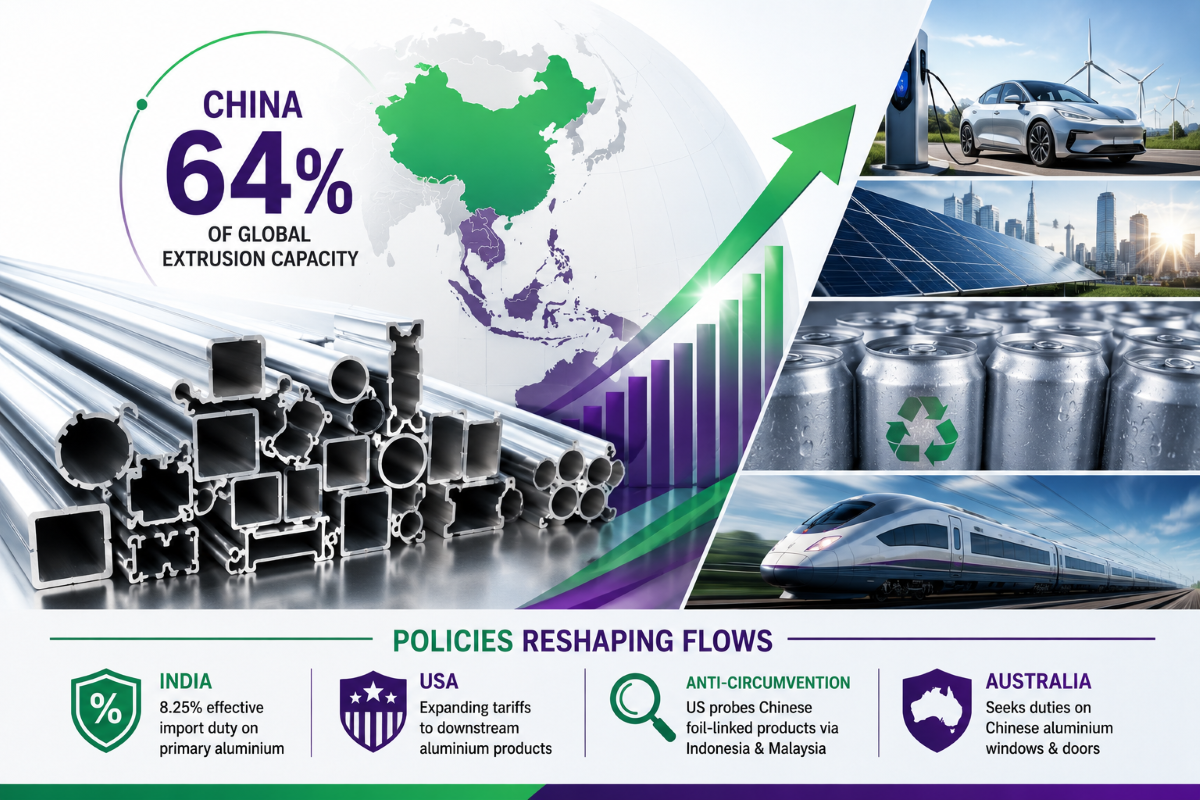
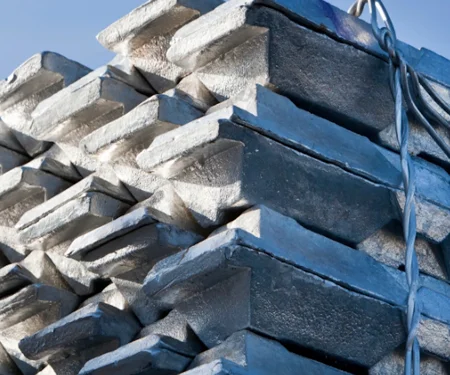
The image used in this article is generated with an AI tool and does not depict any real-time moment
The global aluminium downstream market is being reshaped by three simultaneous forces: rapid extrusion growth in Asia, increasingly defensive trade policies, and rising demand from automotive, renewable energy, packaging and advanced manufacturing. China remains the dominant extrusion powerhouse, but India and Southeast Asia are building their own capacity and demand centres.
At the same time, Chinese downstream exports are facing greater scrutiny in Australia and the US, while new applications such as giga-casting and recyclable aluminium packaging are opening fresh demand pools.
For traders and investors, the story is increasingly about where aluminium is processed, where it is consumed and how trade barriers are redirecting those flows.
Unlock in-depth insights into the extrusion segment of the global aluminium industry with The World of Aluminium Extrusions – Industry Forecast to 2032
Asia’s aluminium extrusion map is being redrawn
China remains the undisputed centre of the global aluminium extrusion industry, accounting for around 64 per cent of global extrusion capacity and about 66 per cent of global consumption. Its extrusion demand is also shifting beyond traditional construction towards EVs, solar PV, energy storage, electrical systems and thermal management. India, meanwhile, is expected to see extrusion demand rise from 795,000 tonnes in 2025 to 858,000 tonnes in 2026, although low-capacity utilisation remains a structural challenge.
Asian exports of aluminium bars, rods and profiles, China continued to dominate the trend, but its 2025 exports fell 18.28 per cent to 890,733 tonnes. Malaysia, by contrast, recorded growth, while Vietnam has strengthened its position in the regional trade network. China’s export trajectory has also been influenced by the cancellation of tax rebates and changing global trade economics. Meanwhile, the UAE, India and Thailand remain major Asian buyers.
China’s aluminium extrusion exports fell from 1.27 million tonnes in 2024 to 1.02 million tonnes in 2025, a decline of about 19.7 per cent. The contraction reflected weaker demand in traditional overseas markets, tighter trade measures and a changing export landscape. At the same time, China’s extrusion industry increasingly shifted towards Southeast Asia and other emerging markets, while industrial and higher-value extrusion applications offered some support.
Southeast Asia is attracting a new wave of extrusion investments across Vietnam, Malaysia and Indonesia. The region’s extruded aluminium profile market is projected to grow from around USD 4.54 billion in 2024 to USD 6.86 billion by 2032, representing an 8.47 per cent CAGR. New projects include Kam Kiu’s Vietnam plant and PA Resources’ automated Malaysian facility, reflecting growing demand from automotive, solar and industrial applications.

Key takeaways: China’s extrusion industry remains the benchmark, accounting for about 64 per cent of global extrusion capacity and roughly 66 per cent of global consumption, while India’s demand is projected to reach 858,000 tonnes in 2026, up about 7.9 per cent.
At the same time, China’s extrusion exports showed a sharp H1 swing, with monthly shipments moving from 81,000 tonnes in January to 48,000 tonnes in March and back to 87,000 tonnes in May.
Southeast Asia is emerging as the next growth hub, with its extruded-profile market projected to expand at an 8.47 per cent CAGR to USD 6.86 billion by 2032.
Whether Southeast Asia’s capacity build-out converts into sustained demand and whether China’s export reach continues shifting towards emerging markets will be the main lookout.
Connect with verified aluminium extrusion buyers and suppliers through the AL Biz marketplace.
End-use diversification is creating new pockets of aluminium demand
Aluminium cans accounted for 29.3 per cent of beverage packaging placed on Romania’s Deposit Return System (DRS) in Q2 2026, up from 21.6 per cent in Q1 2024. The rise reflects stronger canned-beverage demand, consumer preference for recyclable packaging and increasing participation in recycling. Aluminium’s share of returned packaging also climbed to 28.8 per cent, while the recycling rate for aluminium cans reached 75 per cent in 2025.
Aluminium cans are gaining favour among beverage brands and consumers as companies respond to changing preferences, sustainability goals and packaging economics. BofA sees the format benefiting from its recyclability, lightweight profile and strong consumer appeal. The shift adds another layer of demand for aluminium beyond construction and automotive applications, reinforcing packaging as an increasingly important downstream market.

Key takeaways: Romania’s aluminium-can share of DRS packaging reached 29.3 per cent in Q2 2026, up from 21.6 per cent in Q1 2024, highlighting the steady penetration of recyclable aluminium packaging.
Main lookouts would therefore be automotive lightweighting, EVs, casting, renewable-energy equipment and recyclable packaging, which could increasingly determine where incremental aluminium demand, and downstream investment, lands.
For producers and investors, rising can penetration could support demand for can sheet and recycled aluminium.
AL Circle is coming up with a new Magazine "ALuminium’s Frontline: OEM Edition 2026" Feature your brand and opinion in the edition.
Trade barriers reshape downstream and end-use aluminium flows
India’s downstream aluminium industry is facing a policy dilemma: manufacturers pay an effective 8.25 per cent import duty on primary aluminium, while some finished aluminium products enter at lower or zero duty under trade agreements. Since domestic aluminium pricing largely follows import parity, higher international prices are passed through to downstream producers. MSMEs are particularly exposed because they operate with thin margins while also facing higher energy and raw-material costs.
An earthquake-related production halt at Japanese automakers, adds another layer of uncertainty to aluminium demand in the country. Japan already relies heavily on imported aluminium, with the Middle East accounting for nearly 30 per cent of its supply. Any disruption to vehicle production could temporarily weaken automotive aluminium consumption, while supply constraints could simultaneously complicate procurement.
The US aluminium tariff regime is entering a new phase as Section 232 protection increasingly covers downstream, semi-finished and finished aluminium products. Downstream imports reached 579,001 tonnes, up 15.45 per cent from 2016. With the US country premium reaching USD 2,529 per tonne in May 2026, downstream producers continue to face elevated input costs. CPA argues that tariffs on primary metal raise the US country premium, increasing costs for downstream manufacturers, while imported finished products can remain comparatively cheaper.
The US Department of Commerce has expanded its anti-circumvention investigations to aluminium containers, pans, trays and lids made in Indonesia and Malaysia using Chinese-origin foil. The move follows earlier investigations involving Thailand and Vietnam and comes after high anti-dumping duties were imposed on Chinese disposable aluminium containers.
Australia’s aluminium window and glazing industry is seeking temporary duties on Chinese aluminium windows and doors while an anti-dumping investigation continues. Imports have increased another 30 per cent since the investigation began, following growth of more than two-thirds over the three years to November 2025. The case highlights the growing pressure on domestic downstream manufacturers from imported value-added aluminium products.

Key takeaways: India’s 8.25 per cent effective import duty on primary aluminium is raising raw-material costs for downstream MSMEs, while the US is moving towards broader downstream tariff protection and has expanded anti-circumvention scrutiny of Chinese foil-linked aluminium containers routed through Indonesia and Malaysia.
Australia, meanwhile, is seeking temporary duties as Chinese aluminium window and door imports have risen another 30 per cent during the ongoing anti-dumping investigation.
Lookout for next competitive edge would be essential, which may come less from metal availability and more from where products are manufactured, processed and traded without triggering trade remedies.

STG buys large aluminium stockpile from Radiant World as trader seeks cash
Next articleRoyal Bank of Canada raises Kaiser Aluminum stake 98.5%: Earnings hit $5.53 per share
Grow with
AL Circle