US aluminium tariffs face a new test: Can downstream protection save domestic supply chain?
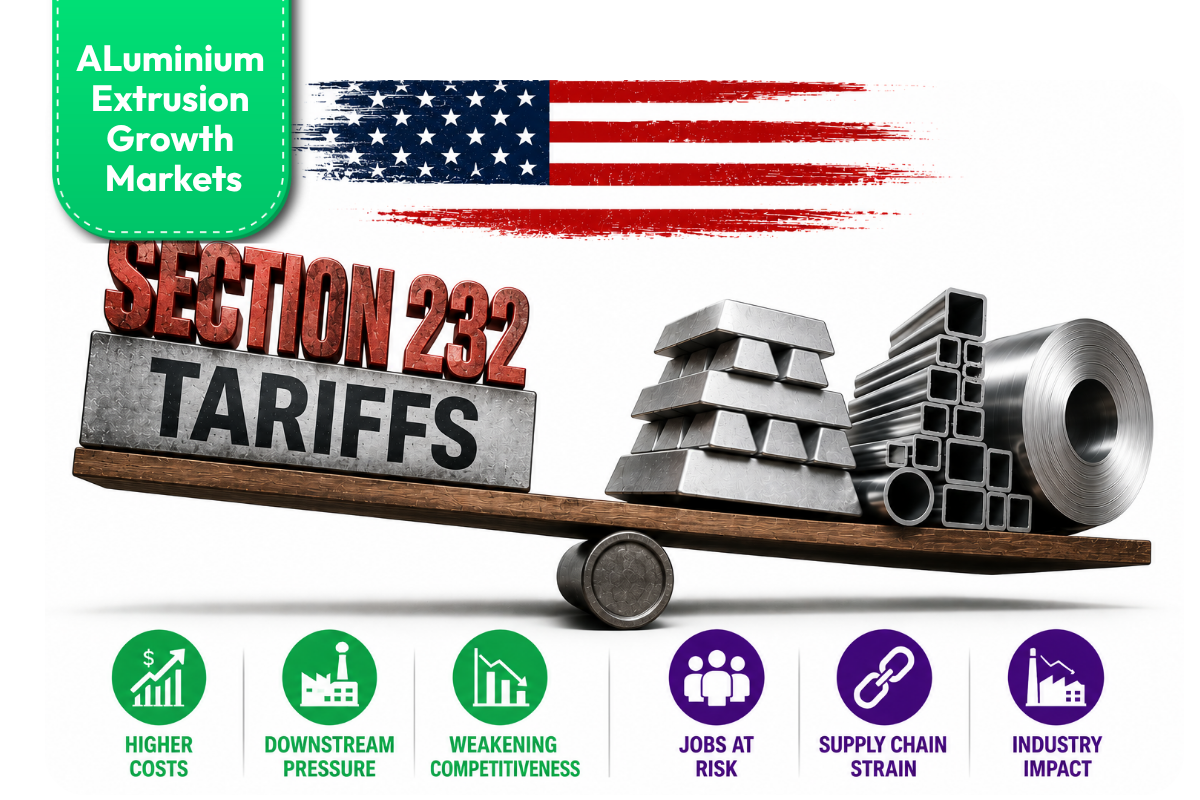
The image used in this article is generated with an AI tool and does not depict any real-time moment
As the US Section 232 aluminium tariff framework issued by Donald Trump absorbs the import of aluminium downstream, semi-finished products and finished goods, it is expected to remove the original loopholes leading in the tariff wall.
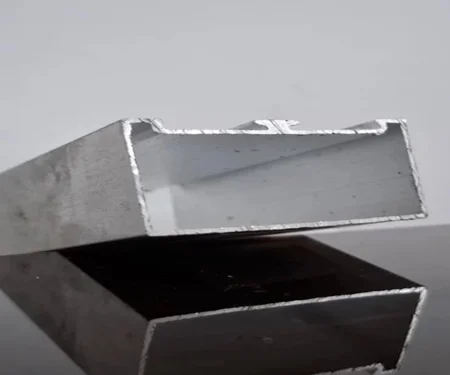
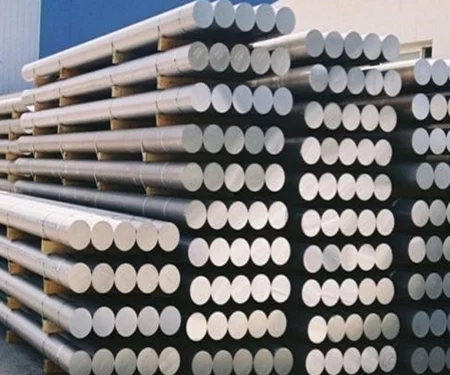
The point is straightforward: protecting primary metal alone does not necessarily protect the manufacturers that convert it into extrusions, rolled products, tubes and other value-added goods. A tariff wall around downstream products is therefore being presented as a way to prevent imported finished goods from gaining a cost advantage over US manufacturers that already face elevated domestic aluminium costs.
The Coalition for a Prosperous America (CPA) opines that the imbalance between declining primary aluminium imports and rising downstream aluminium sourcing needs to be mitigated with a similar tariff wall for aluminium downstream products in order to build a resilient domestic aluminium supply chain.
“Aluminium tariffs don’t stop at the smelter gate. Because the United States imports more than 80 percent of its primary aluminium, a tariff on primary metal flows straight into the US country premium, and every extruder and fabricator in the country pays it,” said Andrew Rechenberg, CPA Senior Economist.
However, the question remains whether this tariff wall would hold strong or sustain cracks as witnessed in the case of the primary aluminium import tariffs.
To know the aluminium casting demand forecast in the transportation sector, explore the “Global Aluminium Casting Market 2026-2032: Plant Economics, Alloy Segmentation, Pricing Intelligence, Supply Chain Analysis & Strategic Recommendations”
Section 232 tariffs: Why they were introduced
The Section 232 tariffs were imposed in March 2018 after the US government concluded that excessive dependence on imported aluminium posed a national security risk. The objective extended beyond restricting imports; policymakers aimed to revive idle smelting capacity, encourage fresh investment, create jobs, and rebuild a resilient domestic aluminium supply chain capable of serving critical sectors such as defence, transportation, energy and infrastructure.
The policy was strengthened further in 2025 with the introduction of a universal 50 per cent tariff on aluminium imports from most countries, increasing the pressure on overseas suppliers while attempting to provide additional support for domestic producers.
Decades of decline: How the US lost its aluminium industry
However, the challenges facing the US aluminium industry began long before Section 232.
The number of US aluminium smelters has fallen from 33 in 1980 to only four operating primary aluminium smelters, leaving the country with only a fraction of its historical production capacity.
Annual primary aluminium production, which stood around 1.59 million tonnes in 2015, has drastically dropped in a decade by 58.49 per cent to 660,000 tonnes in 2025, while no new primary smelter has been built in the country for 45 years.
Electricity accounts for as much as 40 per cent of aluminium production costs. A new US smelter would require a long-term power contract at no more than USD 40/MWh to remain viable, compared with an average of USD 73.42/MWh in four states hosting idle smelting capacity.
The decline transformed the structure of the US aluminium market. Rather than producing sufficient metal domestically, manufacturers started relying on imported primary aluminium to meet growing demand from the automotive, aerospace, packaging, construction and electrical sectors.
Connect with verified aluminium extrusion buyers and suppliers through the AL Biz marketplace.
Import dependence continued to rise
Over the years, imports steadily increased as domestic production weakened, with foreign suppliers filling the widening gap between US production and consumption.
From 2016 to 2025, the import volume of aluminium downstream products including bars, rods and profiles, pipes and tubes, tube or pipe fittings, and wire, jumped from 501,516 tonnes to 579,001 tonnes, indicating a 15.45 per cent surge across the decade.
The import volume reached its peak in 2022 at 679,628 tonnes, representing a 35.52 per cent surge compared to the 2016 import levels.
This growing dependence on external sources was precisely what policymakers sought to reverse and thus, the Section 232 tariffs were enforced.
Has Section 232 worked?
The answer is mixed.
Section 232 has succeeded in reducing aluminium imports, especially since the tariff expansion in 2025. Import volumes have fallen noticeably compared with previous years.
Primary aluminium imports have slipped 16.53 per cent year-on-year from 3.63 million tonnes in 2024 to 3.03 million tonnes in 2025. The drop is steeper than the 2018 levels when the tariffs were first introduced which drove a Y-o-Y decline in aluminium imports from 4.88 million tonnes in 2017 to 4.18 million tonnes in 2018, contracting 14.34 per cent.
However, domestic primary aluminium production has not increased at a comparable pace.
While tariffs discouraged imports, they have not yet generated sufficient new smelting capacity to replace the lost foreign supply. Smelting capacity has remained unchanged at 1.31 million tonnes in 2025, similar to that reported in 2024. The figures point towards a domestic infrastructure that is not strong enough to bridge the demand-supply gap.
High capital requirements, lengthy permitting procedures and, above all, access to reliable low-cost electricity continue to constrain new capacity.
Aluminium consumption has remained relatively resilient across key manufacturing sectors, while domestic production has stayed broadly flat. Consequently, domestic output has not increased to match the reduction in imports.
Therefore, Rechenberg noted, “If we raise tariffs on primary metal but leave downstream products exposed in the upcoming USMCA review, we protect a handful of smelters while exposing the workers who actually turn that metal into the products America builds with.”
The downstream industry bears the greatest burden
This tightening supply environment has had the greatest impact on downstream manufacturers.
Extruders, rolling mills, foundries, can sheet producers, automotive suppliers and other fabricators require substantial volumes of primary aluminium feedstock. With domestic production constrained and imported material becoming considerably more expensive, these companies face rising raw material costs without corresponding increases in domestic availability.
Many downstream producers therefore continue to depend on imports despite higher tariffs, leaving them caught between limited domestic supply and increasingly expensive foreign metal.
USMCA exemptions could widen the gap
The ongoing USMCA review further aggravates the concern.
The landed cost of an extruded aluminium product for a US producer is around USD 3.88 per lb, while it is USD 3.59 per lb for a Mexican producer under the full 50 per cent Section 232 tariff. If Mexico received an exemption, the estimated landed cost would fall to USD 2.39 per lb, thereby creating a roughly 38 per cent cost advantage over the US producer.
The concern is particularly relevant because supplier changes in downstream industries are not immediate. Buyers can take 12-24 months to complete certifications, OEM approvals and technical qualification before switching suppliers. Prolonged cost disparities could therefore encourage a gradual shift towards lower-cost foreign sources.
AL Circle is coming up with a new Magazine "ALuminium’s Frontline: OEM Edition 2026" Feature your brand and opinion in the edition.
Midwest premium amplifies the tariff burden
The US country premium has become a major component of aluminium’s all-in transaction cost, accounting for more than 40 per cent of the US price.
Aluminium delivered to US buyers is generally priced against the LME benchmark plus a regional premium based on factors like freight, storage, insurance, financing, local supply conditions and tariffs.
As Section 232 tariffs increased, the premium climbed sharply. Aluminium tariff raised to 50 per cent in June 2025 saw the US country-premium jumping 77 per cent in seven weeks, reaching 88.10 cents per lb, or USD 1,942 per tonne, in November 2025.
By early May 2026, it reached approximately USD 2,529 per tonne and peaked around USD 2,620 per tonne in May. It remained near USD 2,374 per tonne in mid-July.
Until meaningful new smelting capacity enters production, the US downstream manufacturers are likely to continue operating under constrained supply, inflated Midwest premiums and persistent dependence on imported metal.
The Emirates Global Aluminium (EGA)-proposed aluminium smelter in Oklahoma faces a 60-day moratorium on construction and therefore uncertainty in the date for commissioning.
The next phase of Section 232’s success will therefore be measured not by lower import volumes alone, but by whether the US can translate trade protection into sustainable domestic production growth.
UK-based Eqonic confirms aluminium battery technology: envisions lower production costs
Next articleKaiser Aluminum delivers 52.7% revenue growth despite mixed investor sentiment
Grow with
AL Circle