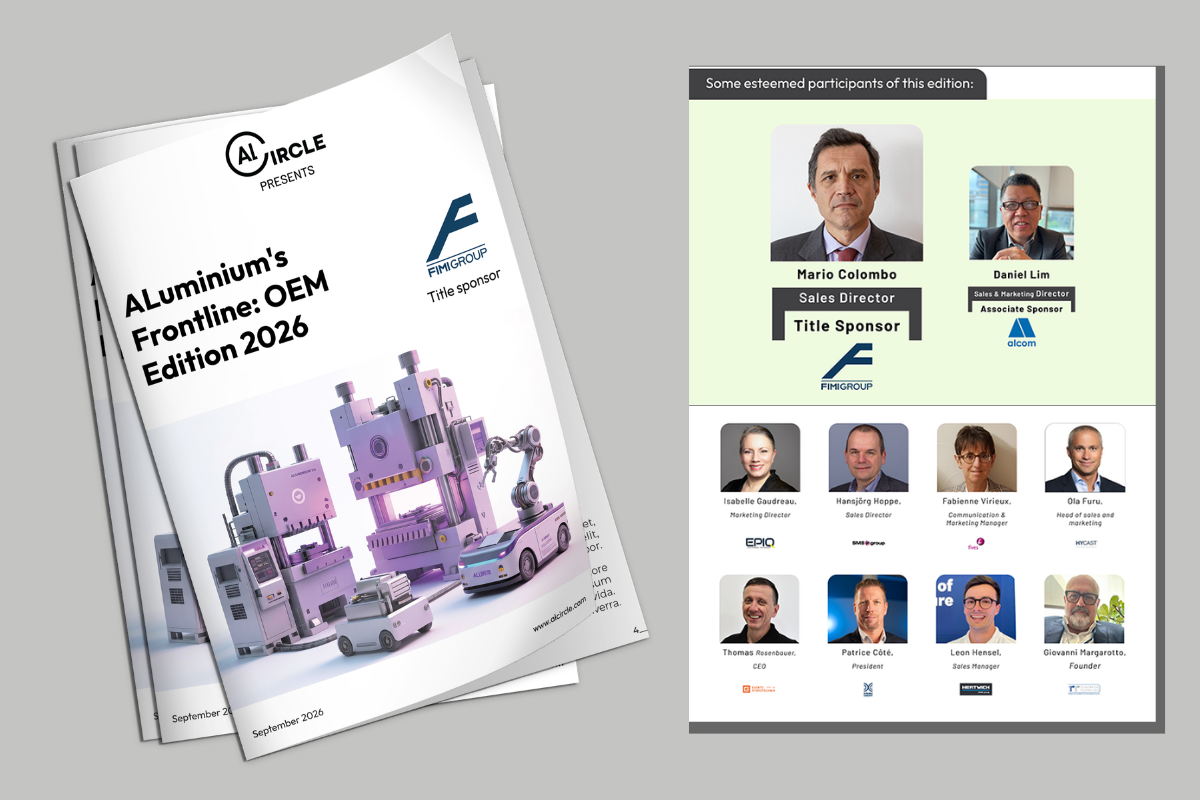
Aluminium’s Frontline: OEM Edition 2026 launched! Inside the technologies powering aluminium from mine to recycling
Much is said about aluminium’s expanding role in modern mobility, aerospace, construction, packaging, renewable energy and countless other applications. Far less is said about the technology and machinery that make this evolution possible - and the Original Equipment Manufacturers (OEMs) behind them.
Yet, OEMs have long been among the forces shaping the global aluminium industry.
There was a time when primary metal producers used to operate as Original Equipment Manufacturers (OEMs) themselves. Owing to the high price attached to the metal, primary producers would invent downstream products, tools, and manufacturing processes instead of selling raw ingots. Much has evolved since then. Today, an extensive ecosystem of Tier-1 and Tier-2 OEMs supports every stage of aluminium production - from bauxite mining and alumina refining to smelting, casthouse, fabricating and recycling.
Literally, from mining to aluminium recycling, OEM is indeed aluminium’s frontline as well described in our latest magazine titled “Aluminium’s Frontline: OEM Edition 2026.”
At the upstream end of the value chain, OEMs manufacture haul trucks, excavators, crushing systems, conveyors and material-handling technologies that keep bauxite mines operating. Moving into alumina refining, equipment manufacturers provide digestion systems, filtration and separation technologies, calcination equipment and other critical process solutions.
The technological footprint becomes even broader in primary aluminium production. Pot technology, current-control systems, anode handling, gas treatment, material handling and automation all depend heavily on specialised engineering.
To know the global production, demand and consumption forecasts of aluminium extrusions, explore our report "The World of Aluminium Extrusions to 2035"
Further downstream, OEM technologies underpin melting and holding furnaces, casting machines, rolling mills, extrusion presses, heat-treatment systems, finishing lines and increasingly sophisticated plant automation.
And the cycle does not stop once an aluminium product reaches the end of its first life.
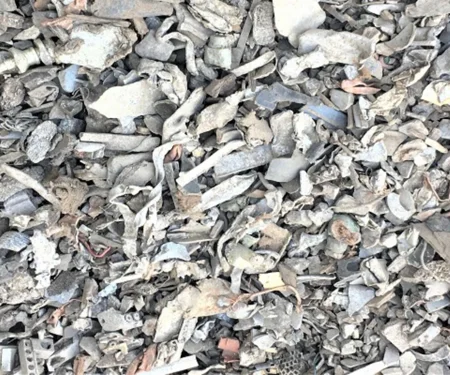
As circularity becomes central to the industry's future, OEMs are developing advanced scrap sorting systems, shredding and decoating technologies, dross recovery solutions, remelting furnaces and metal treatment equipment capable of bringing greater volumes of secondary aluminium back into productive use.
This makes OEMs much more than suppliers of machinery. Their technologies increasingly influence how efficiently aluminium can be produced, how consistently its quality can be maintained and how effectively material and energy losses can be reduced.
Since OEMs are often the most underexplored part of the aluminium ecosystem, AL Circle brings it to the forefront through the much-awaited annual edition that covers heart-to-heart conversations with industry stalwarts like Mario Colombia from FIMI Group, Daniel Lin from Alcom, Emilio Braghi from Novelis, Florin Verboncu from ALRO, Oliver Moos from Cetag, Giovanni Magarotto from T.T. Tomorrow and many more.
One of the recurring themes emerged from these conversations was the transformation of aluminium plants from legacy machinery towards interconnected, automated and data-driven operations. Speaking about the transition from older machinery systems to modern automation, Mario Colombia highlighted interoperability as one of the significant technical challenges confronting plant revamping projects. At the same time, he stressed that the challenge can be managed when addressed from the beginning.
Giovanni Magarotto from T.T. Tomorrow offered another perspective on automation - its ability to bring consistency and repeatability to industrial processes. “Automated movements, controlled tool positioning and programmable operating sequences allow charging, skimming and cleaning tasks to be carried out with a high degree of accuracy and repeatability,” said Mr Magarotto.
Aluminium’s Frontline: OEM Edition 2026 covers many such industry insights through interviews and authored articles. Explore them from our freshly launched digital edition. And for those who prefer the experience of a physical copy, it will be available at ALUMINIUM 2026 in Düsseldorf, Germany, from 6–8 October 2026.
Also, meet our team at Hall 6 | Booth 6M77 and join us for conversations around the technologies, people and ideas shaping the next chapter of the global aluminium value chain.
Can Art expands US aluminum footprint with BRT Extrusions acquisition
Next articleCIE Automotive brings aluminium casting subsidiary into parent after NCLT approval
Grow with
AL Circle