AL Circle Analysis: From 13% costlier cans to 317 GW solar, aluminium trade enters new territory
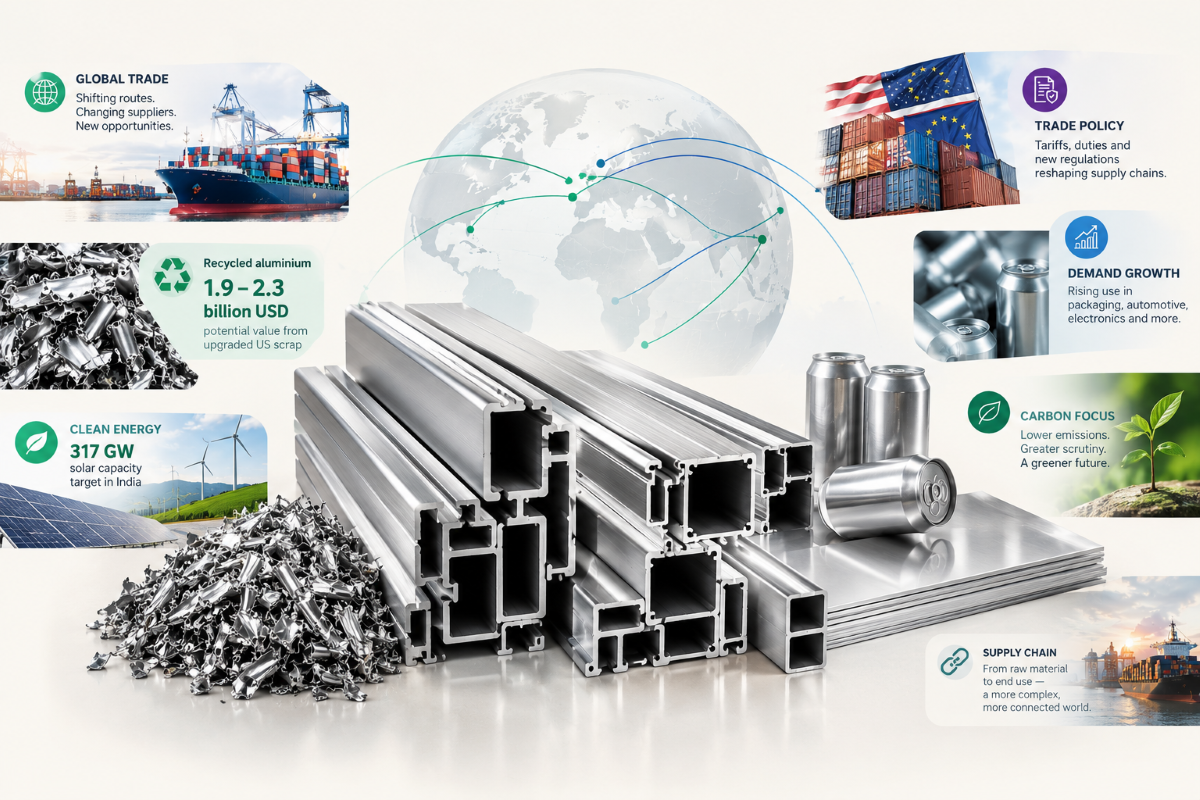
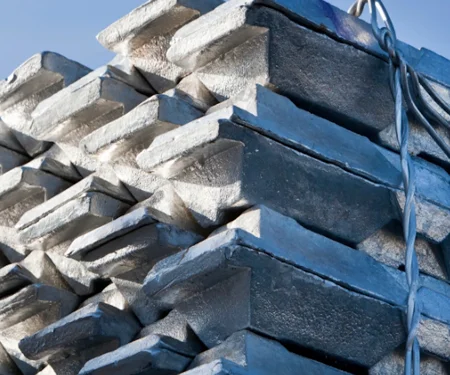
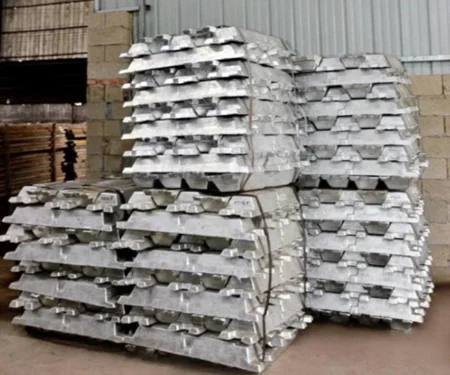
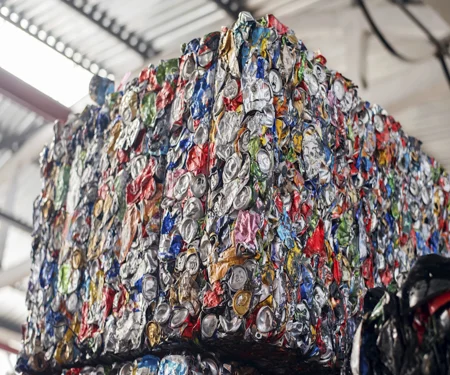
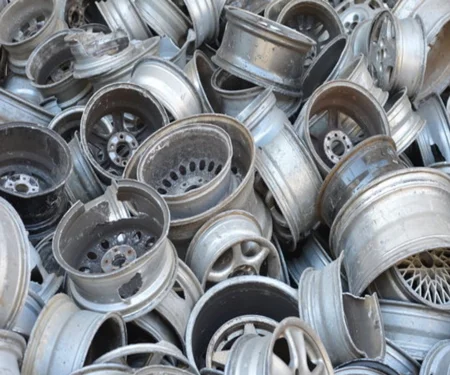
The image used in this article is generated with an AI tool and does not depict any real-time moment
As aluminium continues to draw the spotlight as a strategic variable in global trade rather than a merely traded commodity. Tariffs imposed at the border are now showing up in the cost of cans, auto components and downstream products, while high copper prices are encouraging manufacturers to redesign products around aluminium.
Meanwhile, India is tightening protection around selected aluminium products even as domestic downstream manufacturers question the cost of protecting primary metal. China’s extrusion industry is adjusting to weaker construction demand by moving towards solar, batteries and other clean-energy applications.
In North America, deeply integrated supply chains are confronting the consequences of suddenly changing tariff economics.
To know the global production, demand and consumption forecasts of aluminium extrusions, explore our report "The World of Aluminium Extrusions to 2035"
North America’s tariff spiral: Escalation and selective relief
The US-Canada dispute provides the clearest example of how aluminium tariffs can travel far beyond the original shipment.
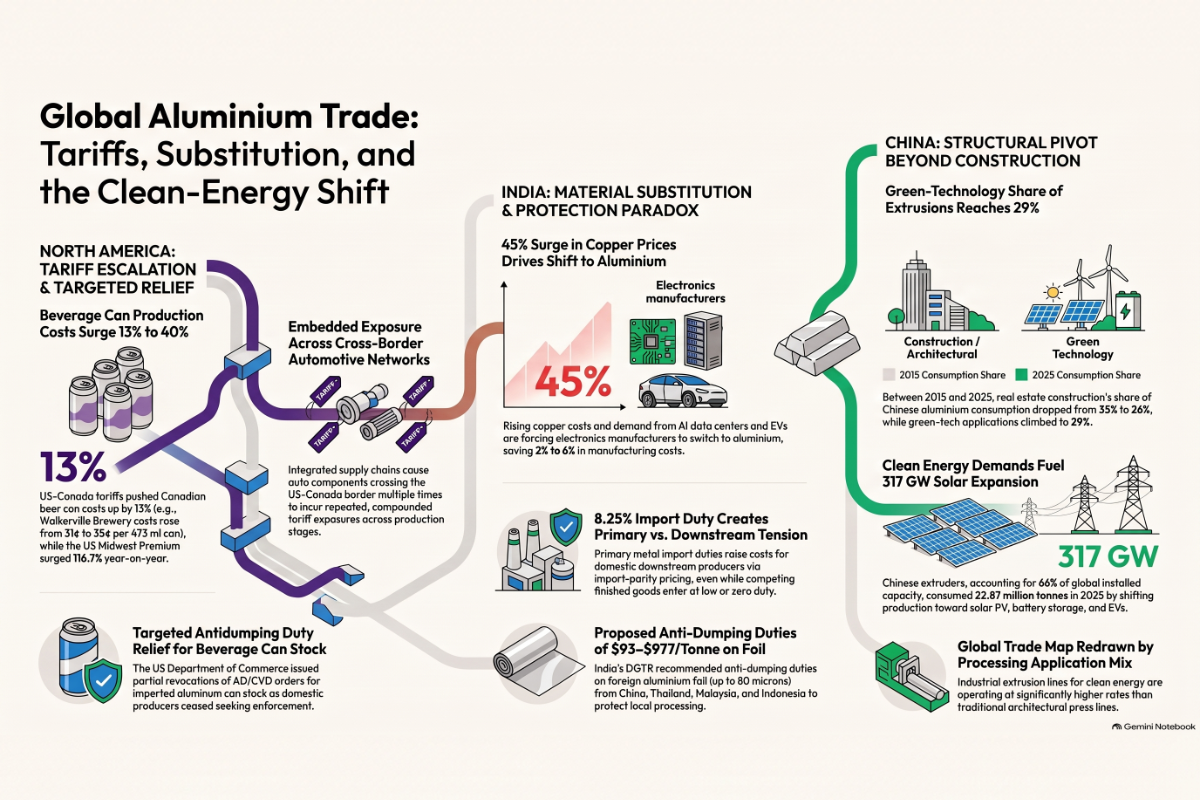
Canada’s decision to raise tariffs on US aluminium and steel to 50 per cent from September 8 as part of a CAD 27.6 billion retaliatory package, while pairing the measure with CAD 7.5 billion. In automotive supply chains, where components can cross the US-Canada border several times, the same tariff exposure can potentially be embedded in multiple stages of production.
The beverage industry shows the effect more directly. US aluminium tariffs have pushed Canadian beer can costs up nearly 13 per cent, adding a further squeeze on an industry already managing years of rising input costs across ingredients, labour, freight and energy. Walkerville Brewery reported its 473 ml can cost rising from about 31 cents to 35 cents.
BC brewers are seeing the wider impact. Can prices have risen 20–40 per cent, with cans representing 55 per cent of raw materials and packaging for some breweries. The US Midwest Premium also rose 116.7 per cent year-on-year, showing that tariff economics can influence domestic aluminium pricing even where the final can is manufactured locally.
The automotive sector faces an even more complicated calculation. Long-established supplier networks were designed around North America as one integrated production base, not as separate national markets. Reconfiguring them requires new investment, while leaving them unchanged exposes companies to unpredictable tariff costs.
Key takeaways
For traders and exporters
- A tariff on primary or semi-finished aluminium can eventually affect multiple downstream transactions.
- Origin, processing location and cross-border processing can become major factors of hidden tariff exposure.
For buyers and manufacturers
- Procurement decisions can no longer focus only on the metal price. Input-cost hedging now matters as much as demand forecasting
- Contract structures need to account for tariff changes across the full processing chain.
- Domestic sourcing does not automatically eliminate tariff-related cost pressure.
Connect with verified aluminium FRP buyers and suppliers through the AL Biz marketplace.
India’s downstream reckoning: Duties, standards, costlier copper
While North American companies are dealing with tariff-driven cost inflation, Indian manufacturers are responding to a different form of pressure: the rising cost and availability of copper.
Copper prices have climbed nearly 45 year-on-year, encouraging Indian electronics manufacturers to examine aluminium and steel as alternatives in applications such as motor windings, condenser coils and transformers. The objective is not simply material substitution; it is broader value engineering, with potential manufacturing cost savings estimated at 2–6 per cent.
The shift also reflects competition for copper from AI data centres and EVs. For traditional electronics and appliance manufacturers, securing copper is becoming a supply-chain issue as well as a pricing issue. That gives aluminium an opening where its cost, weight and performance characteristics can meet application requirements.
Yet India’s aluminium policy presents a paradox. The effective 8.25 per cent import duty on primary aluminium can raise input costs for downstream manufacturers even when the metal is sourced domestically through import-parity pricing. Meanwhile, some finished aluminium products can enter India at lower or zero duty under applicable trade agreements.
The result is a policy tension between protecting primary aluminium production and strengthening value-added manufacturing. For businesses where aluminium represents 60–80 per cent of production costs, even a relatively modest change in metal pricing can materially affect margins.
India is simultaneously becoming more selective about imports of downstream products. DGTR has recommended extending anti-dumping duties on aluminium foil up to 80 microns from China, Thailand, Malaysia and Indonesia, with proposed rates of USD 93–977 per tonne. The recommendation comes against a backdrop of rapidly expanding India-China merchandise trade and a record USD 113 billion bilateral deficit in FY2026.
The technical side of the downstream story is also evolving. BIS Chennai’s proposed revision of IS 398 Part 4:2026 for aluminium alloy stranded conductors introduces A2 and A3 alloy wires and additional testing requirements, reflecting the changing technical demands of India’s power-transmission sector.
Key takeaways
For Indian buyers and downstream manufacturers
- Aluminium substitution is becoming a strategic response to copper availability and pricing.
- Import duties need to be assessed against the competitiveness of downstream products, not primary production alone.
- Technical standards revisions like the BIS conductor update indicate India’s grid and transmission sector is tightening technical specifications, rewarding suppliers who invest early in compliance.
For policymakers
- Downstream competitiveness depends on both affordable feedstock and access to export markets.
- Standards can help create higher-value aluminium demand when aligned with industrial requirements.
China’s structural pivot beyond construction
China offers the clearest example of how demand itself can reshape aluminium trade networks.
Its extrusion sector consumed around 22.87 million tonnes in 2025, while Chinese extruders accounted for about 66 per cent of global installed extrusion capacity. Yet property-sector weakness is forcing the industry to search for new outlets. Between 2015 and 2025, construction’s share of aluminium consumption fell from 35 per cent to 26 per cent, while green-technology applications rose from 11 per cent to 29 per cent.
Solar PV, battery energy storage, EVs and power-grid infrastructure are therefore becoming structural demand centres. The article highlights 317 GW of solar growth, while specialised industrial extrusion lines are operating at substantially stronger rates than smaller architectural press lines.
That shift matters beyond China. As extrusion capacity moves towards renewable-energy applications, the global trade map for aluminium profiles increasingly depends on where solar, storage, EV and grid investments are being built.
At the other end of the trade spectrum, the US has now made a targeted adjustment. The US Department of Commerce has changed circumstances reviews for antidumping and countervailing duties on common alloy aluminium sheet from China and 15 other countries, leading to a partial revocation of orders for aluminium can stock. This decision is based on changed circumstances, applying specifically to aluminium can stock for beverage cans.
Read our latest magazine “ALuminium’s Frontline: OEM Edition 2026” and learn how OEMs are transforming critical aluminium applications across end-use sectors.
Key takeaways
For investors
- Product classification is becoming as important as country of origin.
- Clean-energy demand is creating new aluminium trade corridors as traditional construction demand weakens.
- Large installed capacity does not guarantee profitability. Application mix holds greater importance.
For exporters
- Solar, BESS, EV and grid-related profiles offer alternative demand pools as conventional construction slows.
- Trade opportunities will depend on technical specifications and end-use requirements.
- A market protected for one aluminium product may remain open for another, making product-level trade intelligence essential.
For strategic decision-makers
- Aluminium policy is moving from broad tariff protection towards more targeted intervention.
- Supply-chain resilience increasingly depends on processing capacity, not simply access to primary metal.
- The strongest competitive positions may emerge where raw material, downstream technology, end-use demand and trade access intersect.

CIE Automotive brings aluminium casting subsidiary into parent after NCLT approval
Next articleIndia aluminium extrusion sector targets 10% growth with ₹750b revenue amid working capital pressure
Grow with
AL Circle