Japanese automakers halt production after earthquake, adding pressure to aluminium demand

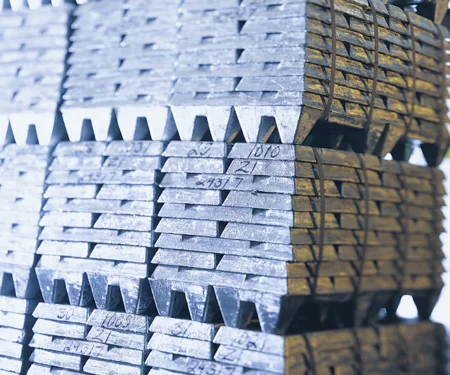
The image used in this article is generated with an AI tool and does not depict any real-time moment
Japan's aluminium market is facing another setback after major automakers suspended production following the 7.1-magnitude earthquake that struck the Kyushu region on Tuesday, July 28. The temporary shutdowns come at a time when demand for both primary and secondary aluminium was already subdued during the seasonal slowdown in automotive sales, further weighing on spot restocking activity.
Although most market participants expect only a limited immediate impact on aluminium consumption, the disruption has added to an already bearish outlook for the sector. That is because the earthquake hit Kyushu, one of Japan's key manufacturing hubs for automobiles, semiconductors, electronic components and flat-rolled steel products, making the region an important source of aluminium demand.
Major automakers suspend production
Toyota suspended production at three plants in Fukuoka Prefecture on Tuesday. The company initially planned to resume operations on Wednesday, July 29, but later extended the shutdown until Friday, July 31. Its subsidiary Daihatsu also halted production at its Oita and Kurume plants until Friday.
Nissan temporarily suspended operations at Nissan Motor Kyushu and Nissan Shatai Kyushu until July 31. While the company said its assembly plants were not damaged by the earthquake, parts procurement has been delayed.
Honda also brought its motorcycle factory in Ozu town to a standstill from July 28 through Friday after a major water leak.
To know the aluminium casting demand forecast in the transporation sector, explore our report "Global Aluminium Casting Market 2026-2032: Plant Economics, Alloy Segmentation, Pricing Intelligence, Supply Chain Analysis & Strategic Recommendations"
Auto parts suppliers assess earthquake damage
The disruption has also spread across the automotive supply chain. Toyota Group supplier Aisin confirmed on July 29 that all employees were safe while damage assessments continued at its Kumamoto plant.
Honda-affiliated supplier Astemo reported that three employees sustained minor injuries at its Fukuoka factory, where water, electricity and gas supplies were also cut off.
Giken Kogyo, another Honda-linked parts manufacturer in Kyoshi city, suspended production from July 29 to assess earthquake-related damage.
FCC, a major supplier of motorcycle clutches to Honda, Yamaha, Kawasaki and Suzuki, has also remained closed since July 29 while inspecting its Uki city production facility.
Automotive slowdown weighs on aluminium demand
The latest disruption comes as Japan's automotive industry is already under pressure from supply chain disruptions, softer demand from the Middle East following the US-Iran conflict that began in late February, and rising competition from Chinese electric vehicle (EV) manufacturers.
Toyota has projected a profit decline for the fiscal year ending March 2027 and revised its overseas production reduction to 100,000 units by February 2027, up from the 83,000-unit cut announced in May. Several other Japanese automakers had already ceased exports to the Middle East in April.
Explore downstream aluminium suppliers, product listings and trade opportunities on AL Biz
Honda Motor reported its first annual loss in nearly 70 years in May. Meanwhile, Nissan announced in mid-July that it would close its Shatai Shonan factory by March 2027 and its flagship Oppama factory by the end of fiscal 2027, consolidating production at its Kyushu facility. The company has not commented on whether the latest earthquake disruption will affect that restructuring plan.
Several automakers have also informed aluminium and scrap suppliers that they already hold sufficient inventories for the third quarter and are not seeking additional material during the seasonal slowdown.
A weaker yen has also discouraged imports, with the Japanese currency remaining above YEN 160 against the US dollar throughout July and trading at YEN 163.31 per US dollar on July 29, according to Fastmarkets' currency converter.
Aluminium premiums continue to soften
Fastmarkets' daily assessment for aluminium P1020A (MJP) spot premium, CIF Japan, stood at USD 300-400 per tonne on Thursday, July 30, widening lower from USD 320-400 per tonne at the start of the week.
Imports of secondary aluminium alloys such as ADC12 have also slowed significantly since early July because of weaker automotive demand.
The United Arab Emirates' scrap export ban introduced in June has added further pressure by encouraging downstream ADC12 production to bypass export restrictions, increasing the availability of lower-priced material in the market.
UAE-origin ADC12 deals were last heard at USD 3,000 per tonne CFR main Japanese ports during the week to July 22. Chinese suppliers were offering USD 3,020-3,050 per tonne CFR MJP as of July 29, while Southeast Asian producers maintained asking prices at USD 3,100-3,200 per tonne because of higher energy costs linked to Middle East geopolitical uncertainty.
Most Japanese bids, however, were only USD 2,800-2,900 per tonne on Wednesday, widening lower from USD 2,850-2,900 per tonne a week earlier.
Fastmarkets' assessment for aluminium ingot ADC12 spot, CFR Japan, remained unchanged at USD 3,000-3,050 per tonne on July 29 for a second consecutive week, staying close to the four-month low of USD 2,850-2,950 per tonne last recorded on March 4.
Market participants generally expect demand to remain weak through the rest of the quarter, with most procurement activity already completed ahead of fewer working days during the Mountain Day and Obon holidays from August 11-16, followed by another holiday period between September 21-23.
“There are fewer working days in August and September,” a second trader said.
AL Circle is coming up with a new Magazine "ALuminium’s Frontline: OEM Edition 2026." Feature your brand and opinion in the edition
BMW gives the X5 a greener makeover with recycled aluminium and renewable energy
Next articleFord adjusted EBIT jumps 90% in H1 2026 while Q2 revenue falls 4%: How it navigated aluminium and low sales pressures
Grow with
AL Circle