AL Circle Analysis: Hindalco's $10.6b push, Vietnam's new packaging plant and Asia's growing aluminium casting market

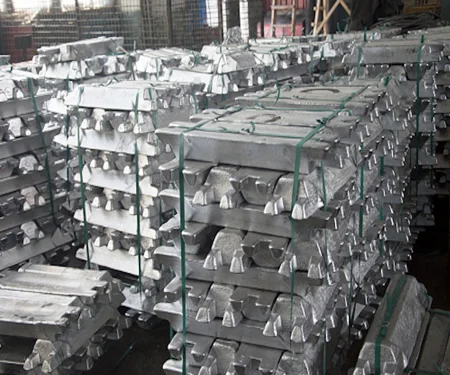
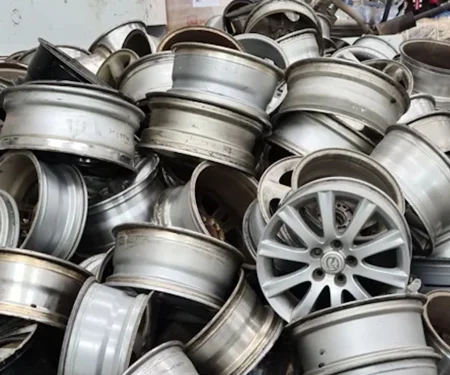
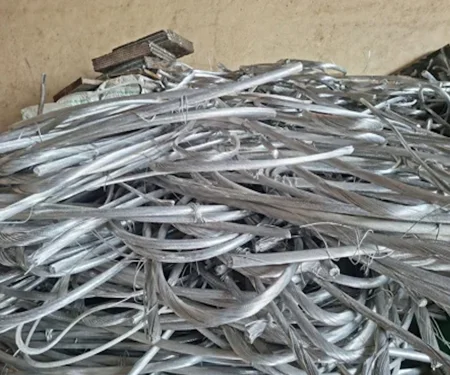
The image used in this article is generated with an AI tool and does not depict any real-time moment
The aluminium industry is seeing demand grow across automotive, packaging and casting, but the benefits are not reaching every part of the value chain equally. While rising consumption is encouraging manufacturers to expand production and invest in new facilities, higher raw material and energy costs are putting pressure on margins. Changing trade regulations and the demand for specialised products are adding to the challenges.
This mixed picture is reflected in recent industry developments. Global aluminium casting consumption is projected to reach 30.01 million tonnes by 2032, pointing to strong demand from end-use sectors. However, Toyo Seikan's packaging business reported a 7.7 per cent year-on-year decline in operating profit in the first half of FY2026 as higher input costs weighed on earnings. Meanwhile, manufacturers are stepping up investments in production capacity, product development and downstream operations to strengthen their position in the market.
End-user demand creates opportunities across automotive, packaging and casting
Automotive applications continue to favour lightweight aluminium
The automotive sector remains an important source of aluminium demand as manufacturers seek lightweight materials to improve vehicle efficiency and performance.
The 2027 Triumph Street Triple 798 RS, launched in India, illustrates the continued use of aluminium in vehicle design. Replacing the Street Triple 765 RS, the model features a larger engine, a lighter aluminium frame and a body that is 5 kg lighter. It delivers 133 bhp and 86 Nm of torque.
Packaging manufacturers focus on coating performance
In beverage packaging, the performance of protective coatings inside aluminium cans is important for product quality and reliability. Novelis is advancing coating tests through its long-standing collaboration with the Georgia Institute of Technology.
Researchers from Georgia Tech's School of Chemical and Biomolecular Engineering and Novelis have developed testing capabilities to assess interactions between beverages and protective coatings. The process enables data collection throughout testing, providing a clearer understanding of coating performance. It has also reduced the testing cycle from months to weeks.
Aluminium casting consumption set to grow in Asia
Global aluminium casting consumption increased from 20.38 million tonnes in 2020 to 23.73 million tonnes in 2025, a rise of 16.44 per cent. It is projected to reach 28.11 million tonnes by 2030 and 30.01 million tonnes by 2032, representing growth of 47.25 per cent between 2020 and 2032.
Asia is expected to remain central to this expansion. China's consumption was estimated at 11–12.5 million tonnes in 2025, followed by India at 1.4–1.45 million tonnes and Japan at 1.2–1.3 million tonnes, according to AL Circle estimates. Die-casting, recycling and automotive manufacturing are expected to support demand.
Key takeaways
- Automotive suppliers: Focus on lightweight components and performance requirements as vehicle manufacturers continue to optimise weight.
- Packaging manufacturers: Strengthen coating tests and quality control to meet customer requirements and improve product reliability.
- Casting producers: Assess capacity and alloy requirements against projected demand from China, India and Japan.
- Aluminium buyers: Track demand by end-use sector, as different applications require specific grades, processing capabilities and quality standards.
To know the aluminium casting demand forecast in the construction sector, explore our report "Global Aluminium Casting Market 2026-2032: Plant Economics, Alloy Segmentation, Pricing Intelligence, Supply Chain Analysis & Strategic Recommendations"
Downstream manufacturers expand capacity and market presence
Camel Group invests in Vietnam packaging capacity
Camel Group is investing VND 2.7 trillion (USD 106 million) in a packaging plant in Quang Tri, Vietnam. Spread across nearly 10 hectares, the facility is planned to have annual capacity of 1 billion packaging products.
The first phase, involving VND 2.3 trillion (USD 90 million), will provide capacity for 700 million units annually. The second phase, requiring VND 400 billion (USD 16 million), will add another 300 million units.
EBRD-backed financing supports Egyptian aluminium tubes
In Egypt, the European Bank for Reconstruction and Development (EBRD), alongside Emirates NBD, is providing financing of up to EGP 500 million (USD 9.3 million) to the Egyptian National Company for Aluminium Tubes Manufacturing (TUBE). The funding will support production capacity expansion and export operations.
ASSA ABLOY acquisition strengthens Latin American presence
Swedish group ASSA ABLOY agreed to acquire Brazilian aluminium solutions manufacturer Rometal on November 12, 2026. Rometal employs around 500 people and will join ASSA ABLOY's Americas Division. The acquisition will strengthen the group's manufacturing presence in Latin America and expand its offering across door systems, furniture fittings and aluminium products.
These developments show how manufacturers are using new facilities, financing and acquisitions to strengthen their market positions and serve customers across different regions.
Key takeaways
- Downstream manufacturers: Evaluate regional demand before expanding capacity, particularly where new facilities are being developed.
- Aluminium tube producers: Explore export opportunities alongside domestic demand as production capabilities increase.
- Suppliers: Monitor new manufacturing projects to identify potential customer relationships and procurement opportunities.
- Companies pursuing acquisitions: Assess whether expansion will provide access to customers, manufacturing capabilities and markets that complement existing operations.
Producers increase investment in capacity and downstream operations
Hindalco outlines INR 1 trillion investment pipeline
Hindalco has outlined an investment pipeline of INR 1 trillion (USD 10.6 billion) over the next five years, covering aluminium, alumina, copper, downstream operations and captive mining.
Of this amount, INR 500 billion (USD 5.3 billion) is already under execution across India, while another INR 500 billion is under evaluation. The investments span different stages of the value chain, reflecting the company's focus on strengthening production capacity alongside downstream operations.
As demand grows across automotive, packaging and industrial applications, producers have an opportunity to participate in more processed and specialised product segments. However, the commercial success of new capacity will depend on customer demand, operating costs and the ability to compete with existing suppliers.
Key takeaways
- Primary producers: Align capacity additions with demand projections and the availability of competitive energy and raw materials.
- Integrated companies: Assess opportunities across alumina, aluminium and downstream processing to strengthen their position along the value chain.
- Investors: Compare the expected returns from new projects with opportunities to improve productivity at existing facilities.
- Downstream buyers: Engage with suppliers to understand future availability, product specifications and procurement requirements.
Explore downstream aluminium products from our comprehensive list on AL Biz.
Rising aluminium prices create contrasting financial results
Higher input costs weigh on Toyo Seikan
Toyo Seikan's packaging business reported a 7.7 per cent year-on-year decline in operating profit in the first half of FY2026, despite higher sales. Raw material and energy costs weighed on earnings.
The LME aluminium benchmark averaged USD 3,380 per tonne in April–September 2026, up 33.1 per cent from USD 2,540 per tonne in the corresponding period of FY2025. The average was below the company's August forecast of USD 3,510 per tonne, but remained significantly higher than a year earlier. The company released its financial results on November 9, 2026.
Novelis records stronger EBITDA despite lower shipments
Novelis reported adjusted EBITDA of USD 508 million in the second quarter of FY2027, up 20 per cent year on year. Rolled product shipments declined by 2 per cent to 919,000 tonnes.
Net sales increased by 25 per cent to USD 5.9 billion from USD 4.7 billion, mainly reflecting higher average aluminium prices. Stronger shipments of beverage packaging and aerospace products partly offset lower volumes in automotive and speciality products.
Manaksia Aluminium and Arab Aluminum return stronger results
Manaksia Aluminium recorded a 21.7 per cent year-on-year increase in net profit to INR 13.5 million (USD 140,000) in Q2 FY2027, compared with INR 11.1 million (USD 119,000) a year earlier, despite a decline in revenue.
Egyptian producer Arab Aluminum returned to profit in the first nine months of 2026, reporting net profit after tax of EGP 11.42 million (USD 212,730), against a loss of EGP 6.60 million (USD 122,944) in the same period of 2025. Lower finance expenses, higher foreign exchange valuation gains and increased sales volumes supported the improvement. Sales rose 1.3 per cent to EGP 448.68 million (USD 8.36 million) from EGP 443.07 million (USD 8.25 million).
The results show that higher aluminium prices and sales values do not affect every manufacturer equally. Product mix, cost structures, financing expenses and operating efficiency also influence profitability.
Key takeaways
- Downstream manufacturers: Review pricing arrangements and cost pass-through mechanisms to manage increases in aluminium and energy costs.
- Processors: Monitor product-level margins instead of relying only on revenue and shipment growth.
- Packaging and automotive suppliers: Assess customer and product diversification to manage weaker demand in individual segments.
- Investors: Examine operating profit, EBITDA, shipment volumes and financing costs together when evaluating company performance.
Trade investigations and carbon rules reshape market access
India investigates aluminium extrusion imports
India's Directorate General of Trade Remedies (DGTR) has initiated an anti-dumping investigation into aluminium extrusions imported from China, Malaysia, Vietnam and Thailand.
The investigation follows concerns raised by nine domestic producers over allegedly cheaper imports and could affect around 228 Indian aluminium manufacturers. The probe will examine whether dumping has taken place and whether it has caused injury to domestic producers. It does not mean that anti-dumping duties have already been imposed.
EU proposes extending CBAM to downstream products
EU industrial emissions declined by 3.3 per cent year on year in 2025. The European Commission is planning to extend the Carbon Border Adjustment Mechanism (CBAM) to 180 additional downstream aluminium and steel products, with the proposed expansion expected in 2028.
This would extend carbon-related requirements beyond basic materials to a wider range of manufactured goods, increasing the importance of product-level emissions information for companies supplying European markets.
Key takeaways
- Indian extrusion manufacturers: Follow the DGTR investigation and assess its potential implications for import competition and domestic pricing.
- Importers and buyers: Maintain alternative sourcing options while monitoring the investigation's outcome rather than assuming duties will be imposed.
- Exporters to Europe: Assess emissions data and reporting capabilities ahead of the proposed CBAM expansion.
- Downstream companies: Review supply-chain transparency, material origins and carbon information requirements to prepare for changing regulations.
Read our latest magazine “ALuminium’s Frontline: OEM Edition 2026” and learn how OEMs are transforming critical aluminium applications across end-use sectors.
Grow with
AL Circle












_md.webp)
_md.webp)
_md.webp)