Ford adjusted EBIT jumps 90% in H1 2026 while Q2 revenue falls 4%: How it navigated aluminium and low sales pressures

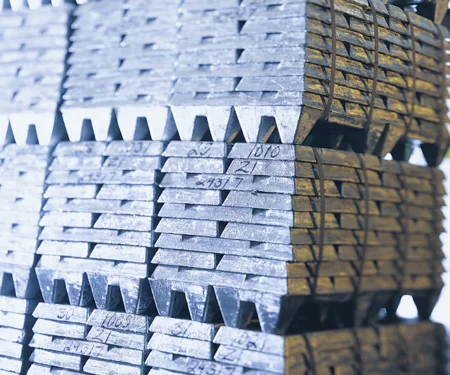
The image used in this article is generated with an AI tool and does not depict any real-time moment
Ford's first-half 2026 results raise an interesting question: how did the automaker almost double adjusted EBIT when revenue grew by less than 1 per cent? The answer lies less in selling more vehicles and more in what Ford sold, how it priced them and where it managed to reduce losses. At the same time, the company faced lower wholesale volumes, aluminium supply constraints and a sharp decline in cash generation.
Revenue barely moves, but earnings tell a different story
Ford's total revenue increased to USD 91.549 billion in H1 2026, from USD 90.843 billion a year earlier, up just 0.8 per cent. Yet the bottom line moved much more sharply. Net income increased to USD 1.229 billion from USD 0. 444 billion, a rise of 176.8 per cent.
Adjusted EBIT climbed to USD 6.0 billion from USD 3.159 billion, an increase of USD 2.841 billion or 89.9 per cent. Adjusted EPS also rose to USD 1.08 from USD 0.51, an increase of USD 0.57.
So, what changed? Ford sold fewer vehicles, but the vehicles it did sell generated better revenue. Wholesale units declined 8 per cent year on year, from 2,155 unit in H1 2025 to 1973 unit in H1 2026, affected by aluminium supply constraints linked to the Novelis plant disruption, product discontinuations and the decision to "right-size" first-generation EV volumes to actual customer demand.
That decline in volume did not translate into lower revenue because Ford benefited from a richer vehicle mix and higher prices. Ford Blue illustrates the point clearly: its revenue rose 7 per cent, even though wholesale volumes fell 5 per cent. Strength in trucks and off-road trims helped support the segment.
The improvement in earnings, however, came with a weaker cash picture. Operating cash flow fell to USD 5.661 billion from USD 9.996 billion, down 43.4 per cent. Adjusted free cash flow dropped to USD 0.2 billion from USD 1.3 billion, a decline of 84.6 per cent.
To know the aluminium casting demand forecast in the transporation sector, explore our report "Global Aluminium Casting Market 2026-2032: Plant Economics, Alloy Segmentation, Pricing Intelligence, Supply Chain Analysis & Strategic Recommendations"
Ford Blue carries the profit improvement
If Ford's H1 results had one clear earnings driver, it was Ford Blue. Revenue increased 7 per cent to USD 49.9 billion, from USD 46.8 billion, while EBIT jumped by USD 2.320 billion to USD 3.077 billion in H1 2026, compared with USD 757 million a year earlier, same period.
The improvement was also visible in the margin. Ford Blue's EBIT margin rose from 1.6 per cent to 6.2 per cent, an increase of 4.5 percentage points. Better pricing and vehicle mix were important to that improvement.
Ford Pro delivered a very different performance. Revenue declined 4 per cent to USD 32.5 billion in H1 2026, from USD 34.0 billion, while EBIT fell by USD 224 million to USD 3.403 billion in H1 2026, from USD 3.627 billion, last year.
Its EBIT margin slipped from 10.7 per cent to 10.5 per cent, down 0.2 percentage points. Ford said the segment continued to recover from temporary Novelis-related aluminium supply constraints.
Then there is Ford Model e. Revenue fell 37 per cent to USD 2.3 billion, from USD 3.6 billion in H1 2025. But the segment's EBIT loss narrowed by USD 482 million, from USD 2.178 billion in H1 2025 to USD 1.696 billion in H1 2026. Ford's decision to reduce unprofitable EV volume and cut costs helped narrow the loss.
Why did net income rise so sharply?
Three developments explain most of the improvement. First, Ford's core vehicle business generated stronger returns. Ford Blue's EBIT nearly quadrupled from USD 757 million to USD 3.077 billion, helped by pricing and mix, while Ford Pro still generated USD 3.403 billion in EBIT despite a 12 per cent decline in wholesale volumes linked to the aluminium supply squeeze.
Explore downstream aluminium suppliers, product listings and trade opportunities on AL Biz
Second, Ford Model e reduced its losses. Its EBIT loss narrowed from USD 2.178 billion to USD 1.696 billion, an improvement of USD 482 million, as Ford pulled back on unprofitable EV volume and reduced costs.
Third, Ford Credit contributed more. Financing pre-tax earnings increased from USD 1.225 billion to USD 1.540 billion, supported by strong financing margins and a high-quality loan portfolio.
But why did the gains seen in H1 not carry through to the second quarter of 2026?
Ford's Q2 2026 revenue fell 4 per cent to USD 48.3 billion, from USD 50.2 billion, while wholesale units dropped 12 per cent, from 1.185 million to 1.039 million. The USD 1.9 billion revenue decline reflected lower wholesale volumes, product discontinuations, aluminium supply constraints and the right-sizing of Gen-1 EV volumes to customer demand, partly offset by favourable mix.
Even so, adjusted EBIT increased from USD 2.1 billion to USD 2.5 billion, 19.0 per cent. Adjusted EBIT margin improved from 4.3 per cent to 5.2 per cent, while adjusted EPS rose from USD 0.37 to USD 0.42, an increase of 13.5 per cent.
Q2 loss highlights the cost of Ford's restructuring
Ford's Q2 2026 revenue fell 4 per cent to USD 48.3 billion, from USD 50.2 billion, while wholesale units dropped 12 per cent, from 1.185 million to 1.039 million. The USD 1.9 billion revenue decline reflected lower wholesale volumes, product discontinuations, aluminium supply constraints and the right-sizing of Gen-1 EV volumes to customer demand, partly offset by favourable mix.
Even so, adjusted EBIT increased from USD 2.1 billion to USD 2.5 billion, up 19.0 per cent. Adjusted EBIT margin improved from 4.3 per cent to 5.2 per cent, while adjusted EPS rose from USD 0.37 to USD 0.42, an increase of 13.5 per cent.
The headline Q2 net result, however, was much weaker. Ford reported a USD 1.3 billion net loss, compared with a USD 29 million loss in Q2 2025. The quarter included USD 4.2 billion in pre-tax special-item charges, with the biggest component being a USD 3.6 billion largely non-cash charge related to the disposition of the BlueOval SK (BOSK) joint venture. Ford also recorded USD 0.5 billion in charges related to EV programme cancellations announced in December 2025.
Cash generation weakened as well. Operating cash flow fell from USD 6.3 billion to USD 4.3 billion, down 31.7 per cent, while adjusted free cash flow declined from USD 2.8 billion to USD 2.1 billion, down 25.0 per cent.
Aluminium supply remained a drag on the quarter. Ford identified the constraints as one reason for the lower Q2 revenue, while Ford Pro's EBIT fell by USD 600 million year on year as the segment continued to recover from temporary Novelis-related supply constraints.
What does Ford expect for the rest of 2026?
Despite the mixed picture, Ford has become more confident about the full year. The company raised its adjusted EBIT guidance to USD 10.0 – USD 11.0 billion, from USD 8.5 – USD 10.5 billion previously. Adjusted free cash flow guidance was also lifted to USD 6.0 - USD 7.0 billion, from USD 5.0 – USD 6.0 billion.
The revised free cash flow outlook includes an expected USD 500 million cash recovery in 2026 from the USD 1.3 billion IEEPA reimbursement recorded in the first quarter. Capital expenditure guidance remains unchanged at USD 9.5 billion to USD 10.5 billion.
Ford Blue is now expected to deliver USD 5.0-USD 5.5 billion in EBIT, up from the previous USD 4.5-USD 5.0 billion range. Ford Pro's EBIT outlook has been raised to USD 7.0-USD 7.5 billion, compared with USD 6.5-USD 7.5 billion previously.
For Ford Model e, the company now expects a loss of approximately USD 4.0 billion, compared with its earlier forecast of USD 4.0-USD 4.5 billion.
Ford's assumptions for the year are also fairly specific. It expects the US seasonally adjusted annual selling rate (SAAR) to remain between 16.0 million and 16.5 million units, while US industry net pricing is expected to increase by about 0.5 per cent.
The company expects approximately USD 1 billion in material and warranty cost reductions during the year, offset by around USD 1 billion of investment in Universal EV and Ford Energy. It also expects the Novelis year-on-year impact to provide
approximately USD 1 billion of net EBIT tailwind, with the benefit heavily weighted towards the second half of 2026.
That leaves Ford's H1 story with a clear tension: the company is earning more from a smaller volume base, but it is also generating significantly less cash. How well Ford can sustain the pricing and mix benefits, manage aluminium availability and fund its EV investments will be central to how the stronger full-year guidance plays out.
AL Circle is coming up with a new Magazine "ALuminium’s Frontline: OEM Edition 2026." Feature your brand and opinion in the edition
Japanese automakers halt production after earthquake, adding pressure to aluminium demand
Next articleMaxion Wheels gives forged aluminium truck wheels a new defence against road grime
Grow with
AL Circle