US imported 11.5x more primary aluminium from Canada than it exported in semi-fabricated form in H1 2026 - know why

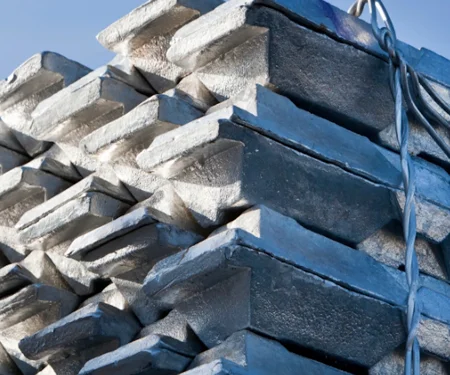
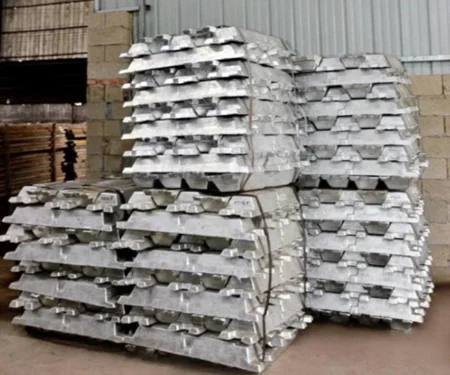
The image used in this article is generated with an AI tool and does not depict any real-time moment
At the US-Canada border, aluminium is constantly on the move, but the direction of trade is far from balanced. In the first six months of 2026, the US imported 907,581.44 tonnes of primary aluminium from Canada, while exporting only 78,886.12 tonnes of semi-fabricated aluminium products such as sheets, plates, foils, extruded profiles, tubes and wire to Canada. US therefore imported about 11.5 times more primary aluminium from Canada than it exported in semi-fabricated form.
That raises a question for the aluminium industry. If such large volumes of Canadian primary metal are entering the US, and the country has a sizeable downstream processing base, why is so little semi-finished aluminium travelling back to Canada? The answer lies in the different roles the two countries have developed across the aluminium value chain, from primary smelting and power costs to downstream capacity, domestic demand and the direction of existing trade flows.
The numbers show two very different trade stories
US primary aluminium imports from Canada climbed from 2.54 million tonnes in 2021 to 2.58 million tonnes in 2022, an increase of 1.52 per cent year on year. Imports then rose another 2.77 per cent to 2.65 million tonnes in 2023, followed by a further 3.48 per cent increase to a five-year high of 2.74 million tonnes in 2024. The trend then reversed sharply in 2025, with imports falling 28.94 per cent to 1.95 per cent, this can be a result of tariff.
Even after that decline, the 2025 volume remained more than eight times the 238,971.99 tonnes of semi-fabricated aluminium products exported by the US to Canada that year.
The semi-fabricated trade followed a different path. US exports to Canada stood at 318,676.75 tonnes in 2021 and 334,333.18 tonnes in 2022, up 4.91 per cent year on year. The volume then stood at a peak of 353,348.17 tonnes in 2023, marking a further 5.69 per cent increase, before declining 7.32 per cent to 327,465.46 tonnes in 2024 and falling sharply by 27.02 per cent to 238,971.99 tonnes in 2025.
The YTD figures show the same imbalance. Primary aluminium imports from Canada reached 1.4 million tonnes in YTD 2024, before declining a bit to 1.17 million in YTD 2025 and 907,581.44 tonnes in YTD 2026. Semi-fabricated exports, meanwhile, fell from 183,871.65 tonnes in YTD 2023 to 174,972.24 tonnes in YTD 2024, then to 148,675.90 tonnes in YTD 2025 and just 78,886.12 tonnes in YTD 2026.
By YTD 2026, semi-fabricated exports were already 57.09 per cent below the YTD 2023 level.
This shows that, Canadian primary aluminium continues to occupy an important place in the US supply chain, while the reverse movement of semi-finished aluminium has remained comparatively limited.
To know the global production, demand and consumption forecasts of aluminium extrusions, explore our report “The World of Aluminium Extrusions to 2035”
Canada has the primary metal the US needs
Canada has retained a much larger primary aluminium production base than the US. In 2025, the country produced about 3.30 million tonnes of primary aluminium from 10 operating smelters. Its largest plant, Alouette in Quebec, has capacity of 632,000 tonne per year, while Rio Tinto's AP60 has added another 160,000 tonne per year of low-carbon capacity.
The contrast with the US is significant. The US had about 1.31 million tonnes of installed primary aluminium capacity in 2025, but actual production was only 660,000 tonnes. Only four to five smelters are running, with many operating below full capacity. Canada's primary aluminium output was therefore roughly five times that of the US.
That production gap helps explain the large volume of Canadian primary aluminium moving south. The US has a substantial aluminium-consuming and processing industry, but its domestic primary smelting base is no longer sufficient to meet its needs. Canada, by comparison, has maintained the production capacity to supply a significant share of that requirement.
There is, however, another reason the Canadian smelting industry remains competitive, and it comes down to one of the most important costs in aluminium production: electricity.
Explore aluminium foil suppliers, product listings and trade opportunities on our AL Biz B2B marketplace.
The power economics explain why Canada makes the primary metal
Aluminium smelting is extremely electricity-intensive, making access to competitive power crucial to the economics of a smelter. Competitive operations typically require long-term power contracts around USD 40 per MWh or less, and Canadian smelters benefit from hydropower-based contracts in the range of USD 26.5-41.0 per MWh.
US industrial power prices are often around USD 60-80 per MWh, while data-centre demand is pushing electricity costs higher in some regions. This creates a USD 20–40 per MWh cost disadvantage for US primary aluminium producers. Over time, that gap has contributed to the US losing about three-quarters of its historical smelter capacity.
The US has the downstream mills - and tariffs add another layer
The US may have a much smaller primary aluminium industry, but its downstream base is considerably larger.
The US has more than 3.5 million tonnes per year of flat-rolled aluminium capacity across over 25 major rolling mills. That downstream base is also expanding, with projects such as SDI's 650,000 tonne per year in Mississippi and Novelis' 600,000 tonne per year integrated recycling and rolling facility in Alabama.
Much of this downstream capacity is geared towards the US domestic market, serving industries such as automotive, aerospace, construction and packaging. This means Canadian primary aluminium can enter the US, move through the country's large downstream manufacturing system and ultimately be consumed within the US itself, rather than returning to Canada as semi-fabricated products.
Also, US imposed a 25 per cent tariff on aluminium imports, including Canadian metal, from March 12, 2025, before doubling the rate to 50 per cent from June 4, 2025. Canada responded with a 25 per cent retaliatory tariff on selected US aluminium and steel products from March 13, 2025.
The pressure on the northbound flow is set to continue. Further measures were announced by Canada including 50 per cent counter-tariffs on specified US-origin aluminium and steel products.
Unlock key insights from leading companies and experts across the aluminium ecosystem with our e-Magazine - Mine to Market: ALuminium Producers & Manufacturers 2026
Note: This is exclusive coverage by AL Circle and may not be reproduced, republished or shared without prior permission.
EU aluminium extrusion trade story: Exports rebound and imports retreat, yet inbound volumes remain higher
Next articleAlamtri Resources enters new growth phase as aluminium smelter ramps up
Grow with
AL Circle