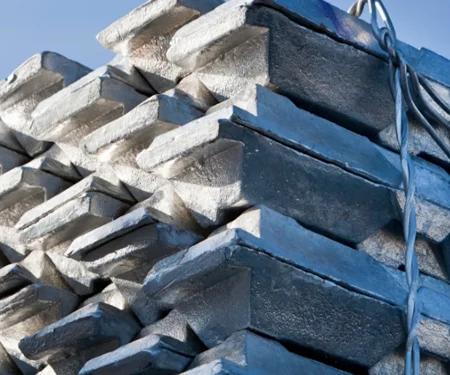
US aluminium extrusion demand to hit 4.2Mt by 2034: Which end-use sectors will drive demand?

Images (s) used in this article are AI-generated and do not represent a realtime moment
The United States is emerging as one of the most important markets for aluminium extrusions, with demand spread across transportation, building and construction, electrical and electronics, machinery and equipment, consumer durables and other industrial applications. IMARC estimates that the US aluminium extrusion market reached 3.0 million tonnes in 2025 and projects it to reach 4.2 million tonnes by 2034, representing a CAGR of 3.71 per cent between 2026 and 2034.
Transportation and building & construction dominate North American aluminium extrusion demand, together accounting for around 65 per cent of total usage. In 2024, transportation was estimated to represent 33 per cent of North American aluminium extrusion consumption, followed by building & construction at 32 per cent. Industrial applications accounted for 12 per cent, electrical & electronics for 10 per cent, and consumer durables for 8 per cent, while other applications made up the remaining 5 per cent.
Transportation remains a key aluminium extrusion market
Transportation is among the strongest demand centres for US aluminium extrusions, particularly automotive. Extruded aluminium is used in vehicle components including rocker systems, bumper beams, sub-frames, seat structures, battery boxes and crash-management systems.
The opportunity is becoming larger as automakers seek to reduce vehicle weight while maintaining structural strength. According to Ducker Carlisle data cited by the AEC, North American light vehicles are expected to contain 92 pounds of aluminium extrusion per vehicle by 2030, compared with 63 lb today. Total aluminium content is projected to exceed 556 lb per vehicle by 2030.
The rise of electric vehicles adds another layer of demand. Battery enclosures, structural components and crash-management systems are among the applications where complex extruded profiles can combine lightweighting, strength and thermal-management requirements. The AEC notes that battery-electric vehicles are expected to contain more extrusions than internal-combustion vehicles.
AL Circle’s North American extrusion forecast reinforces the trend, i.e., transportation accounted for an estimated 854,000 tonnes in 2023 and is projected to reach 1.03 million tonnes by 2030, growing at a CAGR of 2.71 per cent. These figures cover North America rather than the US alone, but the report identifies the US as the region’s major aluminium extrusion consumer.
To know the aluminium casting demand forecast in the construction sector, explore our report "Global Aluminium Casting Market 2026-2032"
Building and construction remains a volume heavyweight
Building and construction continues to be one of the largest end-use markets for aluminium extrusion in the US. Extruded aluminium profiles are widely used in window and door frames, curtain walls, glazing systems, partitions, structural framing, scaffolding and other architectural applications.
The US construction market is also increasingly aligned with demand for durable, corrosion-resistant and recyclable materials. IMARC identifies infrastructure development, housing and commercial construction as important drivers for aluminium extrusions, particularly in applications such as window frames, curtain walls, structural framing and roofing systems.
Across North America, AL Circle estimates that building and construction consumed 842,000 tonnes of aluminium extrusions in 2023, with demand forecast to reach 910,000 tonnes by 2030. The sector’s CAGR is estimated at 1.12 per cent over the period.
This makes construction a relatively mature but sizeable aluminium extrusion market, with growth increasingly linked to energy-efficient buildings, green construction and infrastructure investment rather than simply new building volumes.
Electrical and electronics offer faster growth
The electrical and electronics sector represents a smaller volume market than transportation and construction but offers stronger growth potential. Aluminium extrusions are used in busbars, electrical hardware, lighting fixtures, heat sinks, enclosures and other thermal-management applications.
The US market is particularly interesting for aluminium heat sinks, as rising demand for thermal management, computing equipment and electronic devices supports the use of precision extruded profiles. AL Circle’s research expects North American electrical and electronics extrusion consumption to rise from 259,000 tonnes in 2023 to 322,000 tonnes in 2030, representing a CAGR of 3.16 per cent, the fastest growth among the regions major traditional end-use sectors.
The expansion of renewable energy infrastructure also strengthens this segment. Aluminium extrusion applications extend to components associated with solar power systems and electrical infrastructure, adding another demand stream beyond conventional electronics.
Industrial applications broaden the demand base
The industrial sector is another established market for US aluminium extrusions. Applications range from machine frames, guards, conveyors and platforms to linear-motion systems, enclosures, actuators, motor bodies and solar-panel components.
AL Circle estimates that North American industrial extrusion usage will increase from 298,000 tonnes in 2023 to 328,000 tonnes by 2030, equivalent to a 1.38 per cent CAGR.

Consumer durables remain a steady market
Consumer durables represent a smaller but relatively stable outlet for extruded aluminium. Applications include heat exchangers and frames in air-handling units, air diffusers, air filters, furniture, luggage and kitchen fittings. The 6063 alloy is commonly used for consumer-durable applications.
North American consumption in this segment is estimated at 213,000 tonnes in 2023, with only modest growth to 221,000 tonnes by 2030, implying a CAGR of 0.53 per cent.
Thus, high-growth opportunities increasingly lie in automotive lightweighting, EV components, electrical applications, renewable energy and advanced industrial products, rather than traditional consumer applications alone.
Tariffs reshape the US aluminium extrusion supply equation
The US aluminium extrusion market is entering a more protectionist trade environment. The country has progressively tightened tariffs on imported aluminium and aluminium derivatives under Section 232, with the April 2026 framework setting a 50 per cent additional duty on aluminium articles and certain derivatives, while some derivative products made entirely from US-smelted and cast aluminium qualify for a lower rate. The tariff regime was further adjusted in June 2026.
For aluminium extrusions, higher import costs can encourage manufacturers in automotive, construction, electrical and industrial applications to source more products domestically.
At the same time, however, tariffs can raise input costs for US extruders that rely on imported aluminium or billet.
Connect with verified aluminium extrusion buyers and suppliers through the AL Biz marketplace.
US has extrusion capacity, but can it fill the gap?
The US has a significant domestic aluminium extrusion manufacturing base, giving it room to respond to higher local demand. USITC data show that US extrusion producers had 1.82 million short tonnes of practical capacity in 2023, against production of about 1.27 million short tons, putting capacity utilisation at only 70.1 per cent.
That unused capacity means the US does not necessarily need to build an entirely new extrusion industry to replace imports. Existing producers could increase output as demand and market conditions improve. However, capacity alone does not guarantee supply. Aluminium billet availability, alloy requirements, energy and labour costs, product specifications and downstream fabrication capabilities will determine how much of the additional demand can actually be met domestically.
USITC's investigation found that imports remained an important part of the US aluminium extrusion market, while the Commission also recorded that some domestic producers saw Section 301 tariffs as providing relief and creating additional domestic opportunities. At the same time, importers reported higher prices, reduced availability of Chinese extrusions and shifts in sourcing to other countries.
Tariffs could accelerate localisation — but not overnight
The direction of US policy is nevertheless clear, that more aluminium-intensive manufacturing is being pushed towards domestic supply chains. In July 2026, the US government also authorised an incentive programme aimed at companies investing in building, expanding or refurbishing domestic aluminium smelters, linking tariff benefits to approved onshoring plans.
For the extrusion industry, this could strengthen the upstream supply of primary aluminium over time. But new smelting and extrusion capacity requires investment and cannot be brought online as quickly as tariffs can alter import economics. The immediate opportunity, therefore, lies in utilising existing US extrusion capacity more intensively, while longer-term investment in aluminium, billet, extrusion and fabrication capacity determines how far the country can localise the value chain.
What will shape US aluminium extrusion demand?
The US aluminium extrusion market is entering a phase in which application mix matters as much as overall volume growth. Transportation is gaining importance as aluminium content per vehicle rises, while construction remains the largest traditional demand base. Electrical, electronics and industrial applications provide additional growth opportunities.
The shift is also changing what customers expect from extruders. AEC President Jason Weber said in April 2026 that demand across building and construction, automotive, electrical, infrastructure and general industrial applications continues to support the industry’s long-term outlook, even though near-term demand remains uneven.
This is encouraging investment in larger presses, recycling capacity, fabrication and more complex extrusion technologies. US extruders invested more than USD 140 million in 2023, while North American aluminium extrusion capacity was estimated at approximately 2.8 billion pounds, according to Ducker Carlisle data cited by the AEC.

The Aluminum Association reported that North American demand for extruded aluminium products declined 3.1 per cent in 2025, even as overall aluminium demand in the US and Canada increased 0.8 per cent.
The underlying picture, therefore, is not one of uniform growth. US aluminium extrusion demand is becoming increasingly application-driven, with automotive and EV lightweighting, construction and infrastructure, electrical and electronics, renewable energy and industrial manufacturing determining where the next wave of demand will come from.
AL Circle is coming up with a new Magazine "ALuminium’s Frontline: OEM Edition 2026." Feature your brand and opinion in the edition
The US has sufficient extrusion capacity to respond to part of this opportunity, but the bigger challenge will be ensuring that competitive aluminium and billet supply, specialised extrusion capabilities and downstream processing capacity grow alongside demand.
Note: This is exclusive coverage by AL Circle and may not be reproduced, republished or shared without prior permission.
Fred Stephan replaces Keith Harvey as CEO of Kaiser Aluminum, effective November 2026
Next articleTalica expands aluminium surface treatment portfolio with Hard Anodize acquisition
Grow with
AL Circle