Germany aluminium extrusion market outlook H2 2026 after imports fall 3.5% as exports rise 1%, & billet premiums double
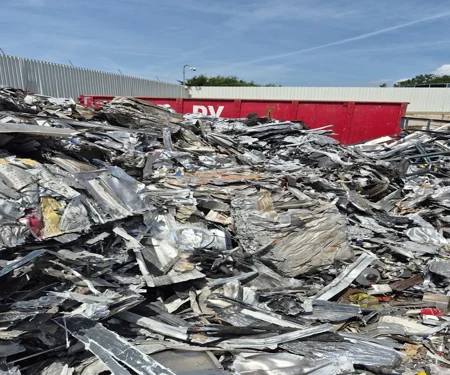
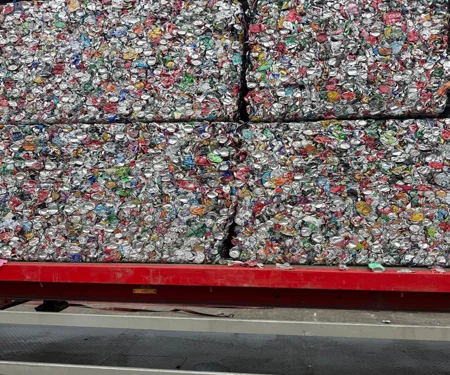
The images used in this article is generated with an AI tool and does not depict any real-time moment
Germany’s aluminium extrusion trade enters the second half of 2026 on firmer footing than a year ago, even as Europe's extrusion industry works through plant closures, elevated billet premiums and a shift toward low-carbon, value-added output.
Quarterly trade data through Q2 2026, along with AL Circle’s recently updated “The World of Aluminium Extrusions - Industry Forecast to 2035” and other reports on Germany’s aluminium extrusion market sizing, point to a market that is stabilising in volume but being rewritten in composition, with automotive lightweighting, EU carbon border rules, and energy-driven capacity rationalisation the dominant forces heading into H2 2026.
Germany's Aluminium Extrusion Trade Pulse (Q2 2024-Q2 2026)
Germany runs a large, structural trade deficit in basic aluminium extrusions (HS 7604), importing roughly double what it exports, consistent with its role as Europe's largest downstream fabrication and OEM hub rather than a primary extrusion exporter.
Over the trailing nine quarters, Germany’s HS 7604 exports and imports (with net import volume in brackets) moved as follows:
Germany’s extrusion trade followed a broadly seasonal pattern through 2024 and 2025. Exports declined from 83,854 tonnes in Q2 2024 to 68,067 tonnes in Q4, while imports fell from 147,579 tonnes to 111,042 tonnes over the same period.
The pattern reversed in early 2025, with exports reaching 75,137 tonnes in Q2 and imports climbing to 154,260 tonnes, widening net imports to 79,123 tonnes. Both flows then weakened through H2, with exports dropping to 61,572 tonnes and imports to 121,677 tonnes by Q4.
Again, the picture improved in 2026. Exports rose from 74,114 tonnes in Q1 to 77,863 tonnes in Q2, while imports increased from 139,304 tonnes to 147,743 tonnes. Despite the QoQ rebound in imports, the Q2 figures remained 4.2 per cent below Q2 2025, while exports were 3.6 per cent higher Y-o-Y.
-Takeaways from the trailing nine quarters:
Exports are outgrowing imports on a Y-o-Y basis for the first time in this window. Q2 2026 exports of 77,863 tonnes rose 3.6 per cent Y-o-Y (vs. 75,137 tonnes in Q2 2025) and 5.1 per cent Q-o-Q, while imports of 147,743 tonnes fell 4.2 per cent Y-o-Y (vs 154,260 tonnes) despite a 6.1 per cent Q-o-Q rebound.
H1 2026 exports (151,977 tonnes) edged up 0.96 per cent Y-o-Y over H1 2025 (150,533 tonnes), while H1 2026 imports (287,047 tonnes) contracted 3.5 per cent Y-o-Y from 297,413 tonnes — a modest but notable narrowing of Germany's extrusion trade gap.
Full-year 2025 volumes suggest that Germany exported 284,459 tonnes and imported 561,258 tonnes of HS 7604 extrusions, underscoring the scale of import dependency even as domestic and EU-neighbour fabrication capacity absorbs the bulk of that volume.
Evidently, a clear seasonal pattern exists. In both 2024 and 2025, Q3 volumes fell an average of 6 per cent (exports) and 8 per cent (imports) sequentially from Q2, with Q4 falling a further 13.2 per cent and 16.3 per cent respectively, a recurring H2 softness tied to the European construction and industrial calendar. Applying that same seasonal cadence to the Q2 2026 base points to an indicative H2 2026 range of roughly 136,000-137,000 tonnes of exports (up 2 per cent Y-o-Y) and 249,000-250,000 tonnes of imports (down 5 per cent Y-o-Y).

- Export destinations: Where German extrusions are flowing
Germany's top five export markets absorbed 47 per cent of total export volume in Q2 2026, reflecting a still-concentrated, EU-centric trade network.
Germany’s export markets are showing a generally healthier picture than its import origins. Austria remained the largest destination in Q2 2026, with exports rising 9.7 per cent Y-o-Y to 9,548 tonnes, although H1 shipments were up only 1.5 per cent. France also recorded solid growth, with Q2 exports increasing 5.7 per cent to 7,719 tonnes and H1 volumes rising 8.1 per cent.
The Netherlands and Slovakia were the standout growth markets. Exports to the Netherlands jumped 15.3 per cent Y-o-Y to 6,771 tonnes in Q2, taking H1 growth to 13.2 per cent. Slovakia recorded the strongest Q2 increase among the major destinations, with shipments surging 23.2 per cent Y-o-Y to 3,035 tonnes, while H1 volumes were up 7.5 per cent.
The Czech Republic and Hungary also posted healthy gains, with Q2 exports up 6.5 per cent and 10.2 per cent, respectively. Poland recorded a more modest 5.3 per cent increase, while Italy rose 3.0 per cent in Q2 but remained down 2.4 per cent on an H1 basis.
Switzerland was the notable exception, with Q2 exports falling 9.2 per cent Y-o-Y to 6,972 tonnes and H1 volumes declining 6.0 per cent. Spain was broadly stable in Q2 but remained 2.3 per cent lower in H1.
Connect with verified aluminium extrusion buyers and suppliers through the AL Biz marketplace.
- Import origins: Who is feeding Germany's extrusion demand
On the import side, Türkiye, Italy and Austria together account for over a third of Germany's HS 7604 inbound volume, with the top five suppliers making up 55 per cent of total imports in Q2 2026.
Germany’s import mix is showing a clear divergence among its major suppliers. Türkiye remained the largest source of aluminium extrusions in Q2 2026 at 20,192 tonnes, but volumes fell 10.3 per cent Y-o-Y and were down 11.3 per cent in H1 2026. Austria recorded an even sharper decline, with Q2 imports falling 14.0 per cent Y-o-Y to 17,425 tonnes and H1 volumes down 8.9 per cent.
Italy and Romania, meanwhile, moved in the opposite direction. Italian shipments rose 9.6 per cent Y-o-Y in Q2 to 19,816 tonnes, taking H1 growth to 5.3 per cent, while Romanian imports increased 9.7 per cent in Q2 and 4.6 per cent in H1. The Czech Republic was the standout growth market, with Q2 shipments jumping 16.9 per cent Y-o-Y to 8,629 tonnes and H1 volumes rising 14.2 per cent.
Among the remaining major suppliers, the Netherlands and Spain were broadly stable in H1, while Poland, Greece and Slovenia recorded declines. Poland’s H1 imports fell 2.5 per cent, compared with an 8.2 per cent decline for Greece and 2.8 per cent for Slovenia.
Türkiye, Germany's single largest extrusion supplier, has now declined for two straight quarters (down 10.3 per cent Y-o-Y in Q2, and down 11.3 per cent in H1), alongside softer intake from Austria, Poland, Greece and Slovenia. In contrast, Italy, Romania and the Czech Republic are gaining share, all posting mid-to-high single-digit or double-digit Y-o-Y growth.
The value picture: Germany's aluminium extrusion market size
Beyond tonnage, the value trajectory of Germany's aluminium extrusion market underscores why H2 2026 matters strategically. According to industry researchers, Germany's aluminium extrusion market was valued at USD 3.79 billion in 2025 and is projected to reach USD 5.02 billion by 2030, a 5.8 per cent CAGR.
Segment-level growth is being led by machinery & equipment (6.8 per cent CAGR) and automotive & mass transport (6.3 per cent CAGR), ahead of construction & infrastructure (5.4 per cent) and electrical & electronics (5.7 per cent).
Global demand model places Europe’s total aluminium extrusion usage at 3.48 million tonnes in 2025, rising to 4.42 million tonnes by 2035, a modest 2.41 per cent long-run CAGR and a roughly steady 9.9 per cent share of global consumption of 35.25 million tonnes.

Structural headwinds shaping the H2 2026 supply side
AL Circle’s H1 2026 industry update flags several developments directly relevant to Germany's extrusion supply chain:
Billet premiums have spiked sharply in Germany itself. Fastmarkets reported the 6063-alloy extrusion billet premium in North Germany's Ruhr region at USD 1,175-1,250 per tonne in May 2026, more than double the USD 560-600 per tonne seen in February 2026, which puts direct cost pressure on German extruders and downstream fabricators heading into H2.
Capacity rationalisation has reached German soil. Norsk Hydro's footprint-optimisation programme closed five European extrusion plants (including its Lüdenscheid facility in Germany) alongside Cheltenham, Bedwas, Feltre and Drunen, with a further closure proposed at Lucé, France, during 2026.
Europe’s primary aluminium output rose 4.9 per cent while alumina production fell 1.8 per cent in H1 2026, per AL Circle’s supply tracking, a widening feedstock gap that keeps upward pressure on regional metal and billet costs even as extrusion demand stabilises.
CBAM and anti-dumping frameworks continue to reshape sourcing. The EU’s Carbon Border Adjustment Mechanism and existing trade-defence measures against Chinese extrusions are pushing German and EU buyers toward low-carbon, recycled-content billet and EU-based or Customs-Union-aligned suppliers.
To know the global production, demand and consumption forecasts of aluminium extrusions, explore our report "The World of Aluminium Extrusions to 2035"
Demand-side catalysts to influence H2 2026, too
Two demand drivers will largely determine whether Germany's H2 2026 rebound holds.
Automotive lightweighting remains the strongest structural tailwind. The VDA (German Automotive Industry Association) forecasts German battery-electric vehicle production will rise 30 per cent to 693,000 units in 2026, even as overall domestic passenger car production edges down about 1 per cent and vehicle exports slip slightly to 3.2 million units. AL Circle's report similarly flags automotive and EV structural components (battery trays, crash-management structures, and busbars) as being among Europe’s strongest extrusion growth niches through 2035.
Construction, long a drag on German extrusion demand, is showing early stabilisation. Germany's construction investment is projected to grow around 1.7 per cent in real terms in 2026, supported by the "Sondervermögen Infrastruktur und Klimaneutralität" infrastructure fund, even though near-term order conversion remains slow due to planning and procurement bottlenecks, and construction PMI readings were still contractionary in early 2026 despite improving sentiment.
H2 2026 outlook: The verdict
Taken together, the data points to a cautiously improving but still uneven H2 2026 for Germany's aluminium extrusion trade.
Exports look set to hold their modest Y-o-Y growth trend (up 3.6 per cent in Q2 2026), aided by resilient demand from the Netherlands, Slovakia, France and Hungary, even as normal seasonal softness pulls absolute volumes down from the Q2 peak into Q3/Q4.
Imports are likely to stay in mild Y-o-Y contraction, extending the pattern of declining intake from Türkiye, Austria, Poland, Greece and Slovenia, as buyers continue reallocating toward CBAM-compliant, lower-carbon EU sources such as Italy, Romania and the Czech Republic.

Cost pressure, not demand destruction, is the dominant H2 2026 risk. The doubling of Ruhr-region billet premiums since February 2026, tightening European alumina supply, and Hydro’s German plant closure all point to a market rationalising capacity and pricing power even as underlying volumes stabilise.
Automotive EV lightweighting and early-stage construction recovery provide the clearest offsetting demand support, positioning Germany's extrusion market to track toward a projected 5.8 per cent value CAGR through 2030, even if physical tonnage growth remains comparatively muted.
Note: This is an exclusive coverage by AL Circle and may not be reproduced, republished or shared without prior permission.
Sudarshan Chemical deepens aluminium dyes footprint with $8.7m Swiss plant deal
Next articleMexico pursues US tariff deal as Canada trade talks collapse
Grow with
AL Circle