From record profits and EV demand shifts to giga-casting: Key developments in aluminium's downstream markets
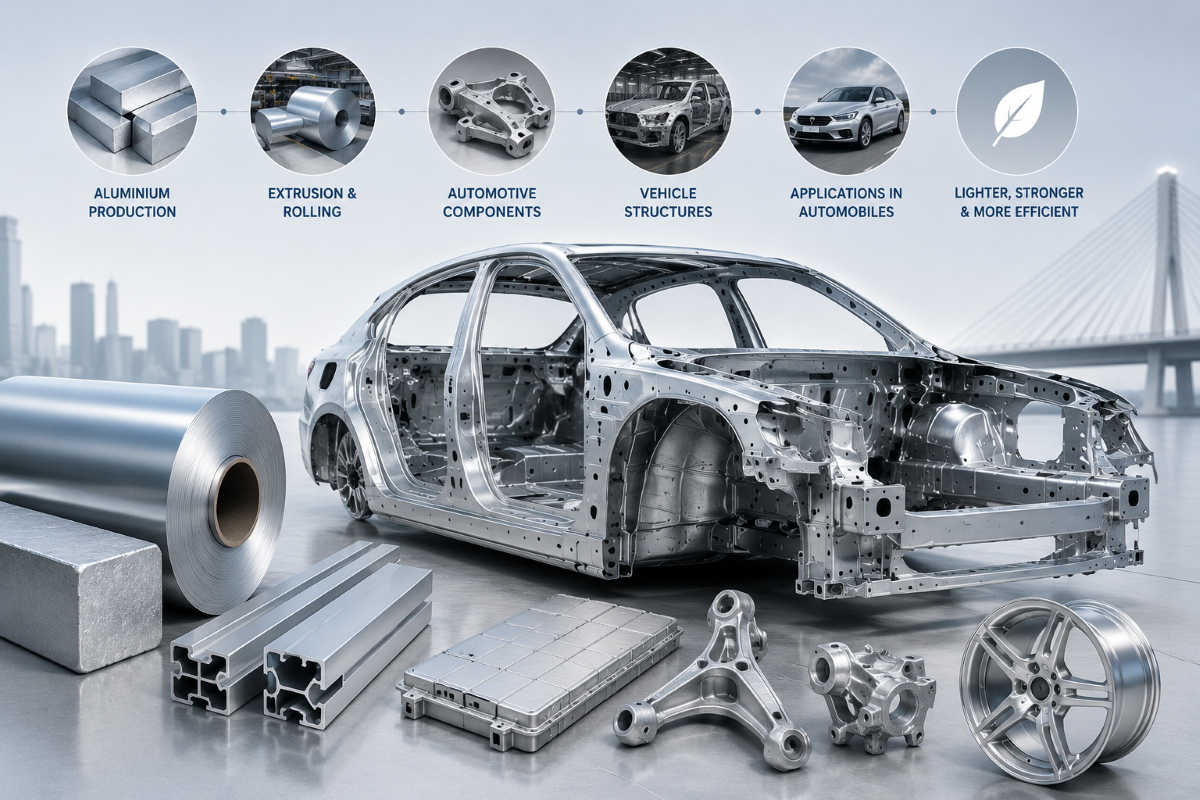
The image used in this article is generated with an AI tool and does not depict any real-time moment
The downstream and end-user segments of the aluminium industry delivered a diverse mix of developments, ranging from corporate earnings and infrastructure-led demand growth to changing electric vehicle sales patterns and new manufacturing technologies.
Aluminium processors benefited from stronger prices in several regions, automakers continued increasing the metal's role in vehicle design, and innovations in casting and packaging highlighted how aluminium applications are evolving beyond traditional markets.
At the same time, supply-chain concerns and regional demand shifts underscored the challenges facing some of the industry's largest consumers.
Earnings diverge across downstream aluminium companies
Recent corporate results showed that while higher aluminium prices supported several companies, gains were uneven across the downstream sector.
In the United States, Kaiser Aluminum reported a 42 per cent increase in revenue, even as shareholder movements remained limited after Systematic Financial Management LP reduced its stake by 2.2 per cent during the fourth quarter. The company's shares recently rose 3.6 per cent to close at USD 175.47, while institutional ownership remained above 99 per cent.
Malaysia's Press Metal Aluminium Holdings delivered another record quarter, with net profit rising 35.2 per cent year-on-year to MYR 624.5 million. Higher aluminium prices, stronger sales volumes and lower input costs helped extend the company's run of record earnings.
In India, MMP Industries posted a 64 per cent increase in fourth-quarter net profit and announced its maiden dividend. Revenue from operations rose around 23 per cent quarter-on-quarter to INR 2.5 billion from INR 2.03 billion in the previous quarter, supported by demand for aluminium powder, aluminium pastes and atomised powders used across industries including construction. Read the full story here.
Hindalco Industries closed FY26 with its highest-ever consolidated revenue and EBITDA. Revenue from operations rose 15.28 per cent year-on-year to INR 2.75 trillion, while EBITDA increased 7.33 per cent to a record INR 380.97 billion. However, reported profit after tax fell 16.32 per cent to INR 133.91 billion after the company absorbed exceptional losses linked largely to the Novelis Oswego plant fires.
The contrast came from Maan Aluminium, where profit after tax fell 55.5 per cent to INR 17 million. PBDIT declined to INR 16.4 million and the operating profit-to-net sales ratio weakened to 0.64 per cent, reflecting one of the company's softer quarterly performances in recent periods.
Infrastructure spending strengthens demand for aluminium-intensive products
Beyond company earnings, demand indicators remained positive for sectors that consume large volumes of aluminium.
India's cable and wire industry is expected to record revenue growth of 28-30 per cent in FY27, supported by an investment pipeline worth INR 10-12 trillion across power transmission, renewable energy, real estate, data centres and smart-meter projects. The growth forecast follows more than 20 per cent volume-led growth recorded by the industry in FY26. Click here.
Tighter global supplies and rising aluminium and copper prices are also expected to contribute to revenue growth, highlighting how infrastructure development, electrification projects and digital expansion are creating new opportunities for aluminium-intensive industries.
Downstream and End user by AL Circle Pvt Ltd
Europe emerges as the strongest EV market
The electric vehicle market continued to shape aluminium demand trends, although performance differed sharply across regions.
More than 5.45 million electrified vehicles, including battery electric vehicles (BEVs), plug-in hybrid electric vehicles (PHEVs) and hybrids, were sold across Europe, China and the United States during the first quarter of 2026.
Europe emerged as the strongest-performing region. Total EV sales across the European Union, the United Kingdom and EFTA countries reached 2.43 million units, representing an 18 per cent increase year-on-year. BEV sales rose 26 per cent to 724,000 units, PHEV sales increased 32 per cent to 354,000 units, and hybrid sales climbed 11 per cent to 1.35 million units. Electrified vehicles accounted for 69 per cent of all vehicle registrations in the region.
The picture was less positive elsewhere. China recorded a 21 per cent decline in EV sales while the US market contracted by 9 per cent following changes to incentive programmes. The contrasting regional trends are becoming increasingly important for future aluminium demand linked to vehicle production. Read the whole article here.
Explore: The most comprehensive and forward-looking industry-focused report "Aluminium Flat Rolled Products: Insights & Forecast to 2030"
Carmakers deepen their reliance on aluminium
Automakers are continuing to expand the use of aluminium as they seek lighter, stronger and more efficient vehicle structures.
BYD announced that its new aluminium frame technology for the Yangwang U8L SUV is around 56 kg lighter than a comparable steel structure while also delivering improved strength and corrosion resistance. According to the company, the frame has passed a 12-tonne lifting test and was designed to provide high structural performance without the weight penalty associated with steel-intensive designs.
The industry's shift towards aluminium is not new. Decades before lightweighting became a mainstream strategy, Audi introduced an aluminium-bodied luxury sedan after engineers concluded that the company's flagship Audi V8 had become too heavy compared with rivals such as the BMW 7 Series and Mercedes-Benz S-Class. The move helped establish aluminium as a viable material for vehicle bodies and influenced later adoption across the automotive industry, including by Ford.
Giga-casting reshapes automotive manufacturing
Beyond lightweighting, aluminium is changing how vehicles are manufactured.
Tesla's adoption of giga-casting technology has triggered a wider industry response, with BYD, Toyota, Volvo, Hyundai, NIO and Xiaomi all pursuing similar approaches. Some of the machines involved weigh as much as 410 tonnes and inject aluminium at pressures exceeding 1,500 bar.
The technology allows as many as 70 individual components to be consolidated into a single casting, fundamentally changing vehicle assembly processes. As a result, conventional automotive die-casting operations are facing growing pressure to adapt, while foundries, alloy suppliers and equipment manufacturers increasingly align themselves with the requirements of large-scale casting systems.
Packaging innovation and supply concerns remain in focus
Aluminium's influence continued to extend beyond automotive and infrastructure markets.
Canovation and CANPACK announced a collaboration to advance CanReseal, a resealable aluminium can-end system. The partnership is intended to complete the remaining development and manufacturing work required to move the technology toward pilot-scale deployment and future commercial applications.
Elsewhere, renewed interest in whether aluminium foil can improve Wi-Fi performance drew attention to research suggesting that the metal's reflective properties can influence wireless signal direction under certain conditions, turning a popular internet claim into a broader discussion about material science.
Supply security also remained a concern for major end users. Japan's automotive industry is considered one of the most exposed to disruptions in Middle Eastern aluminium supplies. Based on 2024 UN Comtrade data, around 30 per cent of Japan's aluminium and aluminium alloy imports originate from the region, leaving manufacturers vulnerable to rising procurement costs and potential shortages of specialised alloys through 2027. Read here.
Taken together, these developments show that the aluminium story is increasingly being written downstream. From record earnings and infrastructure-led demand to electric vehicles, giga-casting, packaging innovation and supply-chain challenges, the industries that consume aluminium are becoming just as important in shaping the market as the companies that produce it.
Explore our e-magazine ALuminium LeaderSpeak 2026 for the latest industry insights and trends.

Aluminium giant Constellium’s FY25 profit gains 358%: Would CBAM cloud the outlook?
Next articleSteel Strips Wheels advances aluminium project as expansion plans gather pace
Grow with
AL Circle