
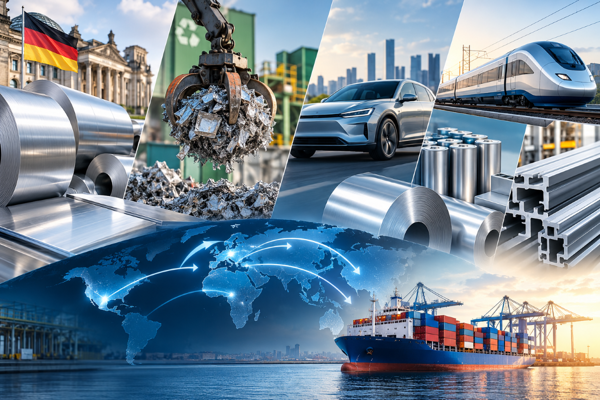
AL Circle analysis: Germany’s aluminium trade surplus, Novelis’ US expansion, Asia’s EV demand & India’s underutilised downstream capacity
Aluminium’s next growth phase is increasingly being shaped by downstream processing, supply-chain resilience and demand from specialised applications. Germany continues to generate a substantial trade surplus in flat-rolled products despite a shrinking primary aluminium base, while North America is investing in recycling and rolling. Across Asia, new manufacturing capabilities and growing demand from electric vehicles, railways and batteries are creating further opportunities. However, declining exports, underutilised capacity and uneven profitability show that investment alone does not guarantee success. For industry leaders, the challenge is to identify where demand is shifting, develop products that meet customer requirements and ensure that new investments translate into sustainable...
AL Circle Analysis: From Guinea to Gulf, how bauxite, tariffs and logistics redraw aluminium map
Aluminium markets in late 2026 are being shaped by more than the headline LME aluminium price. Bauxite security, alumina availability, geopolitical disruptions, tariff negotiations, logistics diversification and regional premiums are increasingly determining where metal moves and what buyers pay. From RUSAL reassessing Caribbean assets and Vedanta securing Odisha bauxite to Brazil extending mine life and EGA rebuilding its Guinea supply chain, producers are strengthening control over critical raw materials. At the same time, the US remains heavily dependent on imported bauxite and alumina, while Europe and Asia are experiencing sharply different premium dynamics. These developments point to a market where physical availability is becoming a regional factor even as aluminium itself remains...
Grow with
AL Circle

CBAM compliance: A checklist for importers in the European aluminium market
As both the worldwide aluminium exporters and the EU-based importers must have realised in the meantime, CBAM knocks on the door and is no longer a distant regulatory concept. Here’s a CBAM checklist that distils the compliance pathway into five actionable steps published by the European Commission that will aide the EU importers and external exporters alike in following the CBAM regulation without having to pay undue penalties. Image for reference only Explore- Most accurate data to drive business decisions with 50+ reports across the value chain The mechanism is on its way to have quarterly reporting, embedded-emission calculations (CBAM cost) and national oversight. Although aluminium producers outside the EU remain in the spotlight, a large share of legal responsibility rests equally...

From primary metal to autos: US tariffs redraw the EU aluminium map
What started as another round of US trade action in 2025 quickly turned into an aluminium problem for Europe. Washington moved to curb EU aluminium shipments under Section 232, but the EU chose not to answer with aluminium tariffs of its own. That left the adjustment one-sided. As US duties rose, European producers found themselves squeezed across the aluminium chain, from primary metal to processed and aluminium-containing goods. The turning point came on February 10, when the US announced a 25 per cent tariff on aluminium imports from the EU under Chapter 76 of the tariff schedule, covering unwrought primary aluminium such as ingots. The measures took effect on March 12, applying without quotas or exemptions. For European producers, the cost impact was immediate. Pressure intensified...

Scarce electricity and tariff pressure – what is the future of American aluminium?
The United States has been witnessing a collision between AI data storehouses and aluminium smelters, and a tug of war for electricity. All over the US, facilities are faced with electricity generation and transmission challenges. While choosing a customer to supply power, they are opting for the data centre as it can pay more with a rapid scale and also accept shorter terms. Consequently, aluminium smelting depends on a stable and affordable electricity supply. However, owing to the volatile and unstable flow of electricity (both conventional and renewable), aluminium has to bear the brunt of competitiveness erosion. Image for representational purposes only Explore- Most accurate data to drive business decisions with 50+ reports across the value chain Primary aluminium smelting is highly...
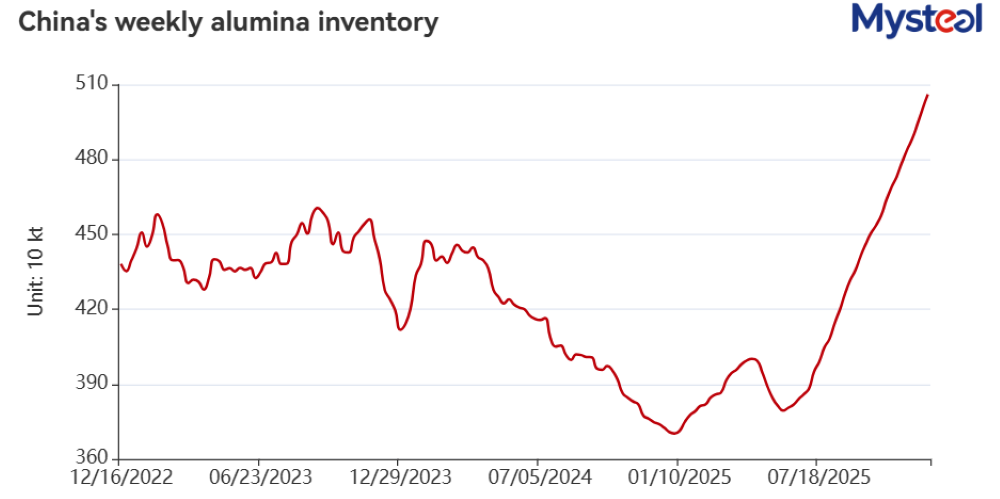
Chinese alumina stocks climb to new high
As of December 11, total alumina stocks across the country’s 10 major ports, 44 alumina producers, 89 primary aluminium smelters, and rail yards or in transit under Mysteel’s regular tracking had reached 5.06 million tonnes, according to results of Mysteel’s latest survey. This represented another 1.1 per cent increase from the previous week and renewed the highest level since Mysteel began the survey in January 2022. The inventory buildup has now extended for 28 consecutive weeks since early June this year, Mysteel Global noted. Last week’s stock accumulation was primarily driven by rising in-transit stocks of domestically traded alumina, market watchers explained. Unloading congestion at some ports, coupled with adverse weather conditions in North China, slowed or disrupted highway...

Vietnam’s rare earth export ban – imitating China, developing import-substitution, or laying the foundation for energy transition
Vietnam is recently being portrayed as “following China’s playbook” on rare earths after it introduced a ban on exports. But if studied closely, they are structurally different with two distinct objectives. While China has restricted its rare earth exports, effective April 4, 2025, using licensing, quotas, and regulatory scrutiny to reinforce its dominance over a supply chain it already controls, Vietnam has put a complete ban, effective January 2026, to supporting its domestic industry that has struggled for decades to exploit its reserves. 中文翻译附于新闻末尾,敬请继续阅读。 China vs Vietnam - imitation of policy or inspiration? China still accounts for 70 per cent of the global rare earth supply, boasting 700 million tonnes of reserves. and an even larger share of processing and magnet manufacturing....

India’s bauxite output rises to 24MT in 2025, with exports up 67.6% and imports easing 31.1%
India’s bauxite exports today look very different from where they stood just a few years ago. This change in picture is due to higher production at home and a gradual easing of import dependence. In 2023, exports over the nine-month period (January to September) totalled 60.968 thousand tonnes, worth USD 0.79 million. Volumes were small, and overseas shipments were not a priority. A year later, that balance had shifted. Exports in January–September 2024 rose to 241.771 thousand tonnes, with value climbing to USD 5.76 million. That worked out to a 296.6 per cent increase in volume and a 629.1 per cent rise in value year on year. By 2025, the move was even more visible. Ministry of Commerce and Industry data shows exports of 405.232 thousand tonnes between January and September, generating...

Aluminium UBCs supply over 70% of can scrap globally, but metallurgy determines circularity, Innoval’s COP30 factsheet shows
The aluminium beverage cans linger to be one of the strongest proofs that the aluminium industry’s circularity is attainable at scale. Not in theory, but in practice. A recent white paper presented by Innoval at COP30 shows that the evidence lies purely in metallurgy, process control and measurable emissions outcomes. Image for reference only Explore- Most accurate data to drive business decisions with 50+ reports across the value chain An Innoval spokesperson has said, “Can-to-can recycling is not only a technical success but a critical climate solution. By optimising metallurgy and processing, we can unlock real environmental benefits while maintaining quality.” Cans are not made from generic aluminium. They rely on two engineered alloys. One where the can’s body stock uses AA3104 and...

China's Jan-Nov primary aluminium output rises 2.5% YoY
In November alone, the national primary aluminium output also rose by 2.5 per cent from November 2024 to reach 3.79 million tonnes, the NBS data showed. However, the result was slightly lower by 0.2 per cent from October, Mysteel Global calculated based on official statistics. Demand from downstream automotive and power storage sectors continued to underpin primary aluminium consumption in November, market analysts said. Automotive aluminium consumption stayed robust last month, supported mainly by the launch of new vehicle models and steady automobile production and sales, as reported. Meanwhile, demand for the material from the power storage sector also improved. Around 11 provinces recorded newly commissioned energy storage projects during the month, Mysteel noted. Also read: Aluminium...

EU’s EV policy whiplash: Ford CEO worried about European automotive future
Ford CEO, Jim Farley has expressed his concern that the shifting EV rules and industrial policies as imposed by the European Union (EU) are highly steep and extremely stringent, leaving no room for flexibility or realistic approach for the European automakers to the market. He warns the European Commission against undermining its own automakers and jeopardising the future of the European automotive industry. Image for representational purpose only Explore- Most accurate data to drive business decisions with 50+ reports across the value chain The EV landscape of Europe is shaped by ambitious environmental goals and equally stringent directives that are being thrust upon the European market of automobiles. These range from CO2 targets to End-of-Life vehicles regulations. Corporate Average...

Energy market fault lines intensify in 2026 as AI, geopolitics and climate pressures converge
S&P Global Energy Horizons says the coming year will expose the strain within the world’s energy and sustainability systems, as governments and industries try to navigate rapid technological change, shifting geopolitical alliances and mounting climate risks. The report points to a world moving at different speeds. The US is setting its own priorities as artificial intelligence expands at a startling pace. Europe is trying to balance competing policy goals, and China is pushing further ahead in clean technology, drawing more of the global market into its orbit. A surge in electricity demand from AI is placing heavy pressure on grids, business models and environmental targets. Whether countries can make headway will depend heavily on how quickly they can expand and modernise network...

As Fastmarkets embeds CBAM into billet premiums, how do aluminium traders calculate costs?
We were all happy when we heard about the scrap exemption from the CBAM regime. But instead, it turned out to be a two-edged sword. If an EU business imports scrap and manufactures secondary aluminium, it will have to pay the tax for the secondary aluminium manufacturing, in accordance with the ETS system. If the business decides to import secondary aluminium, it still has to pay for CBAM. So, is shelter from tax a mere illusion for European aluminium businesses? Explore- Most accurate data to drive business decisions with 50+ reports across the value chain From January 1, 2026, Fastmarkets will include the European Union’s (EU’s) Carbon Border Adjustment Mechanism (CBAM) costs in its secondary aluminium billet premium, DDP Europe (MB-AL-0383) and primary 6063 extrusion billet premium,...

Lithium market dynamics: Supply-demand tensions and evolving price trends amidst global and domestic shifts
Since November, driven by strong demand from the energy storage sector, downstream material manufacturers have been operating at historically high utilisation rates, leading to a widening monthly supply gap for lithium carbonate. Prices surged significantly, with futures rising from around RMB 80,000 per tonne to over RMB 100,000 per tonne, marking substantial volatility. However, recent signs of slowing weekly destocking, coupled with rumors of the potential reopening of CATL, have slightly tempered bullish sentiment, and prices have re-entered a range-bound consolidation phase. At this juncture, market outlook diverges significantly. This article will analyse key market contradictions based on recent supply and demand data from industry surveys. Supply Side: In November 2025, the...

Aluminium Fluoride’s dual reality - indispensable to aluminium, burdensome to producers
Aluminium fluoride (AlF3) has long been a critical ingredient in aluminium production – vital for efficient electrolysis yet scrutinised for its environmental and economic costs. On one hand, it is a necessity, on the other, a dilemma. Functionally, aluminium fluoride is a cornerstone of the Hall–Héroult process as it reduces electrolyte’s melting point from ~2000°C to <1000°C, cuts energy consumption, increases the bath’s conductivity, and helps dissolve alumina into the electrolyte. In short, this additive allows for efficient electrolysis of alumina (Al₂O₃) into molten aluminum metal. But its utility comes at a cost, both literally and environmentally. The price of aluminium fluoride, although varies by purity and supplier, typically ranges between USD 1,000 and USD 1,800 per tonne in...

Secondary aluminium on track to add 22 MT of capacity as global projects gain momentum
With demand rising for low carbon aluminium, producers in several regions are accelerating plans to increase their secondary capacity. Much of the new capacity scheduled is concentrated in billets, slabs and ingots, which are increasingly becoming the main focus of recycling investments. Between 2022 and 2026, secondary additions are dominated by billets, which make up 11 million tonnes of the 22-million-tonne total. Their growing importance mirrors the expansion of extrusion and construction activity, where demand has remained consistently strong. Slabs follow with 8.8 million tonnes of new capacity, supported by rolling demand and a sharp increase expected in 2025 tied to automotive and packaging needs. SFA (Ingot) capacity, at 2.2 million tonnes, reflects the maturity of the ingot...

MONTHLY: China's alumina surplus to persist in December
China's alumina supply surplus is unlikely to ease significantly in December, as domestic output has shown little sign of large-scale curtailment, according to Mysteel's latest monthly report on the key raw material for primary aluminium smelting. Indeed, demand from the primary smelter sector remains steady but unimproved, the report notes. Explore- Most accurate data to drive business decisions with 50+ reports across the value chain On the supply side, large-scale reductions among domestic alumina refiners have not occurred. Some producers briefly trimmed output in November for routine maintenance and in response to weakening profit margins and local government efforts to reduce atmospheric pollution, the report observed. However, these temporary and small-scale curtailments had only a...

Inside the 2025 auto tariff: Three layers of duties that reshaped the industry and redirected trade routes
As tariffs rolled out this year, the automotive sector found itself navigating a policy shift that swiftly reconfigured supply chains, trade patterns and production decisions across markets. The tariff campaign on the automotive sector began with the first round of 25 per cent duties on April 3, hitting imported passenger cars, SUVs and light trucks under 14,000 pounds, instantly raising their costs and giving domestic producers such as GM and Ford a fresh competitive advantage. A second wave followed on May 3, this time directed at engines, transmissions, drivelines and electrical systems including batteries and wiring harnesses. Although manufacturers were granted a brief window to front-load inventories, the pressure was immediate, especially for those unable to meet USMCA’s 75 per...

2025 throwback: recap of the big primary aluminium companies aiming to go bigger
As 2025 prepares to make its exit, now is the time for a recap of the top 10 primary aluminium projects and initiatives from across the globe that were announced and commenced this year. The primary aluminium segment of the value-chain has seen it all during the ongoing calendar year — right from tariff imposition to LME price volatility and smelter closure or capacity curtailment. But these stories have steered the industry forward through the fog of uncertainty and promises to do so throughout the upcoming decade. Image for representational purposes Explore- Most accurate data to drive business decisions with 50+ reports across the value chain Oklahoma’s 4B aluminium grant from EGA - a first in 45 years Kevin Stitt, Governor of Oklahoma, announced on May 15, 2025, about a USD 4 billion...
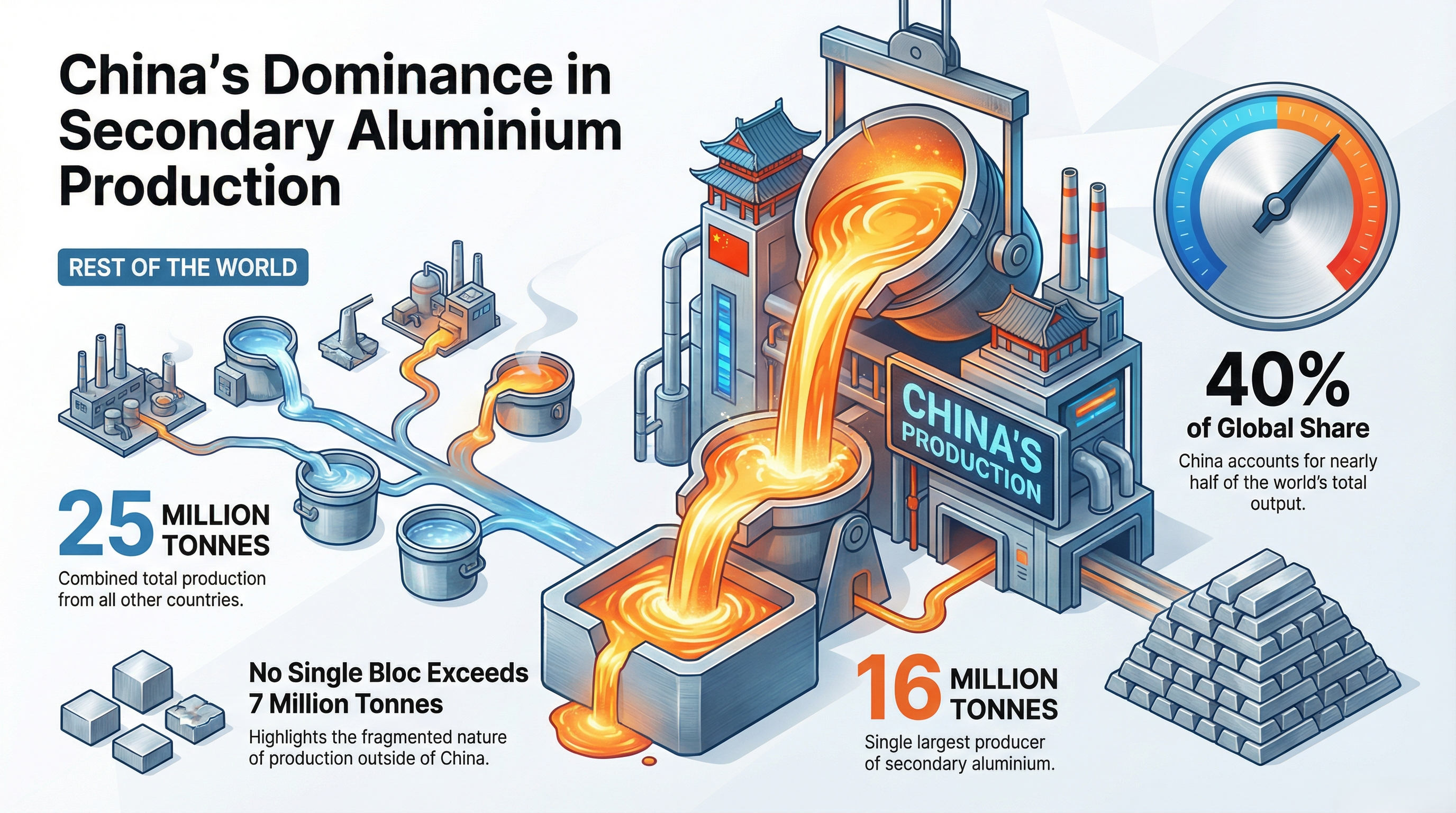
China wins the race against the US in aluminium recycling output, capacity and expansion
China and the United States have been vocal about shifting their focus to the recycled aluminium industry for quite some time. And why shouldn’t they? According to the International Aluminium Institute (IAI), rapid population and economic growth over the coming decades will push global aluminium demand to double by 2050, with 50-60 per cent of that demand expected to be met by recycled metal. The IAI also estimates that the global Recycling Efficiency Rate (RER) currently stands at 76 per cent, covering both new scrap and old scrap. The transportation sector leads aluminium recycling with an 86 per cent recovery rate, and among all end-use sectors, the automotive industry remains the single largest consumer of recycled aluminium. Having said that, at such a critical juncture for the...

