The employment scenario in the Indian aluminium industry has witnessed a significant shift in recent times. As the country progresses towards fulfilling its vision of Viksit Bharat 2047, major Indian aluminium companies have generated employment opportunities that have reached rural areas, no longer restricted in urban communities. Rural India has been experiencing a metamorphosis, with industries emerging in resource-rich districts for all round socio-economic activity.
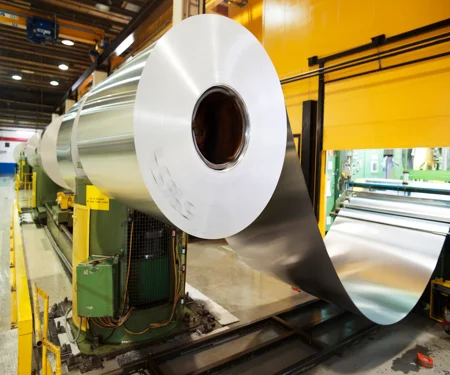
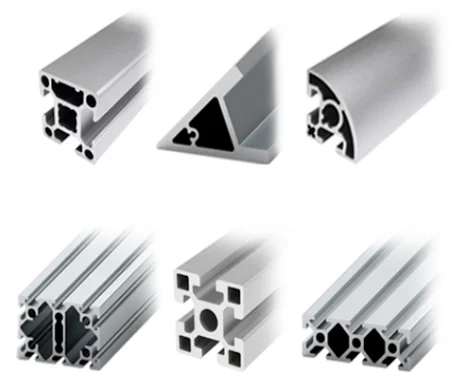
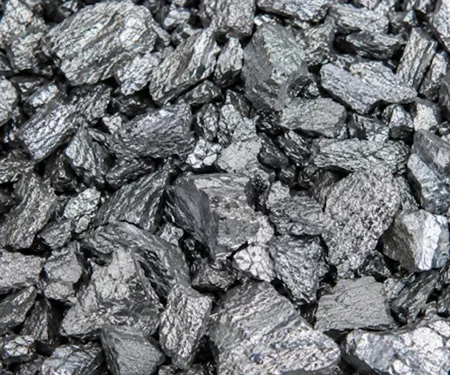
Image for referential purposes only
Explore- Most accurate data to drive business decisions with 50+ reports across the value chain
Role of the Aluminium Sector
Aluminium Association of India has cited estimates depicting the industry to have already generated over 800 thousand jobs and been supporting 4,000 SMEs in the ecosystem of the downstream category.
According to the Employment Report published by the Government of India, in the phase between 2016-17 and 2022-23, there has been a substantial rise in employment by almost 36 per cent. As a result, around 170 million jobs have been added across the economy.
Taking the hiring trend forward, aluminium companies have continued to add new members to their business, with several big organisations setting annual recruitment goals.
National Aluminium Company Limited (NALCO) posted a requirement notification for 518 positions: Electrical, Laboratory, Geologist, Fitter, Operator, HEMM Operator, Mining, Mining Mate, Instrumentation/Instrument Mechanic, Motor Mechanic, First Aider, Pharmacist Gr III, Laboratory Technician Gr III, and Nurse Gr III. The recruitment drive continued from December, 2024 to January, 2025. Currently, it is recruiting a Railway Operational Coordinator, along with executives and medical professionals in the corporate sector. There are also openings for non-executive professionals in the smelting division for S&P Complex, Angul, and M&R Complex, Damanjodi.
Hindalco, with a large existing workforce consisting of over 57,000 members in India and over 71,000 in total, has recruited 3,540 workers in the 2024-2025 phase. The company aims to maintain a streak of 1,000 recruitments annually.
Vedanta Aluminium (subsidiary of Vedanta Limited) hired 15,000 employees in 2025 while setting other milestones like observing gender diversity across its workforce with the very first women-operated smelter line, and an all-women locomotive team. It also plans to dedicate 30 per cent of the workforce to female employees by the end of FY25 and recruit 15 trans workers in 2026 to solidify workplace diversity.
Jindal Aluminium also posted two job openings for Lathe Machine Operator and Technician Helper early in December, 2025.
Don't miss out- Buyers are looking for your products on our B2B platform
The Aluminium Vision Document 2047
The Aluminium Vision Document 2047 has set an ambitious goal of a six-fold production growth and a bauxite capacity for 150 million tonnes per annum (MTPA) with low-carbon standards. Primary aluminium production is also expected to climb from the current 4.5 MTPA (approx.) to around 37 MTPA by 2047.
It also aims for an additional investment of around USD 240 to USD 260 billion. Such an amount would enable the sector to generate over 1 million fresh employment opportunities across the aluminium production chain — mining, refining, smelting, recycling, and value-added manufacturing.
With every 1 million tonnes of aluminium production, the industry opens doors to 20,500 direct and indirect jobs. Each direct job distributes 3.7 indirect jobs in allied areas such as engineering, maintenance and logistics. The job multiplying effect develops the skillset of the rural workforce and builds a foundation for the rural economy, not remaining congested in the already developed cities.
Unlocking aluminium potential
India's aluminium sector has made a track record of doubling production from 2 MTPA to 4.2 MTPA. However, the full potential of aluminium as an effective job engine and reaching 12 MTPA by 2030 and 37 MTPA by 2047 can be realised with the imposition of hefty customs duty on imported aluminium to resist dumping and promote domestic production. BIS quality standards can be enforced for imported scrap with less than 90 per cent aluminium content for sustainability.
Apart from the boost in bauxite and primary aluminium production, the Aluminium Vision Document 2047 also sets several green objectives. These include increasing the national recycling rate to a double to promote sustainability as well as boost the circular economy. Additionally, use of clean energy by adopting low-carbon technologies and green practices so as to reduce the carbon footprint of the industry and produce green aluminium.
Employment is being generated across various sectors, including the downstream and end-user categories, to achieve the “net-zero” goal by 2047. In June 2025, the Production Linked Incentive (PLI) Scheme reported an investment of INR 48,1 billion (USD 53.7 million) and the generation of 38,500 employment opportunities for High Efficiency Solar PV Modules.
The solar PLI scheme targets to set up a 48,337 MW manufacturing capacity of complete or partial solar PV modules. The aim is to construct a strong and sturdy solar PV manufacturing ecosystem, with an anticipated annual capacity of 65,000 MWPA. This initiative, involving aluminium as a core component, focuses on promoting renewable energy in the country, and is expected to generate 19.5 million direct jobs and 78 million indirect ones.
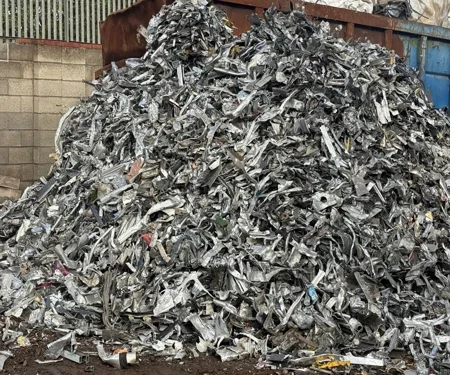
Moreover, collecting more domestic scrap for recycling purposes would boost the circular economy and foster industrial resilience. As the aluminium industry accounts for 2 per cent of India’s manufacturing GDP, a rise in domestic demand in the sector would seamlessly generate millions more jobs and take big steps closer to the fruition of Atmanirbhar Bharat and Make in India.













_md.webp)