Bauxite is the primary raw material used to produce alumina and, ultimately, aluminium - a metal essential to modern infrastructure, transport, packaging and clean energy systems. From power transmission lines to electric vehicles and beverage cans, aluminium’s widespread use begins with stable and sufficient bauxite supply.
Against this backdrop, the global bauxite market is entering 2026 with firmer fundamentals. AL Circle research estimates global bauxite production at 475–480 million tonnes in 2025, with output projected to rise by 6 per cent year-on-year in 2026. Demand across infrastructure, mobility, packaging and energy transition sectors continues to underpin this rise. To know more about the global primary aluminium industry 2026 outlook, book the report “Global ALuminium Industry Outlook 2026".
Guinea and Australia remain at the forefront of global bauxite production, with China, Brazil, Indonesia and India also ranking among the leading producers. The ten highest-producing bauxite mines in 2025 are as follows:
Weipa stands as one of Australia’s most strategic bauxite assets and a cornerstone of seaborne trade. Operated entirely by Rio Tinto, it remains central to Australia’s seaborne supply chain.
Production has moved steadily upward: from 35 million tonnes per annum (mtpa) in 2023 to 37mtpa in 2024, marking a 5.7 per cent year-on-year rise, and further to 39.4mtpa in 2025, reflecting a 6.5 per cent increase over the previous year.
With mining rights secured through 2058, Weipa provides rare visibility in a market where buyers increasingly value reliability as much as volume.
In Guinea, Sangaredi continues to reinforce the country’s reputation for high-quality, low-silica bauxite rich in gibbsite and boehmite. Ownership reflects a shared structure: the Guinean Government (49 per cent), Rio Tinto Group (22.95 per cent), Alcoa (22.95 per cent) and Dadco Investments Limited (5.1 per cent).
Output stood at 14.27mtpa in 2023, slipped slightly to 14mtpa in 2024, and then climbed to 17mtpa in 2025. The increase in Sangaredi Mine’s output was primarily driven by the CBG Expansion Project, which aimed to raise capacity to meet rising global demand.
With a mine life extending to 2038, Sangaredi remains firmly positioned within Guinea’s export-driven growth.
Huntly’s story over the past two years has been closely tied to refinery demand. Established in 1976 in Western Australia’s Darling Range, it supplies ore to Alcoa’s Pinjarra Alumina Refinery.
In 2023, Alcoa’s total bauxite production reached 41mtpa, with Huntly contributing 22.19mtpa - about 54.1 per cent of total output. A year later, overall production declined to 38mtpa. Huntly’s output fell to 17.2mtpa, reducing its share to roughly 45.3 per cent. The curtailment of the Kwinana refinery in June 2024 directly lowered demand for its ore.
For 2025, Alcoa’s total bauxite production is projected at 37.5mtpa. As the Kwinana refinery curtailment remains in effect, Huntly’s contribution is likely to stay around 45 per cent of the total, translating to an estimated output of about 16.88mtpa.
Located in Guinea’s Boké Region, roughly 8 km north by east of Boffa city, the Boffa project spans Boffa North (653.55 km²) and Boffa South (594.61 km²). Owned by Aluminum Corporation of China, the operation was developed as a greenfield project with a production scale of 12mtpa.
Actual output has expanded quickly - from 14mtpa in 2023 to 18mtpa in 2024 and approximately 20mtpa in 2025. With operations scheduled through 2081, Boffa stands out for both scale and longevity.
Société Minière de Boké (SMB) has emerged as the leading producer and exporter of bauxite in Guinea. The consortium operates three major mining sites - Santou and Houda, Malapouya, and Dabiss.
SMB produced 48 million tonnes per annum (mtpa) of bauxite in 2023, increasing output to 55mtpa in 2024. For 2025, production is estimated to reach around 70mtpa. The 2025 estimate is derived from export trends. Guinea’s total bauxite exports stood at 145mtpa in 2024, with SMB accounting for approximately 39 per cent of the total. This translates to roughly 55–56mtpa, aligning closely with its reported production for the year.
If Guinea’s total bauxite exports reach 183mtpa in 2025, and SMB maintains its 39 per cent share, the consortium’s exports would amount to approximately 70–71mtpa. This suggests that SMB’s projected exports for 2025 are broadly in line with its estimated production, indicating a near one-to-one export-to-production ratio.
The Boddington Bauxite Mine (Worsley Alumina) is a major operation situated near Boddington, about 130 km southeast of Perth in Western Australia.
The mine illustrates a clear shift toward capacity optimisation. Operated by South32 under the Worsley Alumina joint venture, output increased from 13.66mtpa in 2023 to approximately 18.8mtpa in 2024, bringing production in line with its rated annual capacity. Operations are currently scheduled to continue through 2036.
Located in Australia’s Northern Territory, the Gove Mine has been in operation since 1971 under Rio Tinto. The mine supplies both export markets and domestic refineries, including Queensland Alumina Limited and Yarwun in Gladstone.
Production rose from 11.56mtpa in 2023 to 12.72mtpa in 2024, marking a 10 per cent year-on-year increase. In 2025, output moderated slightly to 12.7mtpa, a marginal 0.16 per cent decline from the previous year.
Mining activity is expected to wind down later this decade, with the operation’s life currently projected through 2030.
Mineração Rio do Norte (MRN)
In Brazil, MRN, located in Porto Trombetas, has delivered steady incremental growth. Production measured 11.47mtpa in 2023, edged up to 11.52mtpa in 2024 and reached 11.56mtpa in 2025.
The joint venture partners include Rio Tinto (22 per cent), South32 (33 per cent) and Glencore (45 per cent). Operations are planned through 2027.
Tinguilinta’s recent trajectory has been shaped by ownership change. In August 2025, control shifted from Emirates Global Aluminium’s subsidiary Guinea Alumina Corporation to Nimba Mining Company S.A., a fully state-owned entity.
During the transition, production declined from 11.97 million tonnes in 2023 to 10.8 mtpa in 2024. Production was halted for a brief moment and the again export activity resumed in late October 2025, with 600,000 tonnes shipped by early December. The company is targeting more than 1 million tonnes in 2025 and plans to scale up to 10 million tonnes in 2026. Read the full interview for more exclusive details.
All production is exported, primarily to China and India, so exports closely track output. Mine life extends to 2039.
Mineração Paragominas, located in northeast Pará, began operations in 2007 and carries a nominal capacity of 9.9mt. Production reached 10.89mtpa in 2023, eased slightly to 10.50mtpa in 2024 and stood at 10.51mtpa in 2025. With operations secured through 2041, it remains a steady and long-term contributor within Brazil’s portfolio.
Taken together, these mines show how the bauxite market is evolving. Volumes are rising, but more selectively. Capacity is being used more deliberately. Export channels are aligning more closely with production.
2025年全球铝土矿产量约4.8亿吨——从韦帕到帕拉戈米纳斯,谁在驱动增长?
铝土矿是生产氧化铝、并最终生产原铝的主要原料。铝作为关键金属,广泛应用于现代基建、交通、包装及清洁能源体系。从输电线路、电动汽车到饮料罐,铝的广泛应用,其源头都离不开稳定、充足的铝土矿供应。
在此背景下,全球铝土矿市场在2026年迎来更坚实的基本面。据AL Circle研究测算,2025年全球铝土矿产量约为4.75亿–4.80亿吨,预计2026年同比增幅将达到6%。基建、交通、包装及能源转型领域的需求持续支撑这一增长。如需了解更多2026年全球原铝行业展望,可订阅《2026年全球铝业展望》报告。
几内亚和澳大利亚仍是全球铝土矿生产龙头,中国、巴西、印度尼西亚和印度也位居主要生产国之列。2025年全球产量前十的铝土矿如下:
韦帕铝土矿(Weipa)
韦帕是澳大利亚极具战略意义的铝土矿资产,也是海运贸易的核心支柱,由力拓(Rio Tinto)全资运营,始终是澳大利亚海运供应链的关键环节。
其产量稳步提升:2023年为3500万吨/年,2024年增至3700万吨/年,同比增长5.7%;2025年进一步升至3940万吨/年,同比增幅6.5%。
该矿采矿权已续至2058年,在当下市场买方对可靠性与供应量同等重视的背景下,韦帕提供了难得的长期稳定预期。
桑加雷迪矿(Sangaredi)
在几内亚,桑加雷迪矿持续巩固着该国作为高品质、低硅、富含三水铝石和一水软铝石铝土矿生产国的声誉。其所有权结构为:几内亚政府(49%)、力拓集团(22.95%)、美铝(22.95%)和Dadco投资有限公司(5.1%)。
该矿产量在2023年为每年1427万吨,2024年略降至每年1400万吨,随后在2025年攀升至每年1700万吨。桑加雷迪矿产量的增长主要得益于CBG扩建项目,该项目旨在提高产能以满足不断增长的全球需求。
随着矿山寿命延长至2038年,桑加雷迪矿稳居几内亚出口驱动型增长的前沿。
亨特利矿(Huntly)
过去两年,亨特利矿的生产走势与氧化铝厂需求高度绑定。该矿1976年建于西澳大利亚达令山脉,为美铝平贾拉氧化铝厂供应铝土矿。
2023年,美铝整体铝土矿产量4100万吨/年,其中亨特利贡献2219万吨,占比约54.1%;次年整体产量降至3800万吨,亨特利产量回落至1720万吨,占比约45.3%。2024年6月奎纳纳氧化铝厂减产,直接导致其矿石需求下滑。
2025年,美铝整体铝土矿产量预计3750万吨/年。鉴于奎纳纳氧化铝厂仍处于停产状态,亨特利占比或将维持在45%左右,对应产量约1688万吨/年。
博法铝土矿(Boffa)
博法项目位于几内亚博凯大区,博法市东北约8公里处,分为北博法(653.55km²)与南博法(594.61km²)矿段,由中国铝业(Chalco)投资开发,为新建绿地项目,设计产能1200万吨/年。
实际产量增长迅速:2023年1400万吨/年,2024年1800万吨/年,2025年约2000万吨/年。矿山运营期限至2081年,规模与服务年限均具备突出优势。
博凯矿业公司(Société Minière de Boké, SMB)
SMB已成为几内亚领先的铝土矿生产与出口企业,旗下运营三大矿区:桑图-乌达、马拉普亚、达比斯。
2023年SMB铝土矿产量4800万吨/年,2024年增至5500万吨/年,2025年预计达7000万吨/年左右(基于出口趋势测算)。2024年几内亚铝土矿总出口量1.45亿吨,SMB占比约39%,对应出口量5500万–5600万吨,与当年公布产量基本吻合。
若2025年几内亚总出口量达1.83亿吨,SMB维持39%占比,则出口量约7000万–7100万吨,与预估产量基本一致,显示其产量与出口量接近1:1。
博丁顿铝土矿(Boddington)
博丁顿铝土矿(隶属于沃斯利氧化铝项目)位于西澳大利亚珀斯东南约130公里的博丁顿附近,是大型主力矿山。
该矿呈现明显的产能优化趋势,由South32运营(沃斯利氧化铝合资公司)。2023年产量1366万吨/年,2024年升至约1880万吨/年,达到额定年产能。矿山运营期限至2036年。
戈夫矿(Gove)
戈夫矿位于澳大利亚北领地,1971年由力拓投入运营,产品同时供应出口市场与国内氧化铝厂,包括昆士兰氧化铝有限公司及格拉德斯通的雅文氧化铝厂。
2023年产量1156万吨/年,2024年升至1272万吨/年,同比增长10%;2025年小幅回落至1270万吨/年,同比微降0.16%。
矿山预计在十年内逐步关停,目前服务年限至2030年。
北里奥矿业公司(Mineração Rio do Norte, MRN)
巴西MRN矿位于特龙贝塔斯港,产量实现稳步小幅增长:2023年1147万吨/年,2024年微增至1152万吨/年,2025年达1156万吨/年。
合资方包括力拓(22%)、South32(33%)、嘉能可(45%),运营计划至2027年。
廷吉林塔矿(Tinguilinta)
廷吉林塔矿近年走势受股权变更影响。2025年8月,控股权由阿联酋环球铝业旗下几内亚氧化铝公司,转至全资国有的宁巴矿业公司。
过渡期内,产量从2023年1197万吨降至2024年1080万吨/年,生产一度短暂暂停,后于2025年10月底恢复出口,12月初发货量达60万吨。公司目标2025年出口超100万吨,2026年扩产至1000万吨。
全部产量均用于出口,主要流向中国与印度,出口量与产量高度匹配。矿山服务年限至2039年。
帕拉戈米纳斯矿(Paragominas)
帕拉戈米纳斯矿位于帕拉州东北部,2007年投产,额定产能990万吨/年。2023年产量1089万吨/年,2024年小幅回落至1050万吨/年,2025年为1051万吨/年。矿山运营期限至2041年,是巴西铝土矿板块中长期稳定的供应来源。
综上,这些矿山的表现反映出铝土矿市场的演变趋势:总量上升,但增长更趋结构性;产能利用更趋理性;出口渠道与生产匹配度进一步提升。
Don’t miss out- Buyers are looking for your products on our B2B platform
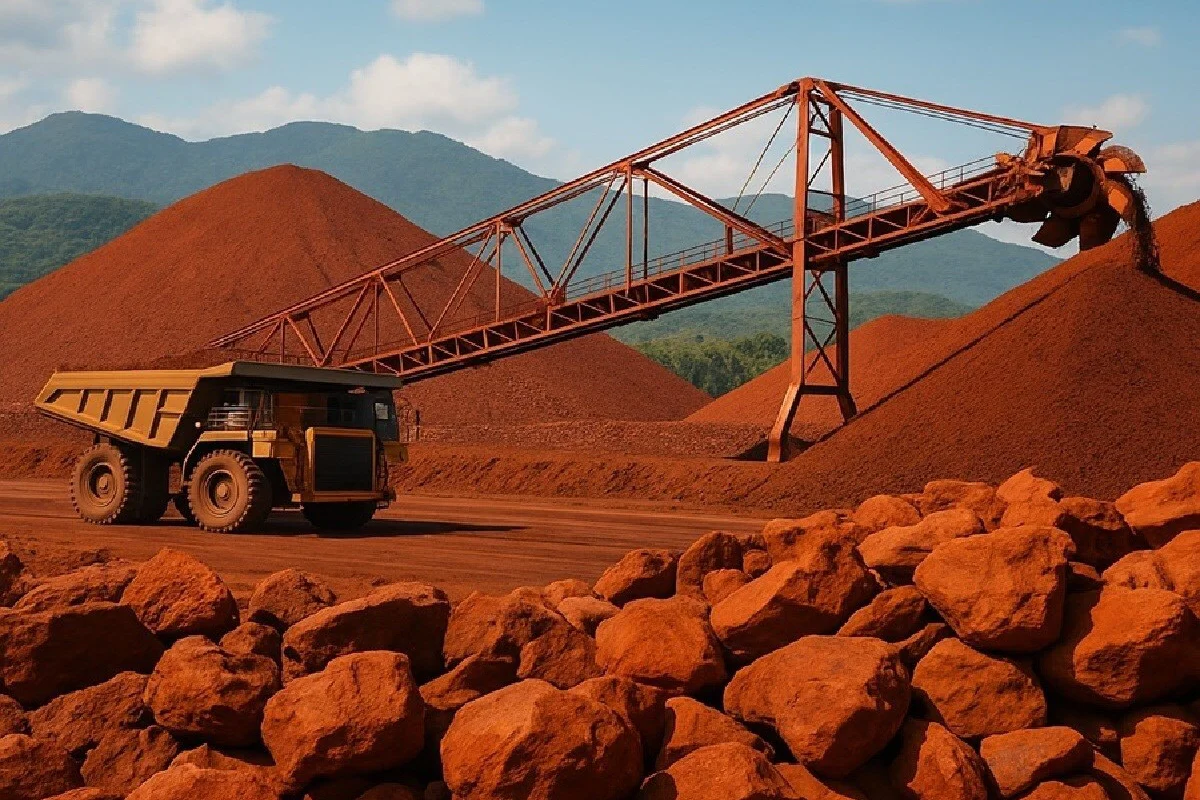
Image generated by AI for referential purpose













_md.webp)
_md.webp)
_md.webp)







