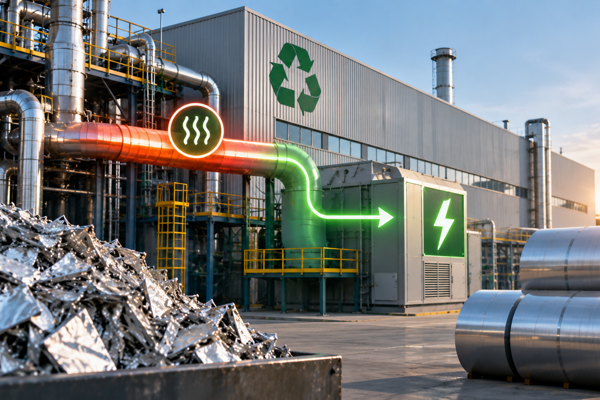
Novelis has commissioned a new waste heat recovery system at its Nachterstedt aluminium recycling plant in Germany, with the EUR 2.6 million (USD 2.86 million) investment expected to generate approximately 8.2 million kilowatt-hours (kWh) of electricity annually. The system will convert heat generated during aluminium scrap processing into electricity, potentially meeting around 15 per cent of the facility's annual power demand while avoiding an estimated 3,000 metric tonnes of CO2e emissions each year. The new system captures waste heat produced during decoating, a stage of aluminium recycling in which coatings and other organic materials are removed from scrap before the metal is remelted. Instead of allowing this heat to go unused, the technology converts it into electricity for...
The United Arab Emirates (UAE) is set to give aluminium a second life as Dubai is preparing to introduce mandatory material passports for aluminium, steel and cement from 2027. The step is expected to construction materials under a harmonised tracking system, to reinforce recycling, reuse and a circular economy. The initiative aims to lead the emirate's construction industry away from the conventional use-and-disposal model by extending the life cycle of materials recovered from demolished buildings. Dubai Municipality announced the Building Materials Passport initiative at Dubai Future Week 2026. Under the theme 'For the Future Human', the event brings together more than 10,000 participants, including experts, decision-makers, policymakers and innovators. The material passport system is...
Grow with
AL Circle

Lindian Resources has begun diamond drilling at its North Knoll prospect in Malawi, marking the first real test of a target that has been drawing interest since early sampling returned rare earths grades as high as 7.15 per cent total rare earth oxides (TREO). North Knoll sits just 800m north of the company’s Kangankunde project, one of the world’s premier undeveloped rare earths deposits outside China, and the similarities between the two are already attracting attention. Earlier work at North Knoll delivered rock chip assays containing high-grade neodymium and praseodymium (NdPr), with NdPr/TREO ratios ranging from 19.2 to 28.8 per cent. Those ratios match what is seen in the main Kangankunde deposit and suggest the mineralisation may continue between the two areas. Field mapping has...

The partnership of French-Swiss firm IB2 and Shanxi Senze Energy Technology Group results in a breakthrough technology of converting low-grade bauxite into high-quality feedstock that can be applied in aluminium production. This innovation will not only revive exhausted bauxite mines but also enable the extraction of rare earth elements and critical minerals used in electric vehicles, semiconductors, and national defence. Image for referential purpose only (source: https://www.mindat.org/) Explore- Most accurate data to drive business decisions with 50+ reports across the value chain A paper published in Minerals Engineering in May, a peer-reviewed journal, observed that 3 per cent of the total bauxite reserves in the world are located in China. Here, the Chinese researchers suggested the...

Aluminium fluoride (AlF3) has long been a critical ingredient in aluminium production – vital for efficient electrolysis yet scrutinised for its environmental and economic costs. On one hand, it is a necessity, on the other, a dilemma. Functionally, aluminium fluoride is a cornerstone of the Hall–Héroult process as it reduces electrolyte’s melting point from ~2000°C to <1000°C, cuts energy consumption, increases the bath’s conductivity, and helps dissolve alumina into the electrolyte. In short, this additive allows for efficient electrolysis of alumina (Al₂O₃) into molten aluminum metal. But its utility comes at a cost, both literally and environmentally. The price of aluminium fluoride, although varies by purity and supplier, typically ranges between USD 1,000 and USD 1,800 per tonne in...

With demand rising for low carbon aluminium, producers in several regions are accelerating plans to increase their secondary capacity. Much of the new capacity scheduled is concentrated in billets, slabs and ingots, which are increasingly becoming the main focus of recycling investments. Between 2022 and 2026, secondary additions are dominated by billets, which make up 11 million tonnes of the 22-million-tonne total. Their growing importance mirrors the expansion of extrusion and construction activity, where demand has remained consistently strong. Slabs follow with 8.8 million tonnes of new capacity, supported by rolling demand and a sharp increase expected in 2025 tied to automotive and packaging needs. SFA (Ingot) capacity, at 2.2 million tonnes, reflects the maturity of the ingot...

Japan’s aluminium market may be heading into a much firmer pricing environment next year, with Marubeni Corp signalling that buyers could be paying USD 85 to USD 203 per tonne in premiums through 2026. The trading company expects international price strength to divert metal away from Asia, tightening availability for Japanese importers. Image source: https://2.bp.blogspot.com/ Explore- Most accurate data to drive business decisions with 50+ reports across the value chain Although Japan relies heavily on overseas aluminium and typically negotiates quarterly surcharges above the London Metal Exchange cash price, those premiums have slipped to USD 86 per tonne in the current quarter, far below USD 228 agreed at the start of the year. That downward stretch may not last long. Talks for the...

The Canyon Minim Martap bauxite project at Cameroon that combines superior quality of bauxite ore with strategic infrastructure positioning can lead to an improved level of regional commodity flow to meet geological excellence. In the current market situation that prefers high-grade deposits to minimise the refinery processing cost and raise the pricing of aluminium, Cameroon makes a strategic entry with bauxite. With Canyon Resources' Minim Martap development, it delves into large-scale mineral extraction, laying a foundation for future mining investments. This marks Cameroon’s possibility for moving beyond agricultural export dependence toward a diversified market. Image generated through AI tool (for referential purposes only) Explore- Most accurate data to drive business decisions...

LME aluminium prices showed mixed movement on December 10, while exchange inventories continued to ease, according to the latest market data. The LME aluminium cash bid price rose to USD 2,836 per tonne on December 10, up from USD 2,831.5 per tonne a day earlier — a 0.16 per cent increase. The cash offer edged higher to USD 2,836.5 per tonne, compared with USD 2,832 per tonne on December 9, marking a 0.16 per cent rise. In contrast, the 3-month contract softened. The 3-month bid slipped to USD 2,865 per tonne on December 10 from USD 2,867 per tonne on December 9, a 0.07 per cent decline. The 3-month offer eased to USD 2,867 per tonne, down from USD 2,868 per tonne, also a 0.03 per cent drop. Explore- Most accurate data to drive business decisions with 50+ reports across the value chain...

Slovakia’s electricity distribution network is set for a major overhaul after the European Investment Bank ( EIB) approved a EUR 350 million ( USD 408 million) loan for the Zapadoslovenska energetika (ZSE) Group. The funding will support a multiyear programme aimed at modernising key parts of the energy grid, including upgrades in and around Bratislava. According to the original report, much of the investment will be channelled into projects in the western and eastern regions of the country. The programme covers high, medium, and low-voltage infrastructure, with plans to renew overhead lines, lay new underground cables, and upgrade transformers and substations. ZSE will also deploy smart technologies and greater automation across the network. The EIB believes these measures will...

Alcoa has warned that the rapid expansion of energy-hungry data centres poses a growing challenge for the future of aluminium smelting, with operators willing to pay far more for electricity than industrial producers can afford. The US-based aluminium business believes the disparity in power costs is already reshaping the landscape for smelter operations. Addressing the Citi 2025 Basic Materials Conference on December 3, Molly Beerman, Alcoa’s Executive Vice President and Chief Financial Officer, highlighted the widening gulf in energy pricing. She noted that US smelters generally pay between USD 30 and USD 40 per megawatt hour, while data centres are prepared to take power at prices exceeding USD 100 per megawatt hour. That gap, she said, makes it increasingly difficult for smelters to...

As tariffs rolled out this year, the automotive sector found itself navigating a policy shift that swiftly reconfigured supply chains, trade patterns and production decisions across markets. The tariff campaign on the automotive sector began with the first round of 25 per cent duties on April 3, hitting imported passenger cars, SUVs and light trucks under 14,000 pounds, instantly raising their costs and giving domestic producers such as GM and Ford a fresh competitive advantage. A second wave followed on May 3, this time directed at engines, transmissions, drivelines and electrical systems including batteries and wiring harnesses. Although manufacturers were granted a brief window to front-load inventories, the pressure was immediate, especially for those unable to meet USMCA’s 75 per...

Rio Tinto is re-examining a long-standing shareholder constraint that has shaped its capital strategy for more than a decade. Speaking at the miner’s annual investor day, CEO of Rinto Tinto, Simon Trott, confirmed active discussions with its largest shareholder, Aluminium Corporation of China Limited (Chinalco). The goal is to resolve governance limits that restrict Rio Tinto’s ability to conduct share buybacks. “In terms of the Chinalco shareholding, we’re actively working with Chinalco on solutions to address that constraint and what that might look like,” Trott said. He also added that progress would take time and that “there's nothing concrete at this stage.” Read More: Rio Tinto to invest $50 million to improve waste handling at Tiwai Point The talks gain added significance following...
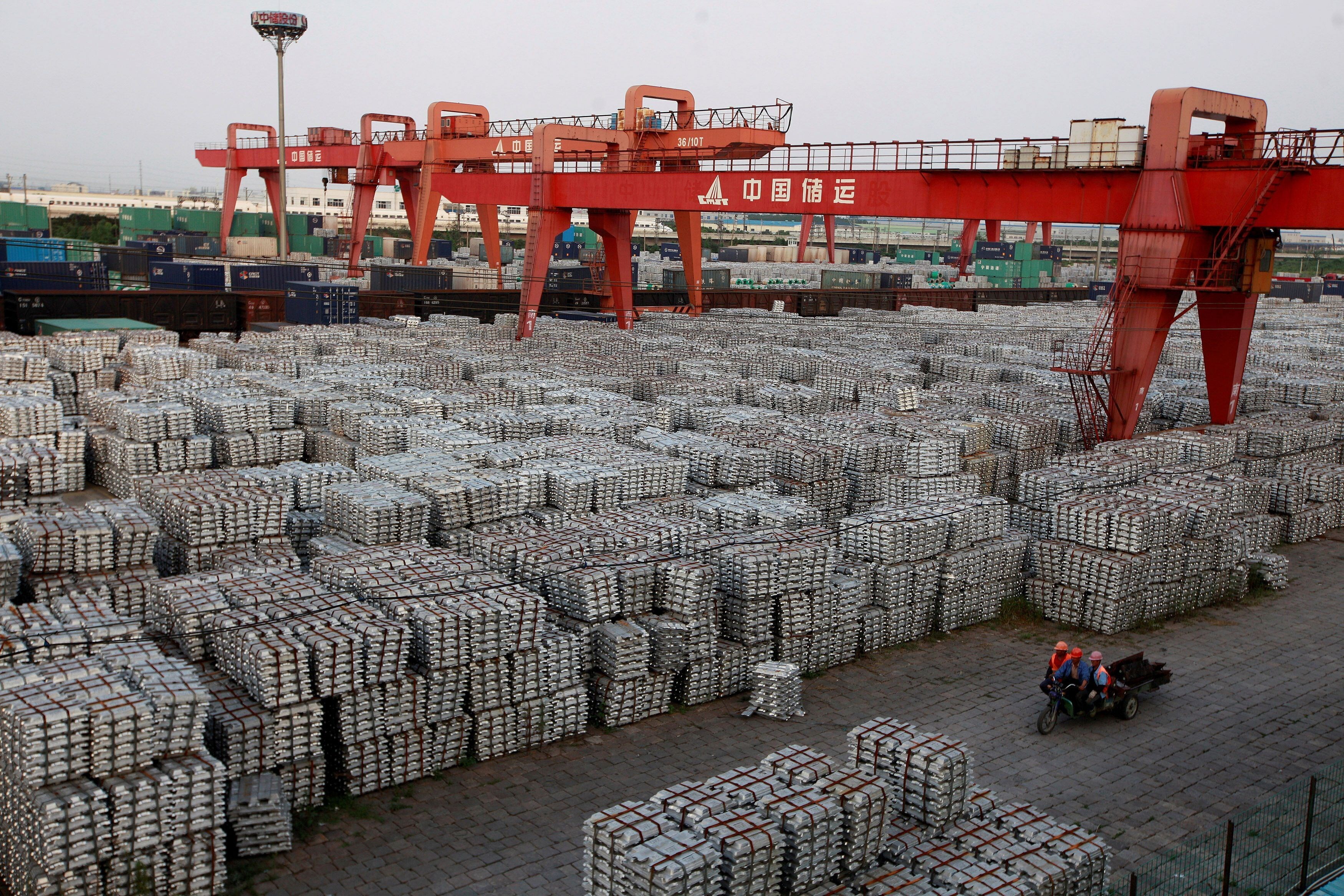
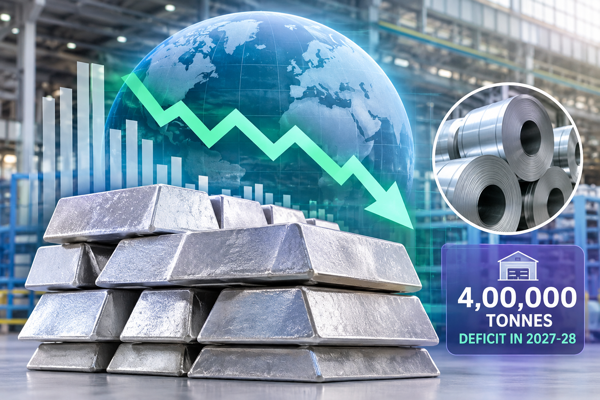
China’s steel and aluminium sectors are moving in sharply different directions, with steel exports surging even as aluminium shipments decline. Steel mills, facing weak domestic demand from the flagging property sector and operating near Beijing’s informal output cap of 1.005 billion tonnes, have aggressively pushed into overseas markets. Exports rose 6.7 per cent to 107.72 million tonnes in the first eleven months of the year, while aluminium exports showed absolutely a reverse trend. China’s exports of refined aluminium and related products dropped 9.2 per cent in the January to November period, amounting to 5.59 million tonnes. With domestic production expected to come in near the 45 million tonne annual cap, stronger demand from manufacturing and the energy sector has kept more metal...

As 2025 prepares to make its exit, now is the time for a recap of the top 10 primary aluminium projects and initiatives from across the globe that were announced and commenced this year. The primary aluminium segment of the value-chain has seen it all during the ongoing calendar year — right from tariff imposition to LME price volatility and smelter closure or capacity curtailment. But these stories have steered the industry forward through the fog of uncertainty and promises to do so throughout the upcoming decade. Image for representational purposes Explore- Most accurate data to drive business decisions with 50+ reports across the value chain Oklahoma’s 4B aluminium grant from EGA - a first in 45 years Kevin Stitt, Governor of Oklahoma, announced on May 15, 2025, about a USD 4 billion...
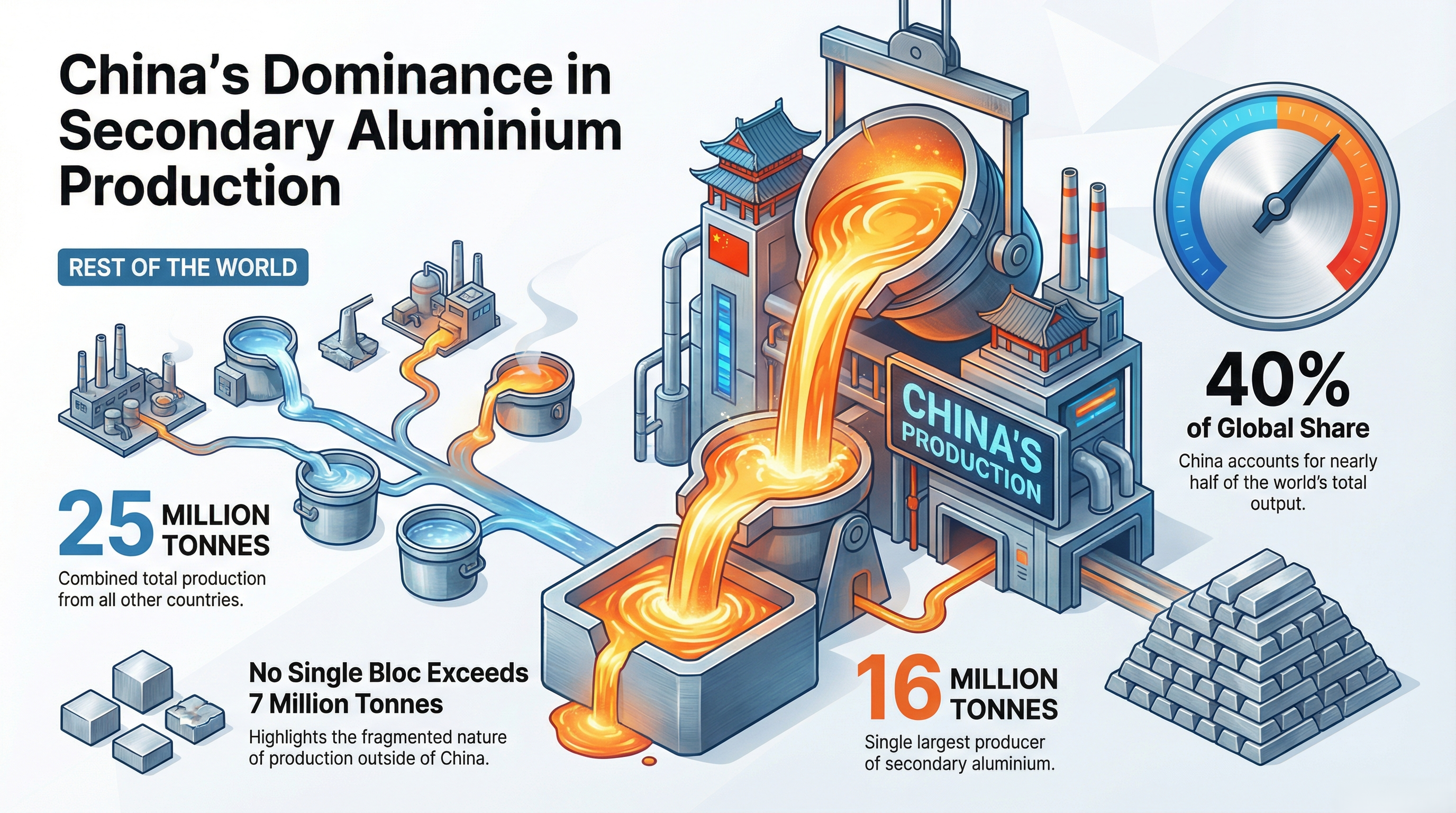
China and the United States have been vocal about shifting their focus to the recycled aluminium industry for quite some time. And why shouldn’t they? According to the International Aluminium Institute (IAI), rapid population and economic growth over the coming decades will push global aluminium demand to double by 2050, with 50-60 per cent of that demand expected to be met by recycled metal. The IAI also estimates that the global Recycling Efficiency Rate (RER) currently stands at 76 per cent, covering both new scrap and old scrap. The transportation sector leads aluminium recycling with an 86 per cent recovery rate, and among all end-use sectors, the automotive industry remains the single largest consumer of recycled aluminium. Having said that, at such a critical juncture for the...

Cartier’s refreshed presence in Tokyo’s Ginza district now arrives with a markedly softer note, after Klein Dytham Architecture reimagined the store’s frontage with sweeping aluminium forms that recall the movement of a wedding dress. In an area monopolised by rigid vertical lines and tightly packed towers, the studio set out to introduce a quieter visual rhythm. Co-founder Mark Dytham said the idea was to bring “a gentle, sculptural calm” to the busy streetscape, favouring fluid shapes over the surrounding geometric order. Layered curves were used to build depth and create a sense of anticipation rather than compete with neighbouring structures. Explore- Most accurate data to drive business decisions with 50+ reports across the value chain The flowing profiles were achieved through...

Metalysis has begun producing high-purity aluminium scandium alloy powder (Al₃Sc), which defines a significant step for Western manufacturers seeking secure alternatives to Chinese-controlled supplies of rare earth elements and critical minerals. Metalysis, spanning across the extended regions of South Yorkshire, considers the development as central to rising demand from the semiconductor, aerospace and defence industries. Its progress aligns closely with the UK’s newly released Critical Mineral Strategy: Vision 2035, published on November 22, identifying the expansion of midstream processing as a strategic imperative. Metalysis is already regarded as a key midstream asset for both the UK and allied nations. Explore- Most accurate data to drive business decisions with 50+ reports across...

LME aluminium prices weakened on December 9 across the cash, 3-month and December 26 contracts, even as exchange inventories moved lower. The LME aluminium cash bid price slipped to USD 2,831.5 per tonne on December 9 from USD 2,867 per tonne the previous day, a decline of 1.24 per cent. The cash offer eased to USD 2,832 per tonne from USD 2,867.5 per tonne, also down 1.24 per cent. The 3-month contract also retreated. The 3-month bid fell to USD 2,867 per tonne on December 9 from USD 2,896.5 per tonne on December 8, a drop of 1.02 per cent. The 3-month offer decreased to USD 2,868 per tonne from USD 2,897 per tonne, lower by 1.00 per cent. The December 26 contract followed the same trend. The bid moved down to USD 2,898 per tonne on December 9 from USD 2,920 per tonne on December 8, a...

India is recognised as one of the most promising markets for low-carbon aluminium by RUSAL, owing to its fast-evolving energy and electrical infrastructure landscape. The Russia aluminium company is aligning its advanced aluminium solutions with India’s ambitions in grid modernisation, renewable energy expansion, and also industrial electrification. India’s growing power demand is driving a fresh look at the materials used across the energy sector. RUSAL believes aluminium fits these needs well, thanks to its strong conductivity, lighter weight and high recyclability. The company is accordingly promoting advanced aluminium alloys for use in power transmission systems, renewable energy projects and heavy electrical equipment, where performance and sustainability are increasingly critical....