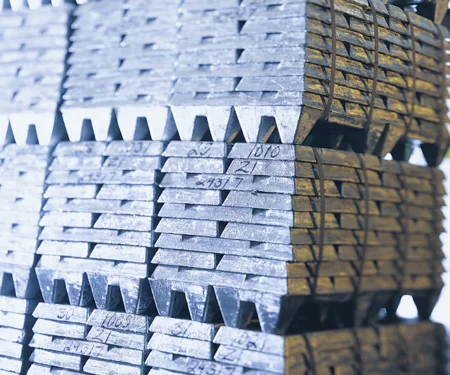
China succeeds in 10-month tech revolution in critical mineral production
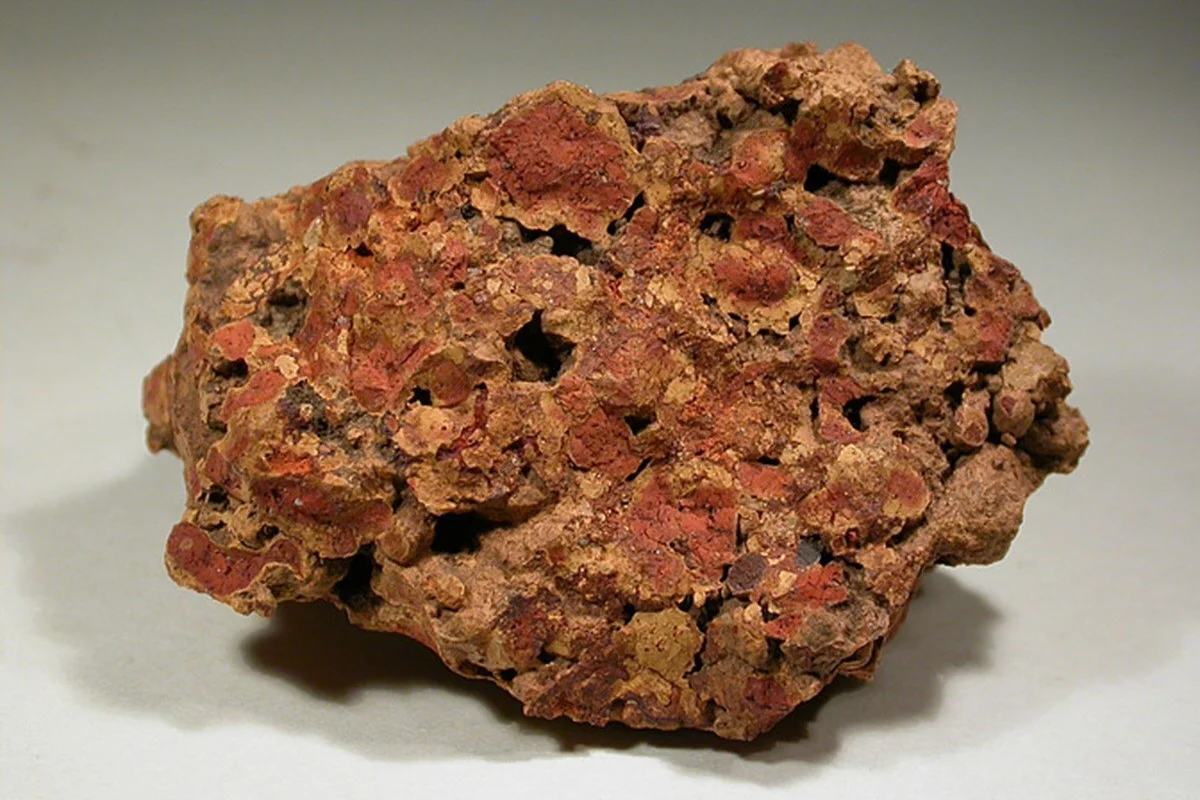
The partnership of French-Swiss firm IB2 and Shanxi Senze Energy Technology Group results in a breakthrough technology of converting low-grade bauxite into high-quality feedstock that can be applied in aluminium production. This innovation will not only revive exhausted bauxite mines but also enable the extraction of rare earth elements and critical minerals used in electric vehicles, semiconductors, and national defence.
Explore- Most accurate data to drive business decisions with 50+ reports across the value chain
A paper published in Minerals Engineering in May, a peer-reviewed journal, observed that 3 per cent of the total bauxite reserves in the world are located in China. Here, the Chinese researchers suggested the process of enhancing alumina extraction out of low-grade bauxite. The technology was developed in France and Switzerland, constructed and commissioned in an industrial complex at a coal-mining county called Liulin in the Shanxi province. The project was fuelled by the provincial government’s keenness for innovation and the local energy industry’s aspiration to secure the global lead.
China’s aluminium industry
A study by Dongxing Securities published in 2024 showed that almost 90 per cent of the ore supplies are imported by China. On average, the silica content in bauxite ores of China ranges from 7 to 11 per cent, and reaches up to 16 or 32 per cent in specific ores. Xavier Perrier, the IB2 project director and technical expert, commented, “By removing silica, we take the percentage of aluminium from 48 to 70 per cent.” Thus, removing silica produces a quality of bauxite with not only low silica content but also very high alumina.
IB2’s innovative approach to remove the silica content from the once waste of low-bauxite is likely to attract miners, marking the world’s first large-scale deployment of this revolutionary silica-removal technology. This helps China ease its reliance on Guinea and Australia for imports and turn to its own domestic low-grade bauxite reserves. Romain Girbal, co-founder and CEO of IB2, remarked after the inauguration ceremony at the Shanxi facility, “It does not make sense for China to be so dependent on Guinea and Australia. We can bring back to China their mineral sovereignty.” He continued, “China has 60 per cent of the world’s aluminium production. You cannot work in that industry without working with China.”
After the successful outcome of this technology, Girbal addressed the point of aluminium importing and stated, “We are not saying that we will eliminate all the imports, but we can rebalance that…Maybe go back to 50/50 or something that is more acceptable for a country that wants to rely on its own resources in a world where deglobalisation is happening quite fast.”
IB2’s global rollout in China
While looking to expand its operations across the world in countries like Brazil, Saudi Arabia, India, Azerbaijan and Kazakhstan, the European company chose to go with China for its first global rollout, due to the country’s self-sufficiency for metal and strong market. Girbal mentioned that IB2 will be increasing the Liulin annual capacity for processing 3 million tonnes worth of low-grade bauxite in 2 years. It also aims to acquire seven clients in China in the next five years.
According to the CEO, the coal and alumina producer, Senze Group, was the first company interested in technological integration. So, collaborating with them was the “real flagship” in China. The deputy general manager of the Group discussed the 10 bauxite mines owned by the company, whose high-quality ore is exhausted. She explained, “The industry typically requires ore with alumina content of more than 50 per cent,” and added, “IB2 addresses this by upgrading low-grade bauxite…It creates value from waste and allows for maximum resource utilisation…we have started processing the low-grade ore that had already been mined to utilise resources that were previously abandoned.”
In March 2025, Beijing released its two-year aluminium industry plan that by 2027, “the resilience and security of the industrial chain and supply chain will be significantly improved,” and China will “strive to increase domestic bauxite resources by 3 to 5 per cent and the output of recycled aluminium by more than 15 million tonnes”.
The US bauxite scenario and potential partnership with IB2
The US Environmental Protection Agency (EPA) mentioned that the US too has to heavily rely on imports for “nearly all bauxite required for alumina manufacturing.” A 2023 analysis by the agency rated the dependability of the US on from moderate to high as the country was “entirely reliant on imports.”
This is because of the limited bauxite reserves in the US, primarily located in Georgia, Arkansas and Alabama, with the silica content ranging from 12 to 16 per cent, rendering domestic mining a challenge. Thus, IB2 is currently in talks with potential US partners for setting up a facility in Arkansas, promoting domestic mining and less reliance on imports from Brazil and Jamaica.
However, apart from aluminium independence, there are many more valuable takeaways from the ore, such as components useful in modern warfare and the clean energy revolution. These are potentially rare materials like gallium, niobium, vanadium and lithium.
Must read: Key industry individuals share their thoughts on the trending topics

Slovak electricity grid modernisation moves ahead with major EIB financing
Next articleLindian drilling targets 7.15% TREO at North Knoll to assess high-grade rare earths potential
Grow with
AL Circle