Klein Dytham delivers a new face to Cartier’s Ginza store with aluminium artistry
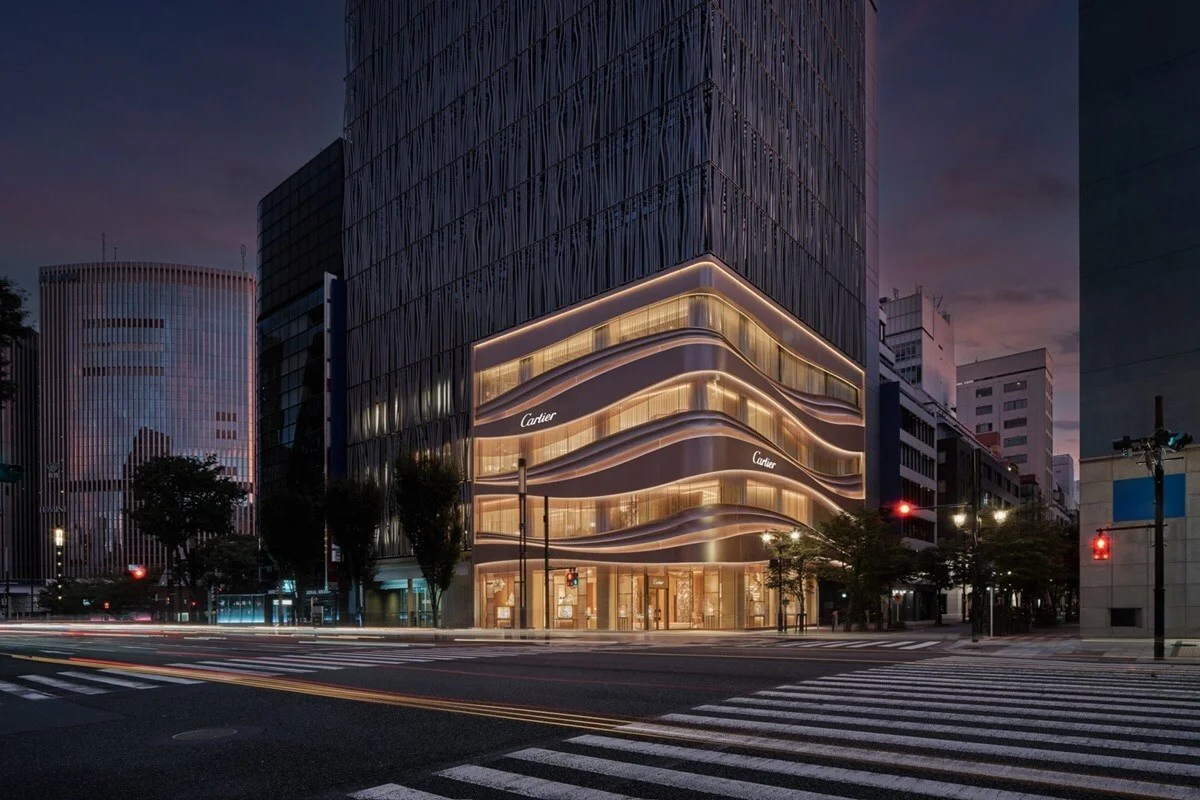
Cartier’s refreshed presence in Tokyo’s Ginza district now arrives with a markedly softer note, after Klein Dytham Architecture reimagined the store’s frontage with sweeping aluminium forms that recall the movement of a wedding dress.
In an area monopolised by rigid vertical lines and tightly packed towers, the studio set out to introduce a quieter visual rhythm. Co-founder Mark Dytham said the idea was to bring “a gentle, sculptural calm” to the busy streetscape, favouring fluid shapes over the surrounding geometric order. Layered curves were used to build depth and create a sense of anticipation rather than compete with neighbouring structures.
Explore- Most accurate data to drive business decisions with 50+ reports across the value chain
The flowing profiles were achieved through bespoke cast-aluminium panels, developed by Dytham and fellow co-founder Astrid Klein. These sculpted surfaces, intended to echo the drape of fabric, allow the building to take on a softer presence rather than an overwhelming one. The interesting part about the building is that as there is a daylight shift, contours slowly leverage the sunlight, which completely changes the building’s appearance for passersby.
This usage of aluminium this way also helped soften the fire-compartment lines between floors, thus making the facade more seamless and useful. Behind a rectangular frame that borders the existing vertical louvres, the design unfolds in three layers: cast aluminium, flat aluminium panels and an inner glass skin.
Cartier specified its Moon Gold finish, a pale gold tone for the aluminium elements. The colour, chosen for its ability to react to natural light, appears cooler and more silvery in the morning before warming towards evening.
Dytham believes that aluminium’s adaptability made it fundamental for the project. Leveraging this metal, it is easier to craft triple-curved shapes so precisely. It delivers a smart appearance to the facade, while ensuring durability and a refined finish as expected by the brand. With excellent flexibility, aluminium helps form both the cast and flat-panel layers.
For the glass component, the studio introduced a geometric print based on the traditional Seigaiha motif, formed from overlapping concentric circles. Associated with waves and good fortune, the pattern brings a distinctly Japanese texture to the interior as sunlight filters through and projects the design inside.
The Ginza project marks Klein Dytham’s second collaboration with Cartier, following an earlier wooden shopfront created for the brand in Osaka’s Shinsaibashi district. Recent architectural additions to Ginza highlighted by Dezeen have included Jun Aoki’s Tiffany store wrapped in curved glass and I IN’s Edo-purple lounge for a local department store.
Must read: Key industry individuals share their thoughts on the trending topics
SUS launches t2-01 aluminium unit house based on the 4R architecture
Next articleInside the 2025 auto tariff: Three layers of duties that reshaped the industry and redirected trade routes
Grow with
AL Circle