Commercial operations commence for Canyon Minim Martap Bauxite Project
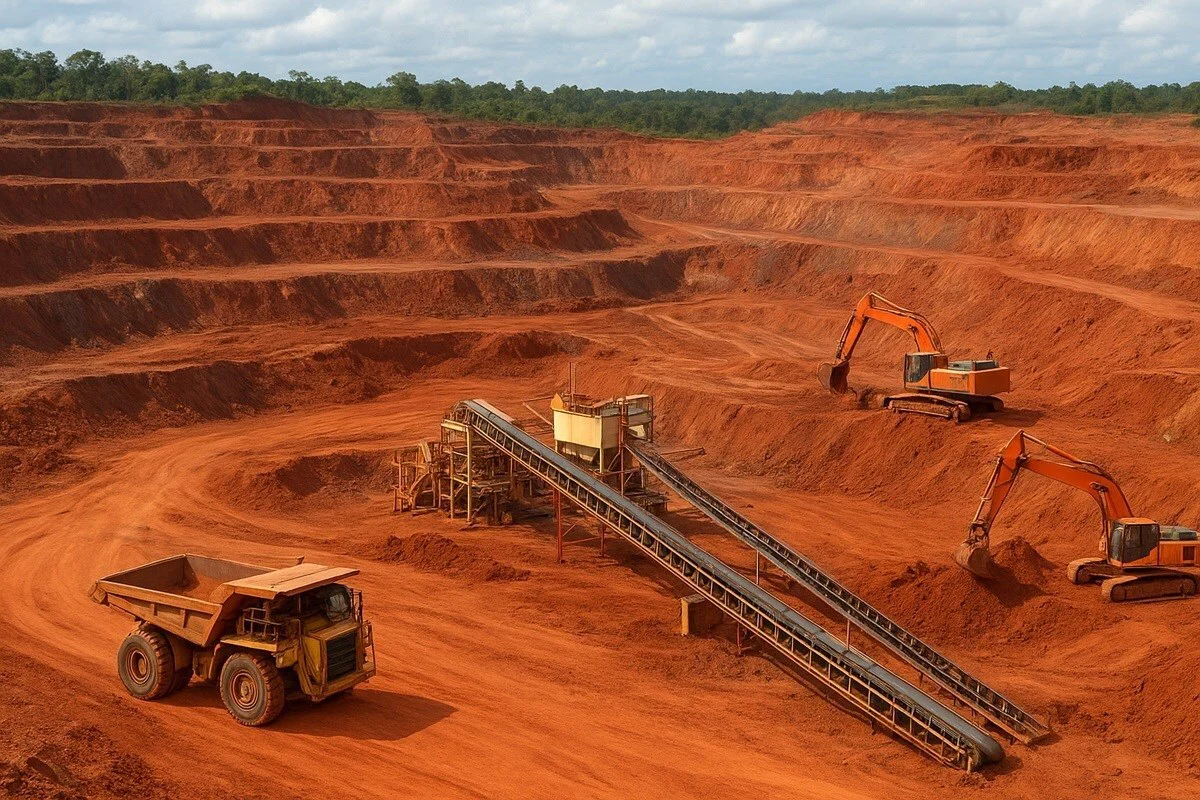
The Canyon Minim Martap bauxite project at Cameroon that combines superior quality of bauxite ore with strategic infrastructure positioning can lead to an improved level of regional commodity flow to meet geological excellence. In the current market situation that prefers high-grade deposits to minimise the refinery processing cost and raise the pricing of aluminium, Cameroon makes a strategic entry with bauxite. With Canyon Resources' Minim Martap development, it delves into large-scale mineral extraction, laying a foundation for future mining investments. This marks Cameroon’s possibility for moving beyond agricultural export dependence toward a diversified market.
Explore- Most accurate data to drive business decisions with 50+ reports across the value chain
Minim Martap’s global standing
Its remarkable alumina content of 51.2 per cent allows Minim Martap to exceed the industry average of 45-48 per cent and places it in the premium bauxite classifications as the high-grade implies a reduced processing cost for alumina refineries, and less raw material requirement for aluminium production. The 1.7 per cent low reactive silica makes the process more efficient and further reduces processing costs for the alumina-to-silica ratio of an estimated 30:1, compared to industry averages of 10:1 to 12:1.
It stands out in an industry characterised by short-living mines with its exceptional operational stability backed by 144 million tonnes ore reserves. Annual production rate being 1.2 million tonnes suggests the potential of carrying on over 120 years of operation.
Infrastructure strategy benefits
Canyon's infrastructure strategy keeps focus on handling the mine-to-market process by investments in port, rail, and handling facilities. This helps in avoiding third-party logistics and enables a hand-in-hand growth of production and infrastructure capacity.
Their 800-kilometre railway corridor to Douala Port is majorly beneficial, lowering per-tonne costs and increasing production scalability. Dedicated trains guarantee reliable schedules, independent of any competition from other cargo. PQ2 rail upgrade upscaled capacity to 10 million tonnes a year. Canyon is also strengthening ties with Camrail, Cameroon's national rail operator, advancing towards possible equity stakes. CEO Peter Secker aims at infrastructure upgrade and less reliance on third-party involvement.
The financial framework
This development has received strong financial support from both international and domestic investors. On November 25, 2025, at the Annual General Meeting, shareholders approved a placement of AUD 70 to Afriland Bourse & Investissement. On December 1, 2025, Executive Chairperson Mark Hohnen’s 3 million unquoted options for AUD 400,000 indicates management confidence in the timeline of the project development.
Impact of production scaling on the market
The commercial launch just in time when the global aluminium market is undergoing supply constraints and quality concerns. Asian demand for aluminium is increasing steadily. With its own bauxite reserves declining, Chinese aluminium production capacity has to heavily rely on bauxite imports. This shift is going to place Cameroon at an advantageous position, creating sustained demand for high-quality African bauxite.
Throughout Q1 2026, the infrastructure development plans include arrival and deployment of surface mining equipment, start of mining operations, mine-to-IRF maiden ore road haulage and delivery and commissioning of rolling stock. Q2 focuses on commercial activities of completing IRF construction, porting stockpile via initial haulage and first commercial bauxite shipment. Initial annual capacity is 1.2 million tonnes. The 2027-2032 medium term scaling targets 10 million tonnes annually with increased progressive capacity, for upgraded infrastructure and premium alumina feedstock in the market.
Engineering designs for Inland Rail Facility are finished and crucial equipment orders are scheduled to be delivered in February 2026. May 2026 will likely see the completion of switchgear, tracks, and sleepers for rail installation as well as port facilities. Locomotives and wagons are ready to be shipped in January 2026. Dredging operations at Doula Port are approved to commence in January 2026. Potential delays in operations have also been addressed such as deploying additional equipment for contractor flexibility, operations post presidential elections for political stability, alternatives for transport and storage for infrastructure redundancy, and positioning of premium products for market diversification.
Due to its shift in market approach, Cameroon plays a significant role in the global mineral sector. Along with creating precedent for future investments in mining, it is also beneficial in various ways beyond mining operations only. Apart from railroad and port development, it will also improve technical expertise in the domestic workforce and generate foreign exchange.
Must read: Key industry individuals share their thoughts on the trending topics

Rio Tinto is in talks with Chinalco, aiming to resolve shareholding restrictions
Next articleNovas Minas project: newfound bauxite deposit in Pará marks a new era of Brazilian mining
Grow with
AL Circle