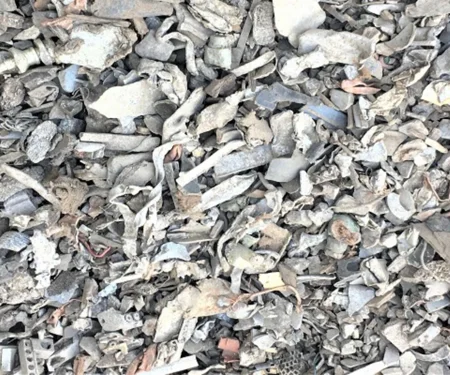
Scrap takes control: Inside aluminium’s shift to a circular, volatile market
The image used in this article is a stock image for referential purposes only
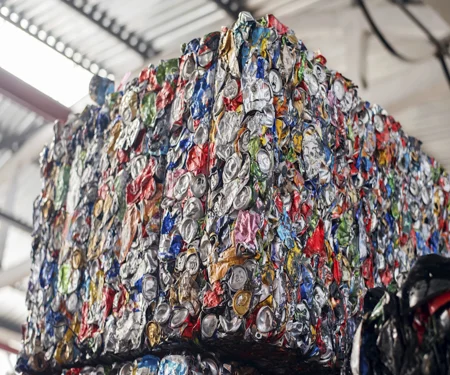
The aluminium industry is quietly undergoing a structural shift. What was once dominated by primary smelting is now moving toward a scrap-led ecosystem, with used beverage can (UBC) material emerging as a critical feedstock.
The shift is rooted in cost and power. Producing primary aluminium requires 13–15 MWh per tonne and, when coal-powered, emits 12-14 tonnes of CO₂ per tonne. That makes recycled aluminium not just a sustainability choice, but an economic one. Read here.
As this transition gathers pace, UBC scrap pricing has moved beyond local dynamics. It is now increasingly linked to benchmarks from the London Metal Exchange, while also reacting to regional energy shocks and supply tightness. What was once a fragmented market is becoming globally visible-and more volatile. Read the full story here.

Rising consumption is shifting the focus to recovery
Demand continues to grow steadily. The aluminium can market, valued at USD 55.5 billion in 2023, rose to USD 58.2 billion in 2024 and is estimated at USD 61.5 billion in 2025, with projections reaching USD 85.6 billion by 2032.
At the same time, consumption volumes are climbing. From around 470 billion cans in 2024, global usage is expected to hit 510 billion in 2025 and could reach 627 billion by 2030. This growth is changing the industry’s pressure points. The challenge is no longer just producing more-it is recovering more.
A group of countries across Asia, North America and South America has already pushed recycling rates beyond 90 per cent, showing that high recovery is achievable despite differing systems. The variation in approach-policy-led, infrastructure-driven or behaviour-based-points to one conclusion: efficiency comes from alignment, not a single model. Click here for the full story.
For 2026 aluminium market outlook, download our report TOC: Global Aluminium Industry Outlook 2026
Technology and investment expand recycling capacity
To keep pace, both technology providers and producers are scaling up. TOMRA Recycling has launched its AI-based FINDER™ system, designed to recover aluminium, copper, brass and stainless steel from complex streams such as end-of-life vehicles and electronic scrap. It also separates printed circuit boards, insulated wires and non-metal materials, with a modular design that allows operators to expand sensor configurations. Click here.
On the investment side, Emirates Global Aluminium is acquiring an 80 per cent stake in Italy’s Eco Green. The Nogara facility expansion will add 15,000 tonnes per year of recycled aluminium capacity, with completion expected in the second half of 2026. Read here.
At the same time, existing recycling loops are being reinforced. Novelis and Infinitum have extended their partnership, under which used cans collected in Norway are processed at Novelis’ Latchford plant in the UK-demonstrating circularity at industrial scale.
China’s imports tighten global scrap availability
China is playing a key role in shaping global scrap flows. According, to the General Administration of Customs of China, aluminium scrap imports rose 4 per cent year-on-year in Q1. In March alone, imports increased 7.5 per cent year-on-year and surged 44.8 per cent month-on-month to 197,331 tonnes-the highest level since December 2017. Click here.
The increase reflects stronger demand from secondary aluminium producers, who ramped up output after the Lunar New Year, alongside tight domestic scrap availability. This combination has pushed Chinese buyers into international markets, tightening supply and amplifying price movements globally.
Sustainability expands across regions and logistics
Decarbonisation is no longer limited to production-it is extending across the value chain. Norsk Hydro has reduced emissions by 30–35 per cent on a key European shipping route using upgraded vessels, highlighting the growing focus on logistics emissions.
In Oman, three low-carbon aluminium projects are being planned in the Duqm Special Economic Zone under the Public Authority for Special Economic Zones and Free Zones. The projects, valued at OMR 2.4 billion, aim to add 620,000 tonnes per year of aluminium billets and pre-cast slabs, supported by green hydrogen and renewable energy expected around 2030. Additional initiatives-the Geely Green Aluminium Project and the Pearl Green Iron and Aluminium Project—are also under consideration. Read here.
These developments reinforce a structural reality: geography is decisive. While conventional production can emit 12–14 tonnes of CO₂ per tonne, smelters powered by hydro or nuclear energy-such as those in Norway, Quebec and Iceland—can reduce emissions to as low as 1–2 tonnes per tonne.
At the policy level, RUSAL highlights that in the CBAM era, manufacturers-particularly in Turkey-are facing a more complex equation. Beyond carbon compliance, factors such as supply reliability, data transparency and pricing flexibility are becoming critical.
Taken together, the aluminium market is becoming more interconnected and less predictable. Scrap is no longer secondary-it is shaping pricing, trade flows and strategy, while recycling is central to supply security. As consumption rises and carbon constraints tighten, the focus is shifting from production to lifecycle management, where recovery, reliability and low-carbon sourcing will define the next phase.
Don’t miss out- Buyers are looking for your products on our B2B platform

ReMA tentatively approves updated aluminium scrap grade amid rising recycled metal demand
Next articleChongqing Shunbo Aluminium posts strong FY2025 results with revenue and profit surging Y-o-Y
Grow with
AL Circle