India’s bauxite imports jump 129.5% in H1 2026: Quality gap, refinery expansion outpace 25Mt domestic output

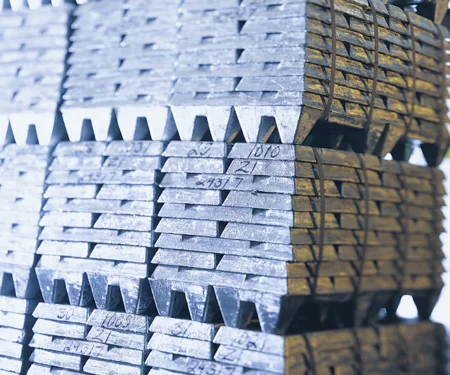
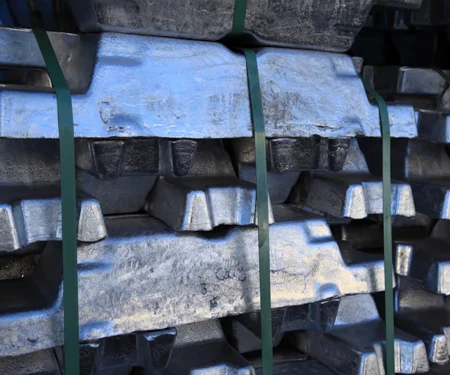
The image used in this article is generated with an AI tool and does not depict any real-time moment
India is producing around 25 million tonnes of bauxite a year, has 4.958 billion tonnes of bauxite resources, and currently produces around 9.5 million tonnes of alumina annually. Yet instead of declining, the country's bauxite imports have been rising. India’s bauxite imports reached 3.70 million tonnes in H1 2026, more than twice the 1.612 million tonnes recorded in H1 2025. The increase of 2.088 million tonnes, or 129.5 per cent, has brought a key question into focus: why are imports rising when domestic bauxite production appears sufficient for current alumina output?
The answer becomes clearer when India's bauxite supply is viewed alongside ore quality, refinery requirements, mine development and the rapid expansion of alumina capacity.
India’s bauxite production has recovered
India’s bauxite production stood at 24 million tonnes in 2022, before declining to 23.4 million tonnes in 2023. Output recovered to 25 million tonnes in 2024 and remained at 25 million tonnes in 2025.
India currently produces around 9.5 million tonnes of alumina annually. At the standard industry conversion ratio of 2.5 tonnes of bauxite for one tonne of alumina, this corresponds to approximately 24 million tonnes of bauxite demand each year.
Domestic production of around 25 million tonnes in 2025, therefore, was broadly sufficient to meet the bauxite requirement associated with current alumina production, leaving a theoretical balance of nearly 1 million tonnes.
Yet imports continued to rise. According to AL Circle research, India’s bauxite production was estimated at 7.398 million tonnes in Q1 2026, while imports during the first half of the year reached 3.70 million tonnes.
Explore the production, demand and consumption forecasts of bauxite and alumina in our report: "Global Bauxite & Alumina Market Forecast to 2036: Supply–Demand, Trade Flows & Price Outlook"
Bauxite imports have been climbing for years
The latest surge is part of a longer upward trend. India imported around 3.1 million tonnes of bauxite in 2021, rising to 3.8 million tonnes in 2022. Imports stood at around 3.7 million tonnes in 2023, increased to 4.1 million tonnes in 2024, and reached nearly 4.9 million tonnes in 2025.
In H1 2026, imports rose to 3.70 million tonnes from 3.30 million tonnes in H2 2025, an increase of 400,000 tonnes, or 12.1 per cent.
The sharp year-on-year increase in H1 2026 therefore follows several years of elevated import volumes rather than representing a one-off movement.
Large reserves do not mean all ore is immediately available
India has 4.958 billion tonnes of bauxite resources, including 646 million tonnes of reserves, but in H1 2026, its import rose 129.5 per cent. The Ministry of Mines has linked India's bauxite imports to growing aluminium demand and the slow pace of adding new bauxite mining capacity.
This distinction between resources and available supply is important. New deposits need to move through land, environmental, forest and other statutory requirements before commercial mining can begin. As a result, domestic production cannot always increase at the same pace as refinery requirements.
Ore grade is another part of the equation
The quantity of bauxite available is only one consideration for an alumina refinery. The chemical composition of the ore also matters.
The Indian bauxite contains 41-50 per cent Al₂O₃ and 6-8 per cent SiO₂. Typical Guinea bauxite contains 44–52 per cent Al₂O₃ and around 3 per cent SiO₂, while Brazilian bauxite contains 50–55 per cent Al₂O₃ and around 3.4 per cent SiO₂.
Looking for alumina refinery raw materials? Compare grades, explore sourcing options, and connect with global suppliers on AL Biz.
The higher silica content of Indian bauxite can be significant for Bayer-process economics. IBM notes that bauxite containing more than 7 per cent total silica is normally unsuitable for the Bayer process, while material with silica below 3 per cent is generally preferred. Higher silica increases caustic consumption and alumina losses in red mud.
This makes ore quality and refinery compatibility important factors in sourcing decisions.
India’s bauxite resources are also not exclusively directed towards alumina production. IBM identifies bauxite as a raw material for the aluminium, refractory and chemical industries.
Around 79 per cent of India’s bauxite resources are metallurgical grade, while refractory and chemical grades together account for around 4 per cent.
Therefore, the country’s total bauxite production cannot be considered a direct measure of the quantity available to alumina refineries. Grade, end use, location and timing of supply all influence the availability of suitable ore.
Top countries from where India imports
India imported 3.5 million tonnes of bauxite from Guinea in H1 2026, compared with 1.352 million tonnes in H1 2025. This represented an increase of approximately 158.9 per cent.
India’s bauxite imports from China fell to 35,000 tonnes in H1 2026 from 60,000 tonnes in H1 2025, a decline of 41.7 per cent. Imports from the United States increased to 19,900 tonnes from 16,900 tonnes, up 17.8 per cent.
Shipments from Guyana rose to 7,200 tonnes from 371 tonnes, while imports from the Netherlands declined to 326 tonnes from 369 tonnes, a decrease of 11.7 per cent.
The data show that Guinea is currently playing the biggest role in meeting India's additional imported bauxite requirement and bauxite grade plays an important role here.
India is also exporting bauxite
India’s bauxite trade is not limited to imports.
Bauxite exports stood at 267,000 tonnes in H1 2026, down from 386,000 tonnes in H1 2025. The decline was 119,000 tonnes, or 30.8 per cent.
However, exports were considerably higher than the 83,000 tonnes recorded in H2 2025, increasing by 184,000 tonnes, or 221.7 per cent.
Refinery expansion is raising future bauxite requirements
The supply equation is likely to become more demanding as India adds alumina refining capacity. Vedanta Limited is developing the Sijimali bauxite mine, which has around 300 million tonnes of reserves and a mining capacity of 12 Mtpa. The project is expected to meet nearly 67 per cent of Vedanta’s future bauxite requirement for refinery expansion projects, with the remaining requirement coming from Odisha Mining Corporation, other domestic miners and imports.
The mine is part of Vedanta’s broader expansion programme. The company aims to increase Lanjigarh’s alumina refinery capacity to 5 Mtpa by FY26 and 6 Mtpa by FY28. It is also planning a 6 Mtpa refinery in Rayagada and a 3 MTPA aluminium smelter in Dhenkanal, Odisha. Overall investment commitments linked to these projects stand at nearly INR 2.27 lakh crore, or around USD 27 billion.
More domestic mines are being lined up
Vedanta is not alone in strengthening domestic bauxite supply.
OMC is preparing to increase production at its Kodingamali bauxite mine from 3.6 Mtpa to 6 Mtpa.
NALCO is developing the Pottangi bauxite mine, which contains around 111 million tonnes of reserves and has a production capacity of 3.5 Mtpa. The mine will support NALCO’s additional 1 Mtpa alumina refinery expansion, taking total alumina capacity to 3.1 million tonnes by H1 2027.
Hindalco Industries is securing long-term bauxite supply for its planned 850 KTPA Aditya refinery expansion in Odisha, expected to be commissioned in FY2027-28, through an MoU with OMC.
Pioneer Aluminium Industries, operated by Anrak, continues to maintain 1.5 Mtpa of refinery capacity, while United Company RUSAL is acquiring up to a 50 per cent stake in the company to strengthen its alumina and raw material supply chain.
Future requirements could rise further if AM Green and Mitsui & Co., Ltd. proceed with their proposed 2 million tonne alumina refinery project.
For more in-depth insights and exclusive analysis on the global aluminium industry, explore the e-Magazine - Mine to Market: ALuminium Producers & Manufacturers 2026
Can new mines close the future supply gap?
The three major projects at Sijimali, Kodingamali and Pottangi represent 21.5 Mtpa of additional bauxite mining capacity based on their stated capacities.
If these projects progress as planned, India's domestic bauxite production could rise towards 45-50 million tonnes annually over the coming years.
However, alumina production is also expected to increase sharply. India’s smelter-grade alumina production is projected to reach around 21.8-23.8 million tonnes by 2036 as refinery capacity expands. At the standard 2.5:1 bauxite-to-alumina conversion ratio, this would require approximately 54.5–59.5 million tonnes of bauxite every year.
Even with domestic bauxite production reaching 45–50 million tonnes, India could therefore still require imported ore. Based on these ranges, the potential difference would be approximately 4.5-14.5 million tonnes annually.
At the same time, India is projected to record an alumina surplus of at least 500,000 tonnes to 3 million tonnes in the High Case by 2036, depending on the scenarios, provided planned capacity additions and operational improvements proceed as expected.
The next phase of India's bauxite market will ultimately depend on how quickly new mines, refinery capacity and suitable ore supply can be brought into alignment.
Note: This is exclusive coverage by AL Circle and may not be reproduced, republished or shared without prior permission.
Grow with
AL Circle