From policy to recycling loops: Sustainability push and recycled aluminium reshape global value chains
In the current global downstream and recycled aluminium, every company is making crucial steps towards sustainability, circularity and better operational efficiency. With new regulations coming into play, smart investments being made and improvements in recycling and manufacturing practices, companies are stepping up to meet decarbonisation goals while also bolstering their supply chains and making the most of their resources. All these trends together are paving the way for a more organised and sustainability-focused future in the aluminium ecosystem.
Ball Corporation, in its financial results for the year 2025 have represented impressive results in relation to maintaining and upholding sustainability. The firm has enhanced the use of renewable electricity by 84 per cent, representing a year-on-year surge of 73 per cent. Not only this, but the firm has also cut down its Scope 1 and 2 emissions by 50 per cent compared to 2017 and has been making strides in circularity, with 74 per cent of its packaging now made from recycled materials.
<
Weekly Recap: Sustainability & Recycled AL by AL Circle Pvt Ltd
The EU released he first official benchmark price for Carbon Border Adjustment Mechanism (CBAM) certificates at EUR 75.36 per tonne for the first quarter of 2026. This framework puts the EU’s carbon pricing for imports into action. By aligning with the EU Emissions Trading System (EU ETS), this pricing approach ensures that domestic producers and importers are on equal footing, as it reflects the average auction prices of carbon allowances.
Hammerer Aluminium Industries acquired a stake in Aluminij Industries, aiming to boost the resilience of Europe’s aluminium supply chain, especially in light of growing geopolitical tensions and sustainability challenges. Within this partnership, HAI’s know-how in high-scrap aluminium processing and Aluminij’s state-of-the-art infrastructure are brought together with the goal of enhancing production capabilities, boosting the use of recycled materials and ensuring reliable access to both primary and secondary aluminium in the region.
Vietnam is currently upholding the sustainability of its booming solar industry through a strategic partnership between IREX Energy and Japan’s Hamada. These firms are working together to create a circular recycling model for photovoltaic panels that have reached the end of their life. By coming into partnership, recovering valuable materials like aluminium, glass and silicon from ageing solar installations will be possible. Moreover, it tackles the growing waste issue while also cutting down on the need for new raw materials and reducing energy use.
India's aluminium industry is making way to reduce carbon emissions, tapping into the country's rich biomass resources and the encouraging policies promoting biofuels and cleaner energy. Bioenergy, which is deemed to include biomass, biogas and biofuels, has the potential to partially substitute fossil fuels in energy-intensive processes like alumina refining and captive power generation. However, its impact is still relatively small compared to the sector's overall energy demands and heavy reliance on electricity. Given that aluminium production is energy-intensive and contributes a lot to industrial emissions and costs, bioenergy is seen more as a complementary solution rather than the main fix.
Sweden’s deposit return system (DRS) has enabled circular packaging efficiency, where as of 2025, over 3 billion aluminium cans and PET bottles were returned, pushing the national return rate to an impressive 88.4 per cent, which is almost near the 90 per cent goal. This shows how effective a well-structured recycling infrastructure can be, especially with the help of high-capacity reverse vending machines that make it easier for people to return their containers.
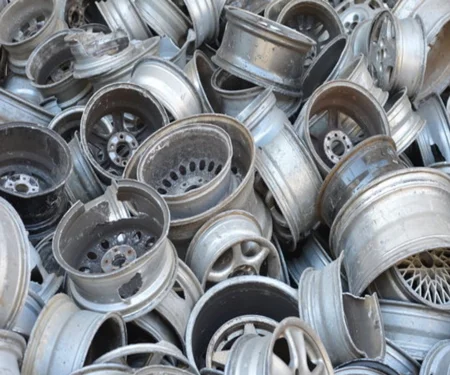
Toyota, concerning the circular manufacturing within the automotive industry, has incorporated recycled aluminium from end-of-life vehicles right into the production of new Corolla engines in the UK. This has been possible because of the “Toyota Circular Factory” model, where the aluminium has been salvaged from dismantled cars, especially from the alloy wheels and is then reprocessed and utilised in manufacturing engine components across a network of connected facilities. This approach has created a closed-loop supply chain, which not only cuts down on material waste and reduces reliance on primary aluminium but also supports broader goals of decarbonisation and resource efficiency.
China is pushing its regulatory efforts on lithium-ion battery recycling, which marks the part of a larger initiative for enhancing the effective management of EV lifecycles and securing vital material supply chains. This focuses on enlarging formal collection networks, directly involving manufacturers in recycling processes, and implementing digital tracking systems to keep tabs on battery movements from their origin all the way to end-of-life processing.
General Motors is planning to invest USD 150 million in the Saginaw metal casting facility for its ongoing dedication to bolstering the supply chains for internal combustion engines while also pursuing its electrification goals. This funding will enhance the production of next-generation V8 engine components, like aluminium-heavy blocks and cylinder heads, by upgrading tooling and equipment, with production set to kick off in 2027. By ensuring there’s enough capacity for the popular full-size trucks and strengthening domestic manufacturing, this strategy emphasises a dual approach where traditional powertrain technologies remain vital.
Novelis is moving with its commitment to operational excellence by rolling out a standardised global manufacturing framework. By the end of FY2026, 10 of its plants are set to achieve the first level of certification under the Novelis Operating System (NOS). This milestone marks a significant shift from a decentralised approach to continuous improvement towards a more unified, system-driven strategy specifically designed for aluminium rolling and recycling.
_0_0.png)
Glencore buys 45% stake in US aluminium recycling plant, targets 120,000 tonnes recycling capacity
Next articleBritons push for government action as UK aluminium recycling loses ground
Grow with
AL Circle