Ball Corp. boosts sustainable operations for a tighter world: 84% renewable energy coverage in ’25
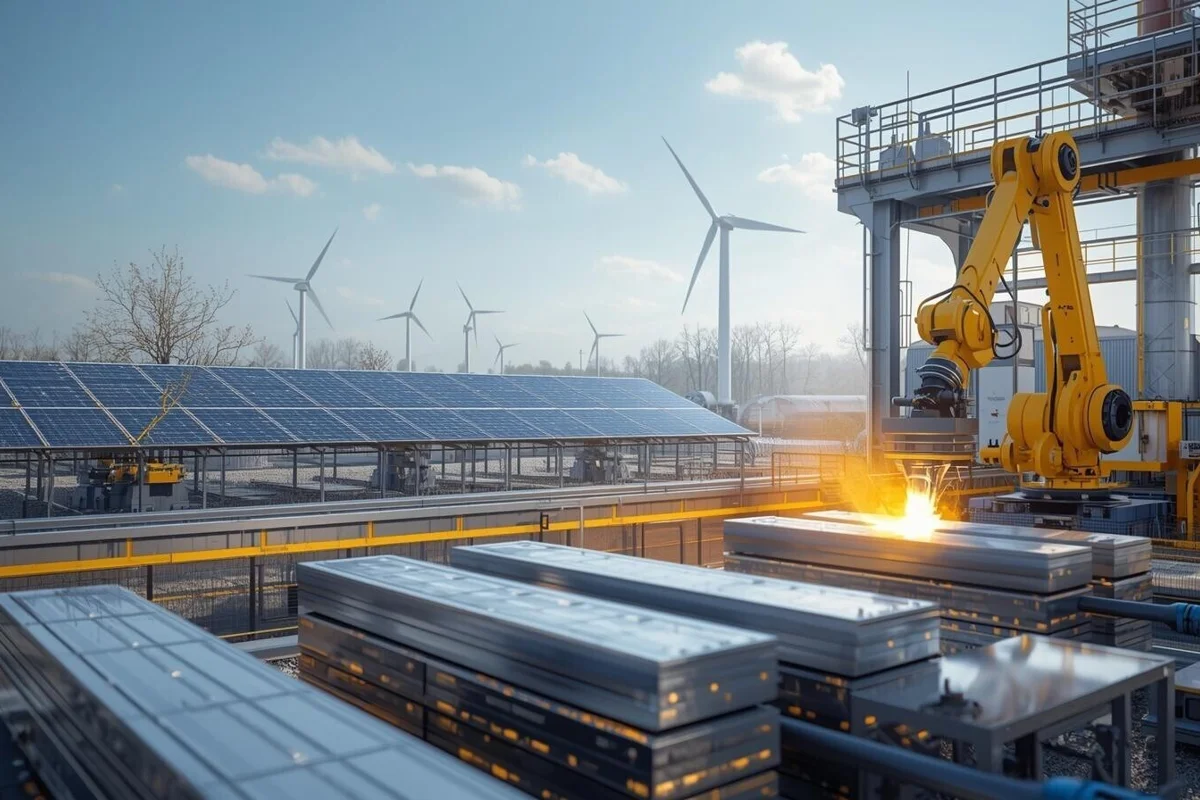
Ball Corporation’s 2025 combined annual and sustainability report is the message that sustainability well fits into a business’ profitability, as a part of the same industrial system.
The numbers bear that out. Ball shipped 111.9 billion packaging units in 2025, up from 107.4 billion in 2024 and 106.5 billion in 2023. Net sales reached USD 13.16 billion, comparable diluted earnings per share rose to USD 3.57 from USD 3.17 a year earlier, and EVA dollars increased to USD 378 million from USD 366 million in 2024 and USD 141 million in 2023. The company also returned USD 1.54 billion to shareholders through buybacks and dividends.
Sustainability metrics move into core business indicators
The sustainability metrics are just as concrete. Ball Corporation discloses that renewable electricity coverage rose to 84 per cent in 2025, up from 73 per cent a year earlier, while Scope 1 and 2 emissions were down 50 per cent versus the 2017 baseline, leaving the business on track for its 2030 target of a 55 per cent cut. Scope 3 emissions were down about 14 per cent from 2017.
In beverage packaging, recycled content reached 74 per cent, STARcan accounted for 56 per cent of can production, and the programme saved more than 4,000 metric tonnes of aluminium. Material-health progress was also substantial: 72 per cent of cans used BPA-NI internal coatings, 63 per cent used PFAS-NI external coatings, and 93 per cent of coatings, inks and compounds were Cradle to Cradle Material Health certified, with 86 per cent at silver level or above.
Safety and capability building were part of the same story, with total recordable incident rate falling 19 per cent to 0.98, 380,000-plus training hours delivered, and 24,000-plus volunteer hours contributed globally.
For the global aluminium value-chain 2026 outlook, book our exclusive report “Global ALuminium Industry Outlook 2026"
Operational efficiency and supply chain tightening
What makes the report notable is that Ball does not leave those figures floating as corporate aspiration. It links them to operations. The company says it is working towards roughly USD 500 million in gross aluminium packaging cost savings between 2024 and 2027, while its energy and water-efficiency work in 2025 added more than USD 4 million in capital projects and cut beverage packaging energy intensity by 2 per cent since 2020.
It also expanded logistics and sourcing controls: 65 per cent of the aluminium it purchased came from fully ASI-certified rolling mills, 34 per cent of purchased aluminium was ASI-certified, up from 27 per cent in 2024, and 87 per cent of critical suppliers were assessed on environmental, social and governance criteria, up from 46 per cent a year earlier.
Ball Corporation’s footprint decisions, from Winter Haven in Florida to Millersburg in Oregon, and its January 2026 majority stake in Benepack in Europe, point to a company trying to shorten supply lines and keep manufacturing close to demand.
Tariff tightening in the US reshapes cost equations
It matters because the external policy environment has become less forgiving. In the US, the White House said on April 6, 2026 that articles made entirely or almost entirely of aluminium, steel or copper would face a 50 per cent Section 232 duty on full customs value, with derivative articles facing 25 per cent.
Products made of 15 per cent or less of those metals are exempt, while metal-intensive products with higher domestic content can receive lower treatment. The same action also said the tariff regime had been tightened to close loopholes and apply duties to the full customs value of imported products. For a global packaging company, that is not a side issue: it raises the premium on regional manufacturing, local sourcing and product designs that use less metal per unit. That is an inference, but it follows directly from the policy shift and Ball’s emphasis on local capacity and lightweighting.
Don't miss out- Buyers are looking for your products on our B2B platform
CBAM formalisation in Europe adds carbon cost visibility
Europe is moving in the same direction, but through carbon pricing rather than border tariffs. The European Commission says CBAM’s definitive regime started on 1 January 2026, and aluminium is one of the sectors in scope alongside iron and steel, cement, fertilisers, electricity and hydrogen.
EU importers bringing in more than 50 tonnes of CBAM goods must obtain authorised declarant status, declare embedded emissions and surrender certificates priced against the EU ETS. The mechanism is designed to reduce carbon leakage and align the carbon cost of imports with domestic production. For Ball, that means the decarbonisation and traceability work in its report is not just a sustainability narrative; it is a commercial defence against a border regime that rewards lower-carbon metal and cleaner supply chains.
Iran conflict introduces energy and logistics volatility
The Iran conflict adds a different kind of pressure: energy and shipping risk. Reuters reported on 6 April 2026 that Brent crude had climbed to USD 111.21 a barrel and WTI to USD 114.73 as the Strait of Hormuz remained shut, with the article noting that the waterway normally carries about a fifth of global oil supply and that attacks on energy and shipping assets were continuing. Reuters also reported that the closure had already reduced exports from several Gulf producers and lifted the cost of moving goods through the region.
For Ball Corporation, which operates a global manufacturing and logistics network, that kind of shock strengthens the case for its own energy-efficiency, intermodal freight and lightweighting work. A can that uses less metal, a plant that uses less gas and electricity, and a freight system that can shift away from road all become more valuable when energy and shipping are under stress.
Must read: Key industry individuals share their thoughts on the trending topics
Sustainability as industrial resilience, not narrative
Taken together, Ball’s report suggests a business that is trying to convert sustainability from an expense line into a resilience strategy. The company is still exposed to input costs, tariff volatility, carbon reporting and fuel shocks, but its 2025 numbers show real progress on the variables it can control: more recycled content, more renewable power, lower emissions intensity, safer plants, tighter supplier oversight and more efficient packaging design. In a market now being shaped by tariffs, CBAM and geopolitical energy risk, that is not positioning for virtue. It is positioning for survival.
Note: Image for generic reference only

Bioenergy in India’s aluminium sector: Scale potential meets a 3-million-tonne reality
Next articleEU sets initial CBAM certificate price at €75.36/t for Q1 2026
Grow with
AL Circle





















