From $82/t to $66.5/t: Where is Australia’s bauxite market headed in 2026?
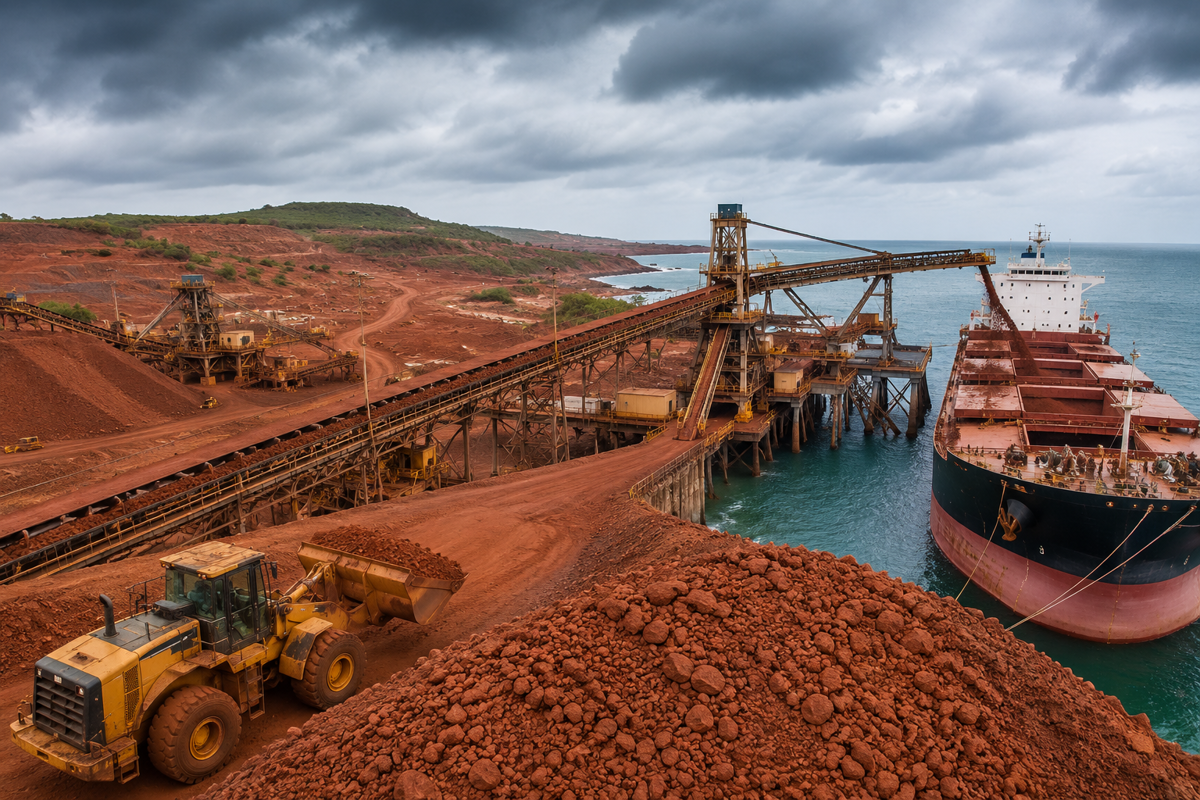
Australia produced about 102.4 million tonnes of bauxite in 2025 and exported 44.23 million tonnes, up from 42.6 million tonnes in 2024, making it the world’s second-largest producer.
Yet just as Australia’s role as a seaborne bauxite supplier is becoming more strategically important amid uncertainty over Guinea’s exports, its own supply chain has taken a hit. Record rainfall around Weipa in January-February 2026, followed by Tropical Cyclone Narelle in March, disrupted Rio Tinto’s bauxite operations and shipments. The result was a sharp Q1 production setback and a fresh reminder that Australia’s advantage as a reliable alternative supplier is still exposed to extreme weather.
Weipa was hit before Narelle even arrived
The disruption did not begin with the cyclone. Rio Tinto reported that its bauxite production in Q1 2026 was affected by weather disruption at Weipa during January and February, with rainfall reaching a record level for the past decade. The situation worsened in March when Tropical Cyclone Narelle forced shutdowns at Weipa and Gove, resulting in an estimated 900,000 tonnes production impact.
The scale of Narelle itself explains why the disruption travelled quickly through the supply chain. Australia's Bureau of Meteorology recorded 293.2 mm of rainfall at Weipa Aero over two days, while wind gusts reached 109 km per hour at the station, its highest March gust on record.
The consequence was visible for Rio Tinto in the production numbers as its Q1 2026 attributable bauxite production fell 11 per cent year-on-year to 13.28 million tonnes, while third-party bauxite shipments declined 8 per cent to 9.02 million tonnes.
The supplied quarterly operating chart reinforces the severity of the interruption with bauxite mined and shipped fell to just 100,000 tonnes each in March 2026, compared with 2.19 million tonnes mined and 2.06 million tonnes shipped in December 2025. The production volume also points to a recovery trajectory outlook of 1.82 million tonnes in June, 2.53 million tonnes in September and 2.35 million tonnes in December 2026.
To know the production, demand and consumption forecasts of bauxite and alumina, explore the report "Global Bauxite & Alumina Market Forecast to 2036: Supply–Demand, Trade Flows & Price Outlook"
The refinery chain feels the shock
Bauxite is only the first link. Once mining and shipping are disrupted, the impact eventually reaches alumina refineries and aluminium smelters.
Rio Tinto reported that Q1 2026 alumina production increased 6 per cent year-on-year to 2.04 million tonnes, partly because Queensland Alumina Limited (QAL) was incorporated at 100 per cent following the end of the previous participation agreement. However, this improvement was partly offset by weather-related disruption across its Pacific refineries.
The refinery output available illustrates the concentration of Australia’s operating refining base. Among the facilities listed, Worsley Alumina has 4.6 million tonnes per annum of nameplate capacity, QAL 3.9 million tonnes per annum and Yarwun 2.76 million tonnes per annum, a combined 11.26 million tonnes per annum.
The wider Australian alumina trade also underlines the country’s importance as an integrated supplier. Australian aluminium oxide exports of 15.94 million tonnes in 2023, 14.94 million tonnes in 2024 and 14.95 million tonnes in 2025 have been recorded. The trade mix is geographically diverse, with Bahrain, the UAE, Canada, South Africa and Mozambique among the largest destinations in 2025.
This is where Australia’s bauxite story gets more interesting. Guinea has remained the dominant force in China’s imported bauxite market. In 2024, China’s January-November bauxite imports were estimated at 144.2 million tonnes, of which approximately 70 per cent came from Guinea and 25 per cent from Australia.

But the balance changed in 2025. China’s total bauxite imports surged 26.4 per cent to 200.5 million tonnes, while Guinea supplied 149 million tonnes, or 74.3 per cent, and Australia supplied 18.6 per cent of China’s imports.
So, Australia did not gain market share in China during 2025. Instead, its importance is increasingly about supply diversification.
Guinea’s bauxite exports reached 182.8 million tonnes in 2025, up 25 per cent, but the government subsequently moved to reduce export volumes amid weak prices, high freight costs and pressure on producer margins.
By April 2026, Guinea's Q1 bauxite production had still jumped 25.3 per cent year-on-year to 60.9 million tonnes, demonstrating that the country’s supply machine remained enormous even as export restrictions were being pursued.
Australian bauxite prices are telling two stories
AL Circle’s internal research, citing SMM, recorded Australian CIF bauxite rising 51.9 per cent during 2024, from USD 54 per tonne at the start of the year to USD 82 per tonne on December 31. The corresponding Guinean price rose 50 per cent from USD 70 per tonne to USD 105 per tonne.
Then came a different 2025-26 price cycle. According to IMARC’s pricing series, Australian bauxite was assessed at USD 95 per tonne in Q2 2025, before easing to USD 75 per tonne in Q3, USD 76 per tonne in Q4 and USD 75 per tonne in Q1 2026. IMARC attributed the Q2 Australian price strength to export demand from China and Southeast Asia, alongside weather, maintenance, labour and freight-related pressures.
More recently, Mysteel's daily assessment for Australian bauxite with 50 per cent aluminium and 6.5 per cent silicon stood at USD 66.5 per dry metric tonne on August 12, 2026, up USD 2.5 per dry metric tonne month-on-month. Mysteel said interest in Australian ore had intensified as Guinean spot supply remained relatively tight, although buyers' bids were still below sellers' expectations because of cost pressures.
Business Analytiq’s August 2026 regional index, meanwhile, puts Australian bauxite at USD 58.53 per tonne, unchanged from the previous reading.
Explore buying & selling leads of bauxite and trade opportunities on AL Biz
Export volumes are still moving higher
Australian bauxite exports rose from 37.48 million in 2023 to 42.56 million in 2024, according to Geoscience Australia. The Australian Aluminium Council puts the corresponding 2024 figure at 42.60 million tonnes.
The Australian Aluminium Council's latest trade data shows exports reaching 44.233 million tonnes in 2025, worth AUD 3.575 billion. That compares with 42.60 million tonnes and AUD 2.498 billion in 2024. That means, export volume rose about 3.8 per cent, while the implied average export value increased from roughly AUD 58.6 per tonne to AUD 80.8 per tonne — a nearly 38 per cent increase.
The Australian government expects the upward trajectory to continue, forecasting 45 million tonnes of bauxite exports in 2025-26, supported by continued Chinese demand. The June 2026 Resources and Energy Quarterly also expects Australian bauxite production to remain above 100 million tonnes annually over its outlook period.
The next test is reliability, not resources
Australia is not short of bauxite. Its 2024 Economic Demonstrated Resources stood at 3.97 billion tonnes. Geoscience Australia ranks the country second globally for both resources and production.
However, the 2026 weather disruptions have exposed the country’s vulnerability at precisely the wrong time. Rio Tinto's Weipa operations sit at the centre of Australia's northern bauxite export network, while Metro Mining's Bauxite Hills mine (located around 95 km north of Weipa) is another growing source of export tonnes for China's alumina industry.
Yet Metro's recovery also demonstrates the flexibility of the Australian supply chain. After the Narelle-related disruption, the company retained its 2026 shipment guidance of 6.6-7.1 million tonnes, while May shipments recovered to 604 thousand tonnes, up 45 per cent month-on-month.
What comes next for Australia's bauxite market?
Three forces will determine Australia's bauxite market through the remainder of 2026.
First, Guinea's export policy. Any sustained reduction in Guinean shipments would increase the value of alternative supply, particularly into China. SMM reported that China's bauxite inventory approached 90 million tonnes by late May 2026, so the immediate market is not facing a straightforward physical shortage.
Second, Australian weather. The Weipa disruption demonstrated that Australia's supply advantage can be temporarily undermined by extreme rainfall and cyclone activity. Narelle was not a routine weather event: it crossed Queensland, the Northern Territory and Western Australia and reached severe intensity multiple times.
Third, freight and production economics. Mysteel says full FOB costs at some Guinean mines have exceeded USD 35 per dry metric tonne, while Guinea-China Capesize freight recently reached about USD 38 per tonne. Such logistics costs can reshape the competitiveness of Australian cargoes even when Australian mine output remains available.

The result is a market with an unusual contradiction, affecting Australia's annual bauxite production capacity, exports approaching 45 million tonnes, and buyers increasingly interested in supply diversification. And yet the country is simultaneously confronting weather-driven disruptions and softer benchmark prices.
Unlock key insights from leading companies and experts across the aluminium ecosystem with our e-Magazine - Mine to Market: Aluminium Producers & Manufacturers 2026
Note: This is exclusive coverage by AL Circle and may not be reproduced, republished or shared without prior permission.
Abx Group’s 37Mt Sunrise bauxite project nears 2027 environmental approvals
Next articleMetro Mining ships 700k WMT in July as waste stripping jumps 140%
Grow with
AL Circle