China bauxite shipments, arrivals slip on high freight and Guinea rains; term supply, port stocks stay high

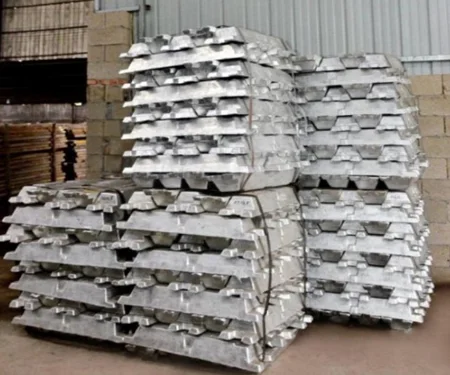
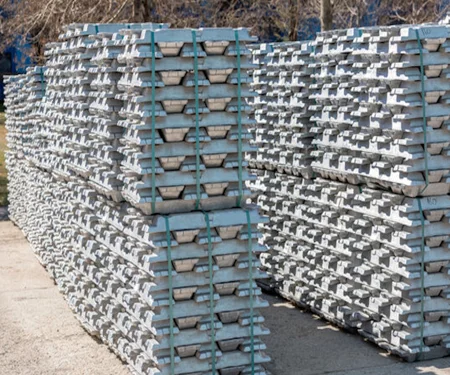
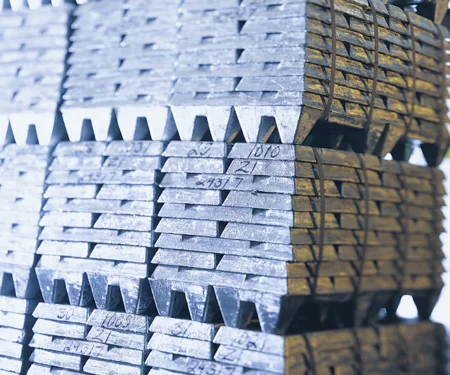
The image used in this article is generated with an AI tool and does not depict any real-time moment
Last week, domestic ore prices remained stable with no fluctuations. In Henan Province, mine renovation is nearly complete, and ground preparation work ahead of commencement will be carried out this week. Meanwhile, supplies of some domestic ore will be auctioned, though winning bid prices have not yet been announced. According to Mysteel's research, a few ores with an alumina content exceeding 70 per cent fetched winning bids of over RMB 1,000 per tonne.
In terms of imported ore, persistently high ocean freight rates continue to squeeze spot shipments from Guinea, resulting in a relatively quiet spot market over the past week. Mines and traders have rarely offered cargoes, and quoted prices show a slight upward trend.
According to Mysteel's research, a medium-sized mine in the Boffa region of Guinea issued a tender last week for 10 spot cargoes (one vessel per month from January to October 2027) on an FOB basis. Considering current freight rates, downstream customers have been relatively conservative with their bids, and no tender results have been released as of now.
In contrast to the quiet spot market, long-term contract shipments remain healthy, and China's total imports of bauxite have not yet shown a significant decline due to high freight costs. According to Mysteel satellite data, shipments from Guinea to China from August up to last week reached 24.87 million tonnes, a year-on-year increase of 65.83 per cent.
Mysteel believes the divergence between the current rise in spot prices and shipment volumes is mainly driven by a mismatch between supply and demand for imported ore in the domestic market. Alumina refineries with ample long-term contract coverage currently hold ore inventories of up to approximately 7 months, while those with fewer long-term contracts have relatively low inventories and a more urgent need to purchase spot cargoes, thus pushing up spot transaction prices on a deal-by-deal basis.
Considering that no alumina refinery has proposed production cuts and that alumina capacity still has room for expansion in the near term, demand for imported ore is expected to remain strong in the short term. Mysteel anticipates that imported ore prices will mainly trend sideways to slightly higher in the short term.
From September 11 to September 17, 2026, the total global bauxite shipment volume from major countries was 4.92 million tonnes, with 4.13 million tonnes destined for China, representing a month-on-month decrease of 32.44 per cent. The volume of cargo in transit was 17.38 million tonnes, primarily originating from Guinea and Australia.
Last week's total bauxite shipments to China declined month-on-month, with the reduction mainly driven by Guinea. By country, Guinea remains China's largest overseas source of bauxite, with shipments to China last week at 3.24 million tonnes, down 35.98 per cent month-on-month. The rainy season in Guinea has not yet fully ended, and continuous rainfall is constraining mining and inland transportation. Coupled with currently high freight rates, enthusiasm for spot ore shipments has been significantly suppressed.
In the previous week, concentrated fulfilment of long-term contracts by major Guinean miners and centralized loading of backlogged stocks at storage yards pushed up the earlier shipment base. This pulse-like shipment activity concluded, and shipment volumes returned to normal levels.
Australian shipments to China last week stood at 885,700 tonnes, down 15.31 per cent month-on-month. Australian mine production and port loading operations are generally stable, with no extreme weather or equipment failures causing disruptions; the decline in shipments was mainly due to vessel scheduling. The combined volume of cargo in transit from both countries was 17.38 million tonnes, and in-transit reserves remain high, indicating continued pressure of arrivals at domestic ports going forward.
In the shipping market, international oil prices have strengthened amid fluctuations, and international dry bulk freight rates are running at high levels. Freight rates on major routes such as Guinea and Western Australia remain firm, continuously driving up the cost of importing bauxite into China.
Overall, last week's shipments weakened significantly month-on-month, primarily due to the high base effect from the concentrated release of backlogged Guinean cargoes in the previous week. High freight rates continue to constrain spot ore shipments, and rainy season disruptions have not yet been fully eliminated, leaving uncertainty over the pace of recovery in Guinean shipments.
The massive volume of cargo in transit continues to support domestic raw material supply, and there remains a possibility of further inventory build-up at ports. Moving forward, the focus should be on tracking Guinean shipments, while continuously monitoring international oil prices, fluctuations in ocean freight rates, as well as the actual arrival pace of bauxite in China and changes in import costs.
From September 11 to September 17, 2026, Chinese main ports received 28 bauxite vessels, mainly from Guinea and Australia, with total arrivals of 3.36 million tonnes, down 10.6 per cent month-on-month. As of September 18, 2026, bauxite inventories at China's main ports stood at 31.38 million tonnes, up 0.3 per cent month-on-month.
Port inventories overall edged up slightly, with a notable divergence in regional port performance, northern and southern ports saw mixed movements. By port, inventories at some northern ports increased: Tianjin Port rose 16.22 per cent month-on-month, and Jingtang Port increased 13.95 per cent.
The build-up was mainly attributed to concentrated overseas bauxite arrivals, where the pace of vessel arrivals outpaced downstream pickup and ex-warehouse activity. Inventories at Caofeidian, Longkou, Weihai, Lianyungang, and Fangcheng ports declined, with Weihai Port seeing the steepest drop of 15.38 per cent month-on-month, mainly due to concentrated pickups by downstream alumina refineries, resulting in ex-warehouse volumes temporarily exceeding arrivals. Inventories at Yantai Port remained unchanged at 7 million tonnes, while Qingdao Port saw a slight decline, with port supply and demand remaining largely balanced.
On the demand side, operating rates at domestic downstream alumina enterprises remained generally stable. There were no large-scale centralized maintenance or shutdown activities in the industry. Downstream players maintained normalized rigid pickups, while terminal demand was stable but relatively weak, with pickup activity insufficient to rapidly digest existing port stocks. On the supply side, overseas bauxite cargo in transit remains high, with ample in-transit reserves and continued expectations of arrivals, leaving potential for further port inventory build-up.
In summary, last week's slight inventory build-up at ports was a structural divergence driven by concentrated arrivals at certain ports, rather than a significant improvement in downstream demand. The industry remains in a loose pattern characterized by high inventories, high cargo in transit, and weak demand. The fundamental backdrop of ample supply has not changed substantially, and domestic port bauxite inventories are likely to remain elevated in the short term.
Note: This news is published under a content and exchange agreement with Mysteel
18 Jamaican students return from Russia with engineering degrees, ready for mining careers
Next articleVBX raises $5m to expand Wuudagu bauxite project DFS as thyssenkrupp offtake deal ends
Grow with
AL Circle