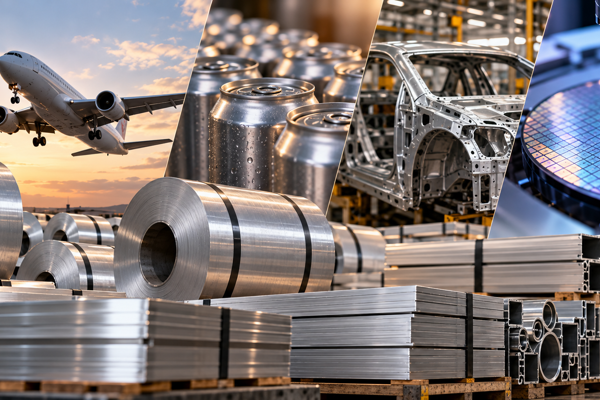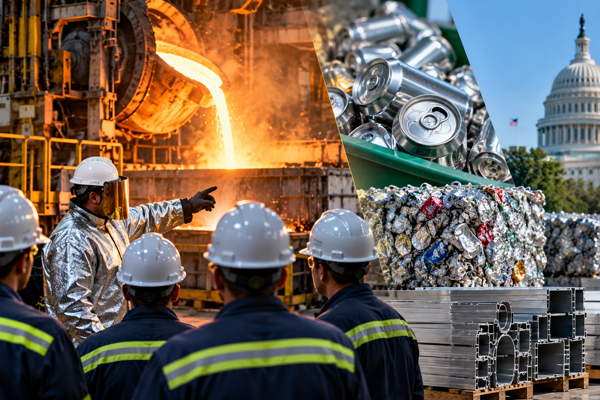
The US aluminum industry is placing renewed emphasis on workforce safety, domestic production, and material recovery, with the Aluminum Association’s sold-out Casthouse Safety Workshop in Charlotte, North Carolina, highlighting the importance of safe molten aluminum handling. The program trained more than 120 industry workers and has been running for over 30 years, with the Association describing it as a global benchmark for casthouse operators and supervisors. The workshop comes as the industry continues to focus on strengthening domestic manufacturing capabilities and supply chains. Alongside workforce training, the Aluminum Association has called for bipartisan permitting reform to accelerate investment in US aluminum production, arguing that faster approvals could help unlock the...
Canada is looking to expand its domestic aluminium processing capacity as the government seeks to reduce the sector’s dependence on the United States. Industry Minister Mélanie Joly has described more than USD 193 million in federal funding for projects at five industrial sites in Quebec as a first step towards strengthening the country’s aluminium supply chain and building the capacity to process more metal at home. The funding, announced in La Baie, Quebec, covers projects at four Rio Tinto facilities in the Saguenay-Lac-Saint-Jean region and the Alouette aluminium smelter in Sept-Îles. Joly, who also serves as the minister responsible for economic development in Quebec, said the investment reflects the strategic importance of aluminium to Canada’s economy and national sovereignty. The...
Grow with
AL Circle

The global aluminium extrusion market is entering a sustained growth phase, driven by construction, transportation, renewable energy and advanced manufacturing. This overview covers market structure, segmentation, cost drivers and the strategic trends expected to shape the industry through 2035. For the full dataset covering capacity, production, consumption and country-level trade flows by alloy, temper, finish and end-use, readers can access AL Circle’s report, “ The World of Aluminium Extrusions – Industry Forecast to 2032 ” or speak to our research desk . The market at a glance Building and construction remains the largest end-use sector, accounting for around 55 per cent to 56 per cent of global extrusion consumption, with applications ranging from fenestration and curtain walls to...

Manaksia Aluminium Company Limited reported a net profit of INR 28.5 million (USD 299,000) for the quarter ended June 30, 2026, up 83 per cent from INR 15.6 million (USD 163,000) a year earlier. Revenue from operations rose 3.9 per cent to INR 1.4 billion (USD 14.6 million) from INR 1.34 billion (USD 14 million). Profit before tax increased to INR 39.4 million (USD 413,000) from INR 20.5 million (USD 215,000) in the corresponding quarter of the previous year. Cost of materials consumed declined to INR 1 billion (USD 10.5 million) from INR 1.13 billion (USD 12 million). Basic earnings per share increased to INR 0.43 (USd 0.0045) from INR 0.24 (USD 0.0025) a year earlier. To know the production, demand and consumption forecasts of aluminium casting, explore our report " Global Aluminium...

Hindalco Industries expects aluminium prices to remain firm at around USD 3,200–3,400 per tonne during the rest of 2026, supported by supply disruptions in the Middle East that continue to keep the global market tight. Managing Director Satish Pai said the company expects its upstream aluminium EBITDA per tonne to remain close to USD 2,000 for the remainder of the year. He added that downstream aluminium volumes are expected to improve over the coming quarters as recently commissioned rolling and extrusion projects continue to ramp up. Aluminium business delivers record quarter Hindalco's upstream aluminium business reported a record EBITDA of INR 74 billion (USD 775 million) in the April-June quarter of FY27, compared with INR 41 billion (USD 428 million) a year earlier. EBITDA per tonne...

Kaiser Aluminum reported a sharp increase in quarterly revenue and earnings, while institutional investors continued to adjust their positions in the aluminium producer, highlighting a mixed picture around the company. Kaiser Aluminum Corporation has posted a strong quarterly performance, with revenue climbing 52.7 per cent year-on-year to USD 1.26 billion and earnings per share (EPS) reaching USD 5.53, more than double the consensus estimate of USD 2.66. The results put Kaiser Aluminum's underlying business performance in the spotlight even as some institutional investors have been changing their holdings in the company. Strong earnings put Kaiser Aluminum in focus The company's latest figures point to a significant improvement in quarterly performance. Kaiser Aluminum reported USD 5.53...

As the US Section 232 aluminium tariff framework issued by Donald Trump absorbs the import of aluminium downstream, semi-finished products and finished goods, it is expected to remove the original loopholes leading in the tariff wall. The point is straightforward: protecting primary metal alone does not necessarily protect the manufacturers that convert it into extrusions, rolled products, tubes and other value-added goods. A tariff wall around downstream products is therefore being presented as a way to prevent imported finished goods from gaining a cost advantage over US manufacturers that already face elevated domestic aluminium costs. The Coalition for a Prosperous America (CPA) opines that the imbalance between declining primary aluminium imports and rising downstream aluminium...

UK-based Eqonic Group has confirmed that aluminium will be the core material used in its next-generation battery technology. The company is moving towards industrial validation and commercial production. Its battery technology does not use lithium, sodium or rare earth materials and is designed to reduce material costs to around 30 per cent of those associated with conventional lithium-metal batteries. Eqonic is now preparing for industrial-scale testing to demonstrate the manufacturability, performance and reliability of the technology before commercial deployment. To know the production, demand and consumption forecasts of aluminium casting, explore our report " Global Aluminium Casting Market 2026-2032: Plant Economics, Alloy Segmentation, Pricing Intelligence, Supply Chain Analysis &...

As industries worldwide accelerate lightweighting, electrification, automation and infrastructure investment, aluminium casting is entering a new phase of growth. Demand is rising across applications where weight, durability, thermal performance and design flexibility matter, from EV battery enclosures and structural components to industrial machinery and electrical equipment. Owing to this, AL Circle’s latest report, “ Global Aluminium Casting Market 2026-2032 ” highlights that the global aluminium casting consumption is forecast to grow at a CAGR of nearly 3.4 per cent between 2025 and 2032. While automotive and transportation will remain the primary demand engine, expanding applications across industrial machinery, electrical and electronics, and construction are expected to broaden...

EXECUTIVE SUMMARY: The campaign imperative: The global aluminium extrusion sector is bifurcating. Facilities relying on historical intuition and manual trial-and-error are facing severe margin compression, while digital-first extruders are capturing record profitability. AL Circle’s Extrusion Campaign is actively tracking this transition. The Asian acceleration (die design): Driven by the need for massive scale, Chinese manufacturers pioneered Machine Learning Surrogate Models. By automating the minimisation of extrudate curvature, they have cut die design lead times from weeks to milliseconds. The European vanguard (advisory & automation): To combat high energy costs and labour shortages, European facilities initiated their digitalisation push early. They now lead the globe in AI-driven...

From a Hong Kong-backed plant in Vietnam to Malaysia's largest extrusion expansion in years and Indonesia's biggest extrusion press, Southeast Asia is witnessing a wave of aluminium extrusion investments. Although these projects span different countries, companies and end markets, they all point in the same direction: manufacturers increasingly see the region as the next major hub for downstream aluminium production. The region's growing importance is also reflected in its market outlook. The extruded aluminium profiles market was valued at approximately USD 4.54 billion in 2024 and is forecast to reach USD 6.86 billion by 2032, expanding at a CAGR of 8.47 per cent as per various industry sources. But now the question is: what is making Southeast Asia the preferred destination for...

Hindalco subsidiary Novelis has expanded its aluminium rolling and recycling footprint through the continued commissioning of its Bay Minette greenfield site in Alabama and the restart of its Oswego hot mill in New York . The twin milestones propelled the company’s performance in the first quarter of fiscal year 2027 (Q1 FY2027), backed by higher aluminium prices, operational efficiencies and steady demand for sustainable aluminium solutions. Steve Fisher, President and CEO of Novelis, said, "We are pleased to start the new fiscal year on a positive note, supported by strong execution, favourable market trends and continued demand for sustainable aluminium solutions." Unlock in-depth insights into the extrusion segment of the global aluminium industry with The World of Aluminium...

As global demand for value-added aluminium products continues to rise across construction, automotive, renewable energy, electrical equipment and industrial manufacturing, aluminium bars, rods and profiles have become one of the most actively traded downstream products. Asia remains at the crucial juncture of this trade, serving both as the world’s largest production hub and one of its biggest consumption markets. Shaping this market from both the supply and demand sides, ten key Asian economies have gained prominence. On the export front, China, Turkey and Saudi Arabia emerged as the region’s top suppliers. On the import side, the United Arab Emirates (UAE), India and Thailand ranked as the leading buyers. Meanwhile, Malaysia and Vietnam appear on both supplying and sourcing lists. A...

South African aluminium rolled products producer Hulamin reported a stronger first-half performance for 2026 as operational stability returned following last year's production disruptions, with higher rolled product volumes, improved plant utilisation and portfolio optimisation helping lift earnings despite ongoing pricing pressures in parts of the business. The company said most of the operational challenges experienced during the second half of 2025 have now been resolved, allowing its core rolling operations to stabilise and progressively ramp up towards the upgraded plant's design capacity. Rolled product volumes reached 85,000 tonnes during the six months ended June 30, reflecting the continued operational recovery. Operational recovery supports stronger earnings Hulamin reported...

Press Metal Aluminium Holdings Berhad (PMAH) has proposed to acquire an additional 35.6 per cent stake in PMB Technology Berhad (PMBT) for MYR 464.95 million (USD 109.9 million) in cash, a move that will raise its shareholding to about 58.8 per cent and make PMBT its subsidiary. The proposed acquisition covers 664.22 million PMBT shares at MYR 0.70 (USD 0.17) apiece under a conditional share sale agreement signed on August 3. The shares will be acquired from five members of the Koon family: Tan Sri Dato' Koon Poh Keong, Datuk Koon Poh Ming, Dato' Koon Poh Tat, Koon Poh Weng and Datuk Koon Poh Kong. Upon completion of the transaction, PMAH's interest in PMBT will increase from its current 23.2 per cent to a controlling stake of 58.8 per cent. To know the production, demand and consumption...
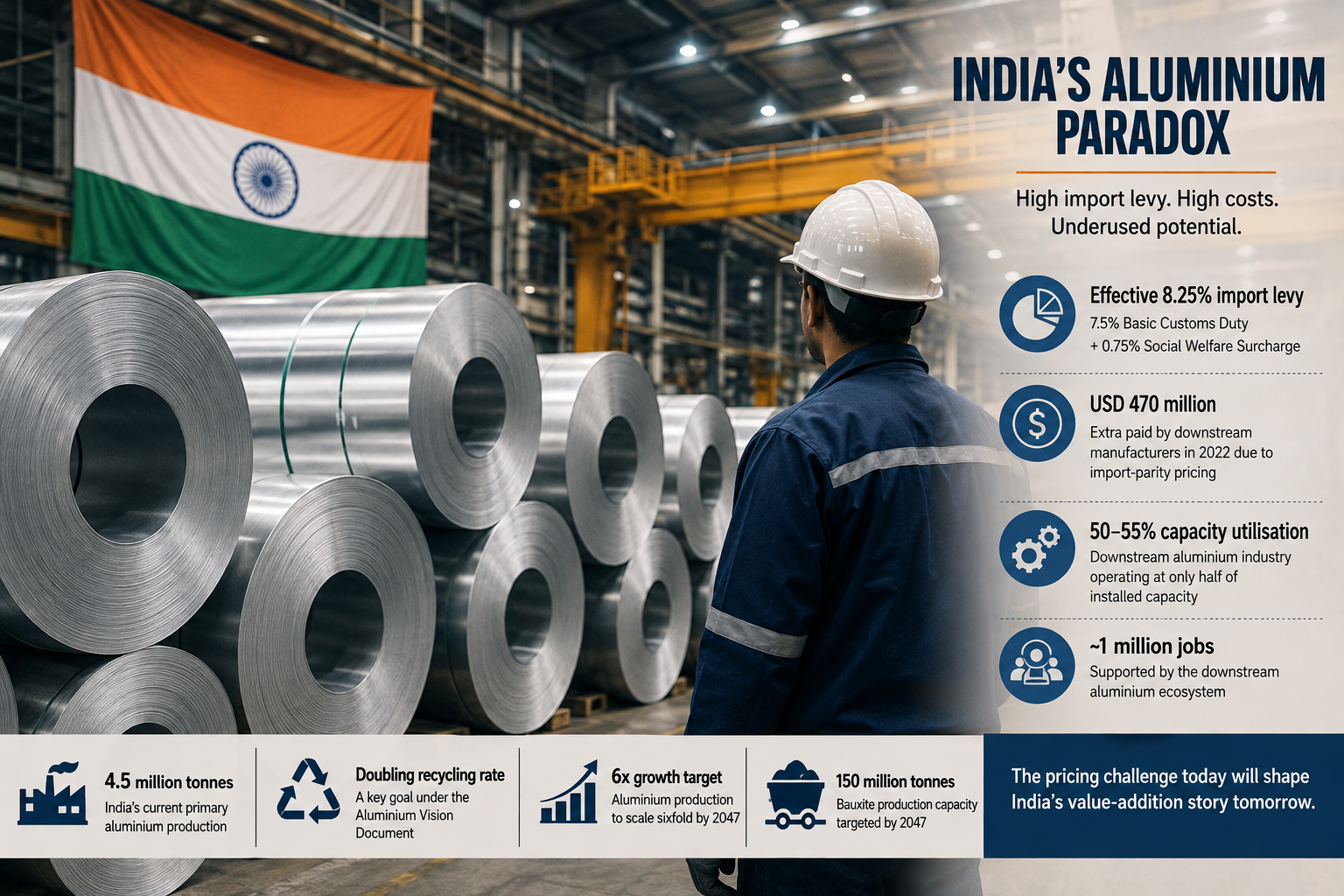
India may be the world’s second-largest producer of primary aluminium, but for thousands of small manufacturers further down the value chain, access to domestically produced metal at globally competitive prices remains a pressing concern. The issue has returned to the centre of India’s aluminium policy debate, with import-parity pricing and the effective 8.25 per cent import levy on primary aluminium increasingly being cited by downstream manufacturers as factors raising their raw material costs. The concern is growing as primary aluminium can account for as much as 80 per cent of the production cost of downstream manufacturers. For micro, small and medium enterprises (MSMEs) operating on thinner margins, even relatively small movements in the cost of metal can therefore have an outsized...

The centre of gravity of the global aluminium extrusion market is increasingly difficult to locate anywhere but Asia. China already sits at a scale that no other extrusion-producing country approaches. AL Circle's The World of Aluminium Extrusions – Industry Forecast to 2030 estimated China's aluminium extrusion usage at 20.94 million tonnes in 2023, against global consumption of approximately 31.5 million tonnes. That means, roughly two out of every three tonnes of aluminium extrusions consumed worldwide were used in China. The same study estimated that Chinese extruders had more than 30 million tonnes of annual capacity, while China's extrusion demand could approach 27.5 million tonnes by 2030. On the other hand, India operates on an entirely different scale, but perhaps on a more...

The aluminium industry's growth story is increasingly being shaped by value-added manufacturing rather than production volumes. Robust earnings, expansion projects and business diversification continued to strengthen confidence in downstream aluminium, with several producers raising their outlooks despite macroeconomic and geopolitical headwinds. At the same time, global trade trends favoured economies with stronger downstream capabilities, while weaker exports in some regions and governance challenges highlighted that growth across the industry remains uneven. Key takeaways Constellium reported record quarterly results, with revenue rising 31 per cent to USD 2.7 billion and net income increasing to USD 148 million. The company raised its full-year 2026 guidance and brought its 2028...

The aluminium industry is one of the most interconnected global supply chains, spanning bauxite miners, alumina refineries, smelters, recyclers, fabricators, traders and end-users. While each segment plays a critical role, businesses often operate with limited visibility in the market whenever the need arises to go beyond their immediate network, either for finding a new raw material source, reaching a global buyer or improving production efficiency. This is where a digital B2B marketplace is an important link in the aluminium ecosystem. Enter AL Biz , the digital integrated B2B marketplace for the aluminium value chain. Through its global platform, AL Biz brings together producers, suppliers, traders and buyers across the entire value chain, i.e., from bauxite and primary aluminium to...

LA Metals, a UK company that supplies and fabricates aluminium extrusion products, is moving into a new growth stage after a management buyout. The deal will help fund higher production capacity, new manufacturing capabilities, and further expansion. The Smethwick-based company, which supplies aluminium extrusion products to customers including Next, Burger King and the UK Ministry of Defence, has been acquired by Finance Director Justin Bates and Operations Director Chris Grierson through a management buyout. Founded in 1987, LA Metals initially operated as a business-to-business supplier of aluminium extrusion products and custom fabrication services. In 2022, the company expanded its offering by launching Aluminium Online, enabling customers to purchase standard and bespoke aluminium...