Constellium SE, a Paris-based global manufacturer of aluminium rolled products, extruded products, and structural components made from advanced alloys, described 2024 as a challenging year, citing extreme weather conditions and weak demand from end markets as significant operational setbacks. At the end of February 2025, the company reported its financial results, mirroring the prolonged market downturn throughout the year.
The company’s revenue saw a hit of 6 per cent compared to the previous year and amounted to $7.3 billion, while its shipments decreased by 4 per cent to 1.4 million tonnes. Consequently, its net income plunged by 61.78 per cent from $157 million in 2023 to $60 million in 2024.
Adjusted EBITDA for the whole year was $623 million, down by 5.89 per cent Y-o-Y from $662 million. Among the major business segments Constellium reported Adjusted EBITDA of $285 million in aerospace & transportation, $242 million in packaging & automotive rolled products, and $74 million in automotive structures & industry after being impacted by the flood at Valais as operations were suspended during the middle of the year. Cash from operations at the end of 2024 was $301 million and free cash flow was $85 million.
The continued effects of the flood also weighed on Constellium’s fourth-quarter performance, leading to a 1 per cent drop in revenue to $1,721 million and net loss of $47 million compared to net income of $5 million in Q4 2023. Adjusted EBITDA amounted to $125 million, recording an annual decline of 23.78 per cent from $164 million, which shipment volume dropped 2.38 per cent Y-o-Y from 336,000 tonnes to 328,000 tonnes.
Jean-Marc Germain, Constellium’s Chief Executive Officer, said: “2024 was a very challenging year for Constellium on many fronts, from the extreme cold weather and snow impacting operations at Muscle Shoals in January, to the severe flooding event at our facilities in the Valais region in Switzerland during the summer, to market-driven headwinds unfolding throughout the year including demand weakness across most of our end markets and tightening scrap spreads in North America.”
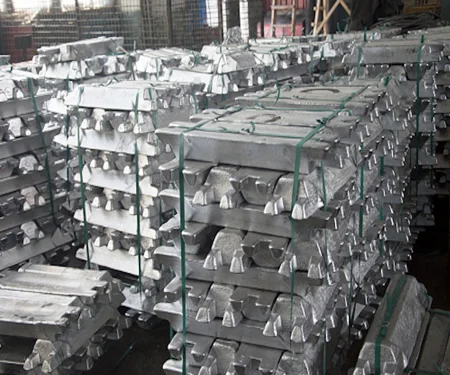
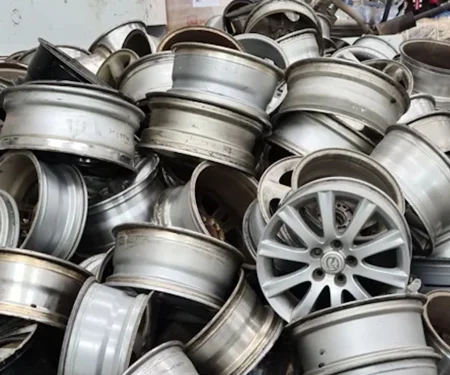
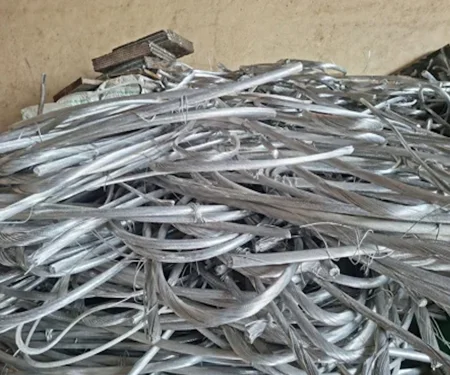
In context of aluminium scrap spread in North America, the United States recovered 3.178 million tonnes of aluminium from scrap during January-November 2024, compared to 3.035 million tonnes during the corresponding period of the previous year. That reflected a growth of 4.71 per cent Y-o-Y through the first eleven months of 2024, in contrast to the growth of 5.2 per cent in demand across both the United States and Canada through the first half of 2024, indicating a gap in the growth rate of recycled aluminium generation and demand.
In 2024, while many global aluminium giants benefited from the LME aluminium price rally despite weakened global demand from end-user sectors amid a bearish economy, Constellium did not experience the same advantage. Against this backdrop, Constellium’s recent decision to implement a minimum price increase of US$ 0.15 per pound for all flat-rolled products shipped in the US appears to be a strategic move to mitigate its financial downturn.
Additionally, in response to aluminium scrap supply challenges, Constellium has introduced advanced Laser-Induced Breakdown Spectroscopy (LIBS) technology to recycle automotive parts, which again marks a significant step towards enhancing recycled aluminium production while lowering carbon emissions in the automotive supply chain by increasing the use of recycled materials.
Constellium’s CEO further added to his comments: “I want to thank each of our 12,000 employees for their commitment, resilience and relentless focus on serving our customers during these difficult times. On the positive front, I am pleased that we started up our new recycling and casting centre in Neuf-Brisach in September, slightly ahead of schedule and below budget, and we returned $79 million to shareholders through the repurchase of 4.6 million shares of Company stock during the year. I am also excited about our recent announcement to shift our reporting to U.S. dollars under US GAAP and to begin filing our SEC reports on U.S. domestic issuer forms.”












_md.webp)
_md.webp)
_md.webp)