Can recycling and innovation shield aluminium from global disruptions?
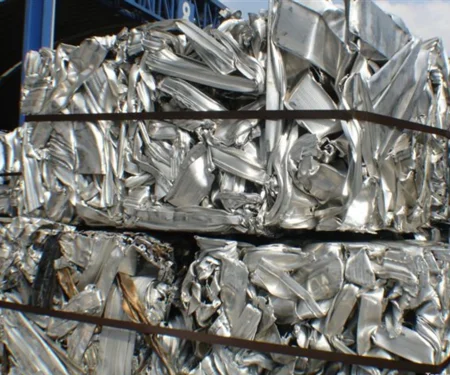
Stock image for referential purposes only
The global aluminium sector is witnessing a sharp transition as recycling, low-carbon technologies, trade tensions and supply chain disruptions reshape industry priorities. On the one hand, stronger earnings and recycling investments have been unlocked, while on the other hand, the impact of the Middle East conflict and Europe’s decarbonisation push continues to gain market attention. Producers and policymakers are striving to secure raw materials, improve the circular economy and protect industrial competitiveness amid mounting geopolitical and economic uncertainties.
Europe’s recycling drive faces pressure due to trade tensions
Italy achieved a 92.8 per cent aluminium beverage can recycling rate in 2025 and has left its imprint as a new global recycling leader. The high recovery rate highlights the country’s efficient collection and recycling infrastructure, helping reduce energy consumption and carbon emissions linked to primary aluminium production. The milestone reflects efficient collection systems and growing industry focus on sustainable packaging and closed-loop recycling.
However, Germany’s recycling sector remained under pressure. According to Aluminium Deutschland, the country produced 684,564 tonnes of recycled aluminium in Q1 2026, down around 3 per cent Y-o-Y amid weak industrial demand, high energy costs and limited scrap availability. The slump additionally points to the challenges surfacing in Europe’s recycling and downstream aluminium sectors amid economic uncertainty and global oversupply concerns. Recovery expectations for 2026 also remain subdued.
Delve deeper into the recycled aluminium and secondary aluminium market with our World Recycled ALuminium Market Analysis Industry forecast to 2032
Meanwhile, Norsk Hydro remained under investor focus after updating markets on quarterly earnings, dividends and spending plans. The company continues balancing weak aluminium prices and volatile energy costs while expanding its low-carbon aluminium and recycling portfolio.
Hydro and Parsons Healthy Materials Lab are jointly examining how recycled and low-carbon aluminium can support sustainable construction practices. They would examine how recycling technologies and renewable-powered aluminium are reshaping construction material choices. One initiative of the partnership is an aluminium-focused research study examining low-carbon aluminium solutions, their limitations, and the implications for material specification and use in construction. The other would study low-carbon aluminium in construction with a New York Masterclass exploring recycled aluminium’s role in reducing supply chain emissions. Read more.
Europe’s aluminium industry has unveiled a comprehensive innovation roadmap aimed at accelerating the sector’s transition toward climate neutrality and industrial resilience. Published by European Aluminium, The Innovation Agenda: Technologies for a Sustainable Aluminium Industry in Europe positions aluminium as a strategic material critical to clean energy systems, electric mobility, construction, packaging, aerospace, digital infrastructure and defence. The Agenda identifies six major pillars, viz., electrification, hydrogen, recycling, resource efficiency, carbon-free primary production and carbon capture, forming the foundation of Europe’s aluminium decarbonisation strategy.
At the same time, European aluminium associations warned that rising global overcapacity, particularly from China, is distorting competition and threatening Europe’s industrial base. Groups including European Aluminium, European Metals, AEGIS Europe and IMA Europe are calling for stronger and faster EU Trade Defence Instruments (TDIs) to counter subsidised imports and market imbalances. The industry argues that existing anti-dumping and trade defence mechanisms are no longer sufficient to address the pace of oversupply and unfair trade practices impacting Europe’s upstream and downstream aluminium value chains.
Similarly, rising aluminium prices and supply tightness triggered by the Middle East conflict are creating fresh opportunities for AI-driven recycling startups. These companies are using machine learning and automated sorting technologies to improve scrap recovery, reduce processing costs and secure secondary aluminium supply as manufacturers seek alternatives to expensive primary metal. The trend also indicates the increasing strive to realise circular economy solutions as pressure continues to mount on global aluminium supply chains.
Asia-Pacific accelerates recycling, clean energy and resource security
Japan-based Daiki Aluminium Industry posted robust FY26 results, with consolidated net sales increasing 10.4 per cent year-on-year to JPY 331.1 billion (USD 2.08 billion). Operating profit climbed 50.4 per cent to JPY 7.3 billion (USD 46 million), while profit attributable to shareholders surged more than fourfold to JPY 3.7 billion (USD 23.36 million), supported by improved operational efficiency and stronger market conditions.
India-based Premier Energies also delivered robust Q4 FY26 growth, reporting a 37.6 per cent rise in revenue to INR 22.3 billion (USD 232 million). Profit after tax rose 64.45 per cent to INR 4.57 billion (USD 47.5 million), aided by higher-margin solar cell sales, better capacity utilisation and favourable product mix. Click here to learn more.
Vietnam is intensifying efforts to emerge as a regional aluminium recycling hub through tax incentives, policy support and investment in scrap processing infrastructure. The country aims to reduce dependence on imported primary aluminium, encouraging investment in recycling infrastructure and secondary aluminium production and align with global decarbonisation goals. The move comes amid tightening competition for scrap worldwide, with Vietnam aiming to position itself as a regional recycling hub while supporting its growing downstream manufacturing and export sectors.
As the ongoing Middle East conflict disrupts aluminium and nickel supply chains, a question mark looms over Asia’s renewable energy ambitions, threatening to raise costs for solar panels, wind turbines and grid infrastructure across the region. Countries including Indonesia, Vietnam and the Philippines have accelerated rooftop solar and renewable energy deployment in recent years, largely in response to persistently high fossil fuel prices. But the growing instability around the Strait of Hormuz is now casting a shadow of uncertainty over the supply of critical industrial metals required for the energy transition.
China, meanwhile, is exploring coal waste as a potential domestic source of critical minerals used in batteries, semiconductors, electric vehicles and defence-related industries, as the country moves to secure supplies of strategic raw materials. A recent report noted that fly ash and gangue produced during coal mining, washing and combustion may hold recoverable amounts of germanium, aluminium, lithium and gallium. Studies suggest that coal should now be treated as waste generated through mining, and power generation can also contain valuable metallic elements.
Explore the position of aluminium at the intersection of sustainability and strategy in Sustainability & Recycling: Aluminium's Dual Commitment

Alupro reveals how to achieve the circular packaging economy with new manifesto
Next articleEurope aluminium recycling facts: Amidst 8MT demand and 66% scrap export surge, recycling grows over 80%
Grow with
AL Circle