Here’s how European Aluminium maps out innovation pathways to reach climate neutrality
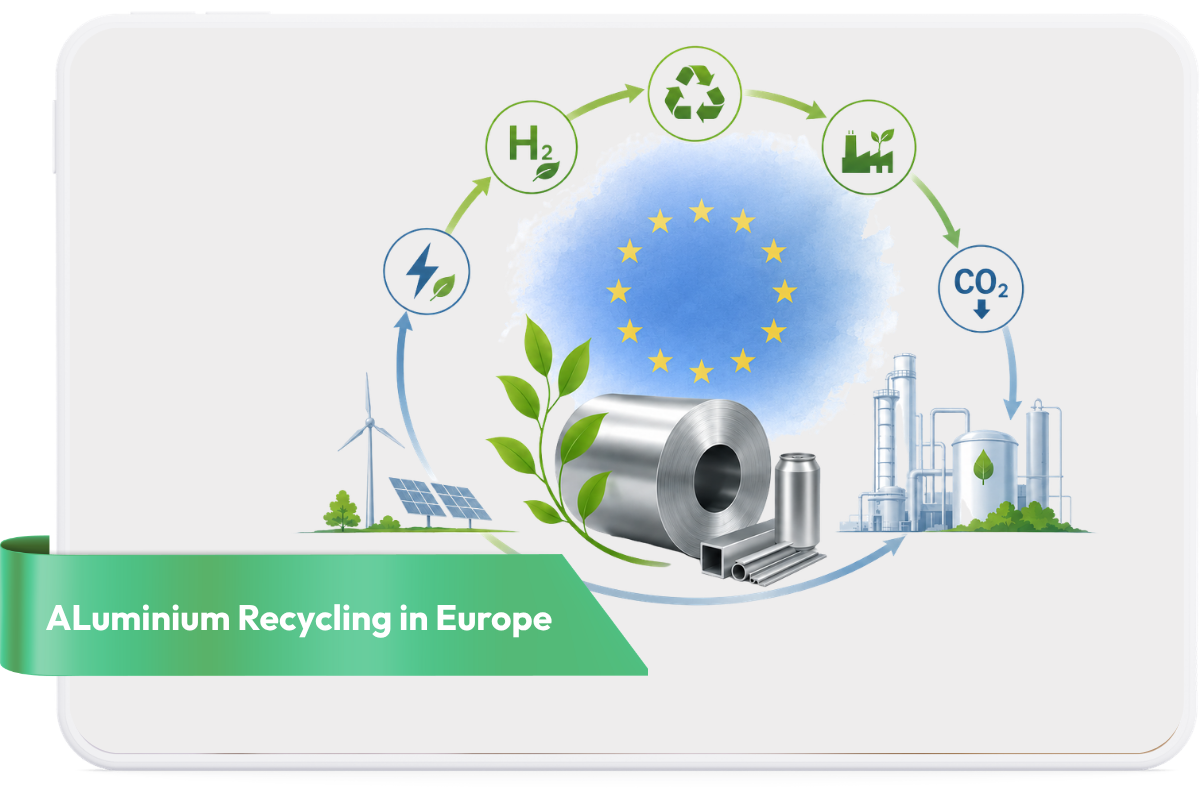
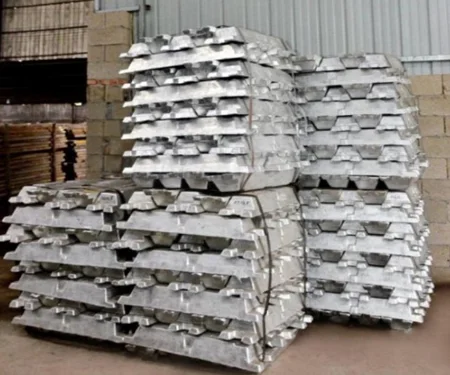
The image used in this article is generated with an AI tool and does not depict any real-time moment
Aluminium has proved indispensable to modern industry, being lightweight and recyclable, with global demand projected to grow from 106 million tonnes in 2025 to 130 million tonnes by 2035. Although playing a critical role in the global energy transition, the sector remains carbon-intensive, emitting nearly 270 million tonnes of CO2 in 2022, or about 3 per cent of global industrial emissions. European primary aluminium production had a carbon footprint of 6.6 kg CO2 per kg of aluminium based on 2023 data gathered by European Aluminium, versus a global average of 14.8 kg CO2 per kg.
Europe’s aluminium industry has unveiled a comprehensive innovation roadmap aimed at combating climate change and accelerating the sector’s transition toward climate neutrality, circularity and industrial resilience. Published by European Aluminium, The Innovation Agenda: Technologies for a Sustainable Aluminium Industry in Europe positions aluminium as a strategic material critical to clean energy systems, electric mobility, construction, packaging, aerospace, digital infrastructure and defence.
Delve deeper into the recycled aluminium and secondary aluminium market with our World Recycled ALuminium Market Analysis Industry forecast to 2032
As demand for low-carbon materials rises globally, Europe’s aluminium industry is facing mounting pressure to decarbonise production, improve resource efficiency and reduce dependence on imported raw materials.
The Agenda identifies six major pillars of innovation, viz., electrification, hydrogen, recycling, resource efficiency, carbon-free primary production and carbon capture. Together, these areas form the foundation of Europe’s long-term decarbonisation strategy for aluminium.
Electrification as key to emissions reduction
Electrification is one of the most immediate pathways for lowering emissions across the aluminium value chain. While primary aluminium production already relies on electricity through electrolysis, several downstream activities like alumina refining, remelting and extrusion still depend heavily on fossil fuels.
European Aluminium argues that expanding electric-powered technologies, backed by renewable energy and thermal energy storage systems, could largely reduce greenhouse gas (GHG) emissions. The industry is also exploring how aluminium smelters could provide flexible grid services by adjusting electricity demand in response to renewable power availability.
Hydrogen emerges as a complementary fuel solution
Hydrogen is another important decarbonisation route, particularly for high-temperature processes where direct electrification may not yet be technically or economically viable. Low-carbon hydrogen could gradually replace natural gas in industrial heating applications, reducing combustion-related emissions.
Green hydrogen in alumina refining and smelting can reduce emissions by up to 60 per cent by 2035 in certain low-carbon scenarios. As mentioned in a study recorded in the Journal of Cleaner Production, shifting from natural gas to green hydrogen in alumina refining reduces emissions from 1.10 tonnes CO2 to 0.33 tonnes CO2 per tonne of alumina, implying an emissions reduction of roughly 70 per cent. Another study in the journal observed, “net-zero to net-negative carbon footprint can be achieved, ranging from –0.5 to 0.2 tCO₂/tAl” with the use of green hydrogen.
European Aluminium notes that hybrid systems combining hydrogen and natural gas may provide transitional flexibility while hydrogen infrastructure develops across Europe.
It recommends further work on hydrogen combustion systems, industrial safety standards, transport infrastructure and certification mechanisms to accelerate its propagation.
Recycling remains central to Europe’s aluminium strategy
Recycling is presented as a cornerstone of Europe’s aluminium ecosystem and circular economy ambitions. According to the report, recycled aluminium uses around 95 per cent less energy than primary aluminium production, while roughly 75 per cent of all aluminium ever produced remains in use today.
European Aluminium notes that Europe leads the global transition toward renewable-powered aluminium, with 78 per cent of the electricity used in its production coming from renewable sources. Recycled aluminium already contributes over 60 per cent of Europe’s aluminium output.
Europe currently recovers approximately 90 per cent of aluminium from transport and construction applications and around 75 per cent from beverage cans. The aluminium beverage can-recycling performance across the EU, UK, Switzerland, Norway and Iceland reached 76.3 per cent in 2023, as declared in the joint report from Metal Packaging Europe and European Aluminium.
To improve circularity, implementation of advanced sorting technologies, improved scrap preparation systems, alloy redesign for recyclability and stronger collaboration between recyclers, manufacturers and waste management companies can be helpful.
Read in detail the recommendations of European Aluminium to realise circularity goals in The Innovation Agenda: Technologies for a Sustainable Aluminium Industry in Europe
Resource efficiency and waste valorisation gain importance
Improving resource efficiency by reusing industrial waste and by-products generated during aluminium production remains a central area of focus.
Europe’s aluminium industry produces more than 7 million tonnes of residues annually, including bauxite residue, spent pot lining, aluminium dross and salt slags. Rather than treating these materials as waste, the industry is exploring ways to convert them into commercially valuable products through industrial symbiosis.
Recycled aluminium production stood at 5.82 million tonnes in 2024, with expected output to reach 6.3 million tonnes in 2025. Meanwhile, Europe’s dross treatment network has continued to grow in line with rising recycling activity. In 2024, nearly 573,000 tonnes of dross were gathered for processing, leading to the recovery of about 166,000 tonnes of aluminium.
Additionally, as per a European Commission report, out of the 7 million tonnes produced in Europe, close to 100,000 tonnes of red mud or bauxite residue are being recycled.
In this case, industrial-scale validation projects, harmonised End-of-Waste regulations and standardisation frameworks to support wider market adoption of valorised materials are recommended.
Carbon-free aluminium production technologies advance
A major focus of the report is the development of carbon-free primary aluminium production technologies. European Aluminium identifies alternative alumina refining methods, inert anode technology and carbon-chlorination systems as breakthrough innovations capable of eliminating direct process emissions from aluminium smelting.
Inert anode technologies could remove Scope 1 emissions from electrolysis by eliminating carbon oxidation and perfluorocarbon formation. Meanwhile, alternative feedstocks and new refining routes could diversify raw material sources and reduce reliance on the conventional Bayer process.
Norsk Hydro’s Karmøy pilot plant in Norway has become a reference point for low-carbon aluminium production by combining hydropower with advanced smelting technology to lower energy consumption and emissions. The company also supports its low-carbon strategy through hydro-powered operations at Sunndal and Høyanger.
ALVANCE’s Lochaber smelter in Scotland, the UK’s only aluminium smelter powered by on-site hydropower, forms the backbone of its GREENAL strategy focused on circular and low-emissions aluminium production.
Century Aluminium’s Grundartangi smelter in Iceland runs entirely on renewable hydro and geothermal power, supporting one of the industry’s lowest-carbon aluminium footprints.
Carbon capture identified as a solution for hard-to-abate emissions
Carbon capture and storage (CCS) is positioned as a complementary solution for industrial emissions that cannot easily be eliminated through electrification or hydrogen.
European Aluminium is advocating for pilot projects focused on aluminium-specific carbon capture systems, alongside stronger collaboration between aluminium producers, energy providers and CO₂ transport operators. Recommendations include research into economically viable carbon utilisation pathways and accelerated permitting procedures for storage infrastructure.
To learn more about the European Aluminium recommendations for coordinated policy support, funding mechanisms and regulatory certainty to materialise into full industrial deployment for ensuring Europe’s foothold in the future global aluminium landscape, download The Innovation Agenda: Technologies for a Sustainable Aluminium Industry in Europe by the European Aluminium.
Explore the position of aluminium at the intersection of sustainability and strategy in Sustainability & Recycling: Aluminium's Dual Commitment

Vedanta Chairman Anil Agarwal calls for exploration and entrepreneurship to make India energy surplus
Next articleEuropean aluminium sector braces for oversupply; seeks stronger EU trade shield
Grow with
AL Circle