European aluminium sector braces for oversupply; seeks stronger EU trade shield
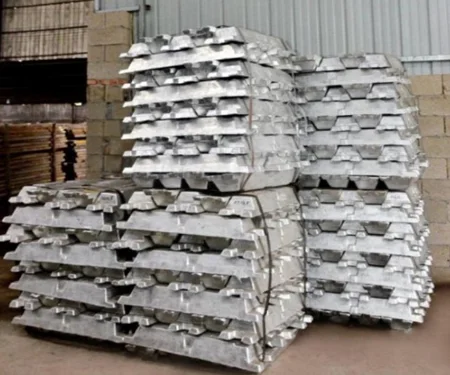
Stock image for referential purposes only
European aluminium sector warns that excess aluminium volumes, particularly from China, are distorting competition, weakening profitability and threatening the long-term resilience of Europe’s upstream and downstream value chains.
As global overcapacity and unfair trade practices continue to mount and pressure Europe’s industrial base, its aluminium industry seeks a stronger and more effective EU trade defence framework.
Delve deeper into the recycled aluminium and secondary aluminium market with our World Recycled ALuminium Market Analysis Industry forecast to 2032
In a joint industry statement backed by multiple European industrial associations, signatories stressed that the EU’s existing Trade Defence Instruments (TDIs) remain critical but are no longer sufficient to address the scale and pace of current market disruptions.
Some of the notable signatory bodies include European Aluminium, European Metals, AEGIS Europe, and IMA Europe.
EU policies and anti-dumping duties
The statement highlighted that industrial policies enforced by the EU, such as tax incentives and subsidies, have been supporting excess production in non-market economies.
Consequently, it creates an uneven playing field for European manufacturers already grappling with high energy costs and strict environmental regulations. As the resulting oversupply increasingly spills into Europe, strategic sectors such as aluminium are pushed under severe strain.
Over the past two years, the EU has steadily tightened its stance on Chinese industrial imports. In 2023, the EU and US jointly intensified scrutiny of Chinese aluminium and steel trade practices. It was succeeded by the EU’s imposition of up to 38 per cent tariffs on Chinese electric vehicles in 2024 amid concerns over state subsidies and market distortions.
Europe subsequently imposed anti-dumping duties on imported fused alumina from China, while also launching expiry reviews on anti-dumping measures covering Chinese aluminium extrusions and aluminium converter foil, both due to expire in 2026.
The bloc is additionally assessing whether existing anti-dumping duties should remain in force beyond 2026 as concerns over persistent overcapacity continue to grow.
European associations urge for stronger measures
Recognised by both the EU and NATO as a strategic and critical raw material, aluminium has become central to Europe’s energy transition, defence readiness and industrial competitiveness. Industry bodies, therefore, emphasised that a more assertive trade defence mechanism is essential to safeguard Europe’s autonomy and manufacturing capacity.
The groups called for faster, more flexible implementation of TDIs, warning that lengthy investigation timelines might expose European producers to irreversible damage before any measure is implemented.
They also urged the European Commission to better address circumvention practices, incorporate environmental and social costs into dumping calculations and adopt a broader value-chain approach to prevent unfairly traded products from simply shifting into adjacent segments of the market.
Alongside reinforcing current TDIs, the organisation advocated the consideration of a new WTO-compliant mechanism specifically designed to tackle state-induced distortions and persistent overcapacity spillovers.
Signatories further called for a more strategic application of the EU’s Foreign Subsidies Regulation (FSR), enabling authorities to identify broader patterns of non-market behaviour across sectors rather than assessing isolated transactions alone.
Against this backdrop, European Aluminium has joined two coordinated initiatives led by AEGIS Europe and European Metals, urging EU institutions to strengthen and modernise the bloc’s trade defence toolbox in response to growing global market imbalances.
The statement asserts that the evolution of Europe’s trade policy framework in line with the realities of today’s geopolitical and industrial environment is imperative, especially as global competition intensifies and strategic industries face rising pressure from subsidised imports and structural overcapacity.
Explore the position of aluminium at the intersection of sustainability and strategy in Sustainability & Recycling: Aluminium's Dual Commitment

Here’s how European Aluminium maps out innovation pathways to reach climate neutrality
Next articleAntaisolar launches We Cover Solar Roof One-Stop Solution
Grow with
AL Circle