Vietnam enters the global scrap race with tax incentives and recycling ambitions in focus

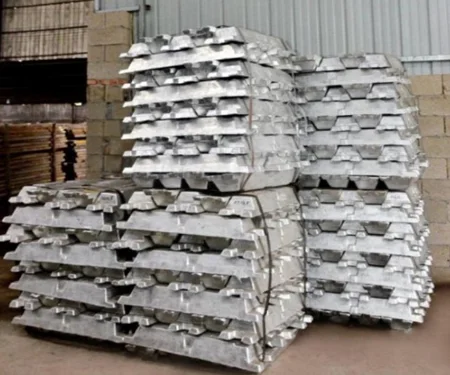
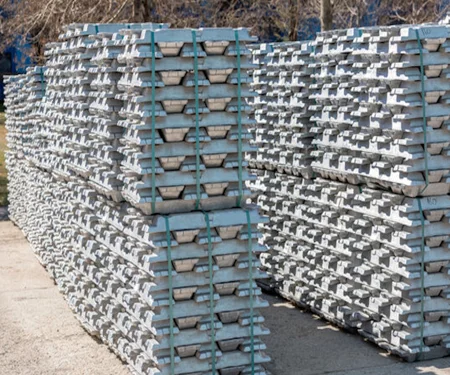
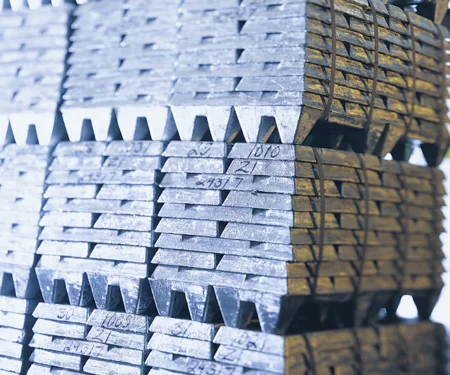
Stock image for referential purposes only
As global scrap trade routes keep changing, Vietnam is trying to position itself as the next big destination for aluminium and copper recycling. But while the country is offering tax benefits and financial support to attract investors, many traders and recyclers still believe the market is not fully ready.
The shift comes after the US-China trade war sharply disrupted global scrap flows. When tariffs on US goods entering China climbed as high as 125 per cent in April 2025, Chinese buyers started moving aluminium and copper scrap cargoes through Southeast Asia and Japan instead. Buyers also began sourcing more material from Europe, the UK and the Middle East.
Now, fresh problems are emerging. Europe may introduce export levies on aluminium scrap in 2026, Middle Eastern supply remains uncertain, and ports in Thailand, Malaysia and Japan are tightening inspections. As a result, many buyers are asking the same question: where can future scrap supply come from?
Vietnam offers incentives to attract recyclers
Vietnam is trying to seize the opportunity. At CMRA 2026, government officials promoted new policies aimed at growing the country’s recycling sector as part of its 2050 net-zero goals.
Under Vietnam’s revised Corporate Income Tax law, recyclers and waste-treatment companies can receive a preferential 10 per cent tax rate for 15 years. Battery recyclers can also apply for support packages worth up to VND 20 billion (USD 800,000) each.
The government is also strengthening recycling rules through a new Extended Producer Responsibility (EPR) framework starting May 25, 2026.
Under the new rules:
- Aluminium packaging must reach a minimum 22 per cent recycling rate
- Steel and metal packaging must reach 20 per cent
- Rechargeable batteries must reach 8-12 per cent
- Electronic equipment must reach 3-15 per cent
Companies that fail to meet the targets can instead contribute to the Vietnam Environment Protection Fund. Despite these measures, investors still see major obstacles.
Also read: Global aluminium scrap tracker 2025: A 41.7Mt backbone under pressure as demand rises 3.87%
Domestic scrap supply remains weak
Vietnam’s recycling industry still depends heavily on imported scrap because local collection systems remain underdeveloped.
Most domestic scrap comes from more than 4,000 small “craft villages,” where waste is often processed informally without proper environmental controls. In comparison, Vietnam has only around 35-54 formally recognised recycling companies.
The country also imports over 70 per cent of its key steelmaking raw materials, including iron ore, coking coal and steel scrap.
Vietnam also allows only a limited number of scrap grades for import, making competition extremely intense for approved materials like extrusion scrap. In some cases, Vietnamese buyers reportedly paid higher prices than Thai consumers despite Thailand having much larger recycling capacity.
Illegal trade still exists as well. Traders said prohibited materials like baled used beverage cans (UBC) are still sometimes shipped into the country through unofficial channels.
Explore - World Recycled ALuminium Market Analysis Industry forecast to 2032 for insights into global recycled aluminium demand, supply trends, and future market growth.
Demand growth is still uncertain
Even if Vietnam expands recycling capacity, many market participants are unsure whether demand will be strong enough to absorb the material.
China, one of the world’s biggest aluminium consumers, is buying less imported cast aluminium alloy because domestic ADC12 production has grown rapidly. Chinese imports of cast aluminium alloy fell 16.8 per cent year on year in 2025.
Market participants also expect demand to weaken further as electric vehicles receive less policy focus under China’s latest Five-Year Plan.
Japan’s market has slowed as well. Weak automotive sales pushed Japanese imports of cast aluminium alloys in the first quarter of 2026 to the lowest level for a first quarter since 2013.
Vietnam’s own downstream market is still relatively small. According to the Vietnam Metal Recycling Forum (VMRF), the country’s aluminium scrap processing capacity is around 700,000 tonnes per year. But domestic ADC12 demand is estimated at only about 120,000 tonnes annually.
Chinese exporters are now aggressively targeting Vietnam to offset weak demand at home, while suppliers from Thailand and Malaysia are also competing heavily for the market.
Thailand and the Middle East still look stronger
For many traders and recyclers, Thailand still appears more attractive than Vietnam for large-scale investment.
Market participants said Thailand has a more developed recycling industry, stronger manufacturing demand and a more mature industrial ecosystem.
“The Thai metal recycling market is way more advanced than it ever was in Malaysia. There’s less corruption in Thailand and way more global automakers and other metal manufacturing companies setting up in Thailand that will need raw material,” one major scrap supplier said.
The Middle East is also gaining attention. According to the Bureau of Middle East Recycling (BMR), countries such as the UAE and Saudi Arabia are investing heavily in ports and scrap-processing infrastructure to become major global transshipment hubs over the next decade.
Some Chinese traders are also exploring routes through Bangladesh and Pakistan, although concerns over cashflow and port infrastructure continue to limit those options.
For now, Vietnam remains a market with strong potential, but also significant risks. The country is attracting attention, but many in the industry still believe it needs stronger domestic supply chains, better infrastructure and larger downstream demand before it can truly become Asia’s next recycling hub.
To look for buying or selling leads of "aluminium scrap" , visit our B2B marketplace.

Daiki Aluminium posts a 50% rise in FY26 profit against only 10% growth in sales
Next articleFrom CBAM to recycling growth, here’s how supply shocks and sustainability race redraw the global aluminium map
Grow with
AL Circle