AlCircle News Edited By "Debanjali Sengupta"

Debanjali Sengupta is a passionate content writer with 10 years of experience in Business writing, Web Content writing, Blogging, Editing and Research. She is responsible for generating and editing content for AlCircle Newsletter and other online and offline content for enhancing the brand value and its visibility among global users.
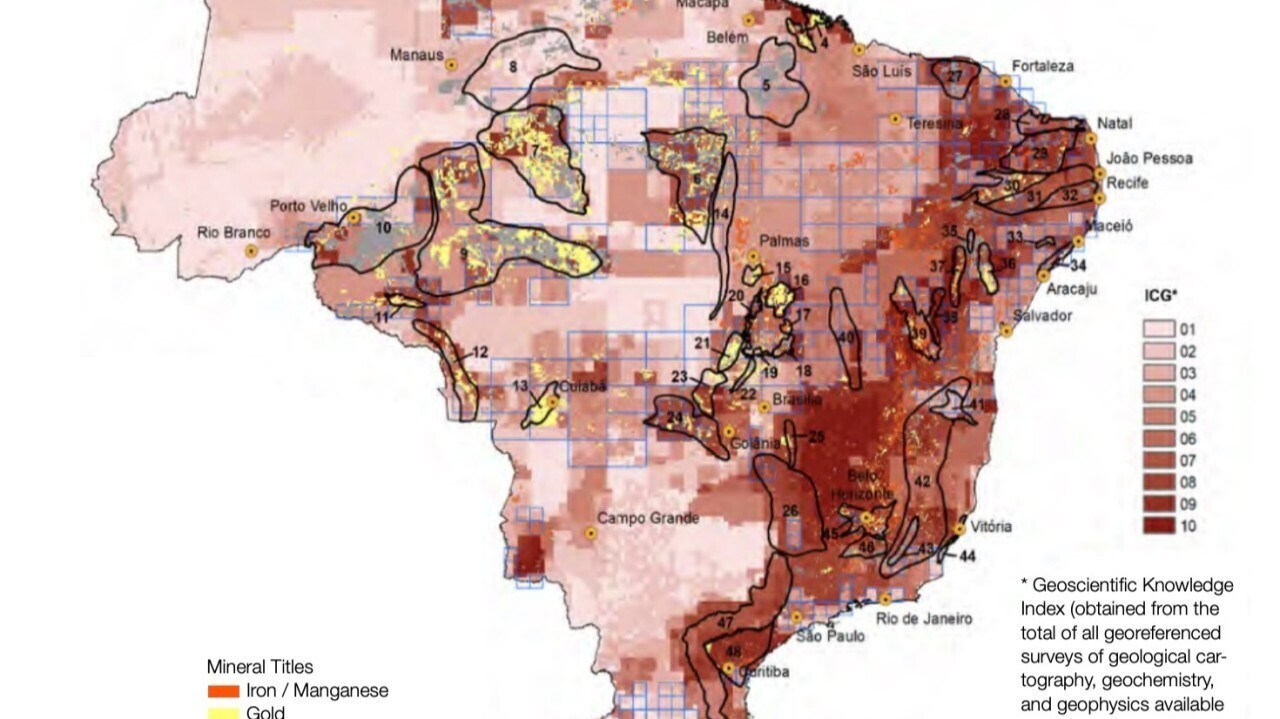
South America's bauxite-giant Brazil now bets big on critical minerals with policy push and rising investments
From being a bauxite-rich nation to now positioning itself as a potential global powerhouse in critical minerals, Brazil stands at the crossroads of industrial opportunity and sustainable development. Nestled in South America, Brazil ranks first in niobium, second in rare earths, graphite and iron ore, third in manganese and nickel, fourth in bauxite, and sixth and seventh in zinc and lithium. For bauxite alone, it boasts of having 2.7 billion tonnes of reserves, with output of around 30 to 33 million tonnes per year (until early 2020s), yet still has large geographical locations rich in these minerals untapped. The total mineral reserves in Brazil are over 34 billion tonnes as of 2022. Vast resources yet modest output The problem with Brazil is it lhas huge reserves where output is not...

Taural India adopts Vedanta’s low-carbon aluminium Restora to go green at casting
Taural India Pvt Ltd, one of the leading aluminium casting manufacturers in India, is on the way to advancing its sustainability agenda with two new and key initiatives - one is the adoption of Vedanta’s low-carbon aluminium and the other is the implementation of a green sand-casting process at its upcoming facility in Supa, Ahilyanagar. In early 2025, Taural signed a MoU with the Government of Maharashtra to expand its manufacturing operations in Ahilyanagar. Taural’s green initiatives are expected to offer dual benefit to the company by not only helping the manufacturer in reducing the environmental impact of industrial production but also by enhancing its production while being self-reliant. Taural’s adoption of Vedanta’s low-carbon aluminium, Restora, will bring down its carbon...

EU-India FTA talks enter 14th round: CBAM and tariffs loom over aluminium, steel and broader trade deal
All eyes are on the fourteenth round of EU-India Free Trade Agreement (FTA) negotiations, scheduled on Monday, October 6, in Brussel, as it promises to build stronger ties of trade and economy between India and the European Union. However, there are a few challenges that have been hindering the deal to reach its ultimate goal. This time, EU Ambassador Herve Delphin has, however, assured that the bloc is committed to delivering a mutually beneficial deal, noting that the EU-India trade partnership holds critical importance at a time when tariffs and market access barriers dominate global discourse. He has also pointed out that in this challenging situation, EU-India economic ties stand apart, with EU companies generating a total annual turnover of 86 million euros in India, which is...

CODIT flags tariffs strain on South Korea, whose aluminium export growth starts faltering from 62% to 25%
US tariffs have had a serious adverse impact on Korea as the country’s economy leans heavily on exports to the American market. The strain is already visible in the country’s trade performance, with export growth slowed to 3 per cent Y-o-Y, down from 5.8 per cent in July. Although that marked the third consecutive month of growth, it was the weakest in the streak, underlining the impact of Washington’s trade barriers. A new study by the CODIT Global Evidence-Based Policy Institute, “U.S. Imposes 50% Tariffs on Aluminum and Copper: Strategic Responses for Korea,” underscores the structural vulnerabilities of Korea’s non-ferrous metals industry, valued at KRW 57 trillion (USD 40.5 billion) and dominated by small and mid-sized companies. The study finds that aluminium and steel form the...

August sees record global alumina production, contributed by the Americas and Africa & Asia (ex-China)
Echoing the last year’s trend, the world metallurgical-grade alumina production in August 2025 recorded a month-on-month rise, touching an all-time high. Notably, the output neared 12.5 million tonnes, with daily average production above 400,000 tonnes. The monthly production stood above 12 million tonnes earlier in July, March, and January of this year, but daily output above 400K occurred for the first time ever. However, it is to be noted that although the production in August followed last year’s M-o-M growth trend, the rate of expansion was marginally below the 1.54 per cent achieved in August 2024. According to the data shown by the International Aluminium Institute, the world alumina production in August 2025 stood at 12.495 million tonnes, led by daily average output of 403,100...

Alcoa’s Kwinana refinery to shutdown permanently – what impacts will it bring on economy and alumina supply chain?
On Tuesday, September 30, Alcoa Corporation, a global industry leader in bauxite, alumina, and aluminium products, confirmed the permanent closure of its Kwinana alumina refinery in Western Australia. This decision has been taken after a year of cease in operation and gradual phase-wise curtailments. Since January 2023, the 60-year old refinery has been operating at around 80 per cent of its capacity. Already the curtailment of production caused a few hundreds of job loss, from approximately 800 employees to around 250. Now, the permanent shutdown will affect the rest, as part of the initial plans where the company mentioned that job cuts would continue till a point employee numbers are scaled down to about 50. After exploring many ways to restart the refinery’s production, Alcoa finally...

US secondary aluminium output up 2% in H1 2025, offsetting primary production’s decline
Secondary aluminium production in the United States has stepped up just as primary output has faltered, rising 2 per cent in the first half of 2025 to offset the equivalent decline in primary production. The United States Geological Survey data showed the primary aluminium production through the first half of 2025 recorded a year-on-year drop of about 2 per cent, weighed down by persistent declines or restraints in output. In June, the output dropped by 1,000 tonnes over a year, standing at 54,000 tonnes, mirroring the same trend as the previous month when the primary aluminium production dropped Y-o-Y from 57,000 tonnes to 56,000 tonnes. In April, however, the output had grown by 1,000 tonnes, while in the two preceeding months; it stood restrained at 577,000 tonnes and 52,000 tonnes....

World primary aluminium production in Aug’25: Muted monthly growth, modest annual gains
The world’s primary aluminium production remained almost muted over a month in August 2025, mirroring the same trend as the previous year. However, on an annual basis, the output stood 1 per cent higher than 6.222 million tonnes. According to the data reported by the International Aluminium Institute, the world primary aluminium production in August 2025 summed at 6.277 million tonnes, just slightly higher than 6.268 million tonnes in July. While growth was minimal, the sector at least avoided another decline—after the last month-on-month drop in June, when production fell 3 per cent from 6.258 million tonnes to 6.070 million tonnes. Cumulatively, global primary aluminium output from January to August reached 49.04 million tonnes, marking a 1.32 per cent year-on-year rise from 48.4...

From $140M funding to stage-wise foundation: Know how Canyon is advancing Minim Martap bauxite
Canyon Resources Limited, the Australian miner behind the Minim Martap project in Cameroon, has rolled out a funding package to support the launch of the large-scale bauxite development. The fund aims to raise AUD 215 million (USD 140 million), subject to shareholder approval, under the management of Cameroonian banking group Afriland and Canyon’s majority shareholder, Eagle Eye Asset Holdings (EEA). The package comprises a two-tranche placement worth AUD 205 million (USD 134.5 million) and an additional AUD 10 million (USD 6.6 million) from EEA. Institutional investors will provide AUD 36 million (USD 23.62 million) in the first tranche, while EEA will commit AUD 100 million (USD 65.6 million) in the second, raising its stake in Canyon to 56.5%. These funds will be combined with Canyon’s...

Interest rates down, aluminium costs up: Breaking down the Fed’s move
Federal interest rate cut often creates a paradox. On one hand, it is intended to shore up economy by making borrowing cheaper and encouraging businesses to take loans to invest in hiring and expanding production. On the other hand, this exercise potentially leads to inflation, dampens stock market growth, reduces investment appetite, and affects consumer behaviour. The recent Fed rate cut in September by a quarter-point, bringing down the rates to 4 to 4.25 per cent, is also triggering the same conundrum. While the latest rate cut is aimed at boosting economy and employment, it fuels the risk of inflation from the current 2.9 per cent as of the end of August. But the fact is the government is now prioritising jobs over price stability. "The labour market is really cooling off," said Fed...

India’s critical minerals drive: Legal reforms, domestic extraction, and aluminium’s emerging role
As the global clean energy transition, electric vehicle boom, and digital economy accelerate, India has realised the hard truth that its deep reliance on imported critical minerals is unsustainable. Thus, in an attempt to increase the domestic production of critical minerals, India is considering lifting a long-standing restriction that mandates the miners to extract only the mineral they have the licence for. Several reports indicate the reform will allow the leaseholders of thousands of mines, which were allocated before 2015 without formal auctions, to commercially mine newly-discovered strategic minerals like lithium, cobalt, and rare earths. Important to note, all of these minerals are vital for clean energy, automobiles, electronics, and defence. Two officials on the condition of...

Double trouble: aluminium scrap outflow adds to tariff woes for the European packaging industry
Heard enough that Europe’s rising outflow of aluminium scrap is hitting a double blow by depleting vital feedstock for its secondary aluminium industry on one hand and on the other by eroding the material which is central to sustainability and net-zero goals. So far, the concerns were voiced mainly by recyclers but now the packaging manufacturers have joined the pack warning of a looming crunch of raw material on home soil. The strain is being felt harder when the European Union is moving forward with its Carbon Border Adjustment Mechanism (CBAM) tool, which restricts aluminium imports yet leaves the unchecked flow of scrap exports unresolved. Let alone the supply crunch of raw material, industries fear they may also fall short on carbon-reduction targets. For the packaging industry, the...

Tariffs or economic slowdown - What’s behind North America’s aluminium demand weakness, although scrap tells a different story!
According to preliminary estimates from the Aluminum Association, aluminium demand in North America (the US and Canada) fell 4.4 per cent year-on-year in the first half of 2025. Whether this decline is the direct fallout of Washington’s punitive duties is a question the Association intends to probe. Its president and CEO, Charles Johnson, has stressed that trade policies must bolster and not burden the domestic aluminium industry. The numbers also point to a deeper dilemma: does a slowdown in aluminium demand signal an equal cooling in both aluminium ingot and scrap? While unwrought aluminium imports are sliding, scrap inflows are climbing, and inventories are swelling. This raises tough questions about how the market is truly shifting. A deeper look at the data and its analysis may offer...

ALUMEX India 2025 – Beyond the hype, what the industry hopes to achieve
September 10, 2025, New Delhi: India’s first-ever exhibition dedicated solely to aluminium extrusions ‘ALUMEX India 2025’, organised by ALEMAI (Aluminium Extrusion Manufacturers Association of India), has begun at the Bharat Mandapam Convention Centre in the capital city of India and will continue to host more than 200 exhibitors and thousands of business visitors until September 13. Through this four-day event, ALEMAI aims to showcase and position India’s highly promising aluminium extrusion industry at the forefront. Currently, India has 3 million tonnes of aluminium extrusion production capacity, which by 2047 is expected to grow six-fold, as underlined by Rajiv Kumar, CEO of Vedanta Aluminium, during the inauguration today. But despite having an installed capacity of 3 million tonnes,...

AL Circle x ALEMAI: More than 250 aluminium extrusion plants are at risk due to cheap imports in India, points out Jitendra Chopra
At an exclusive interview with Mr Jitendra Chopra, President of ALEMAI, he has pointed out that enhancing domestic consumption is the way forward for the Indian aluminium extrusion industry to grow and offset the pressures created by external tariffs. He believes that India Government should reiterate and take strong measures agaisnt the tariffs and cheap imports to safeguard its 250 aluminium extrusion manufacturers. Mr Chopra has also highlighted that India's aluminium extrusion industry is projected to grow at a CAGR of 8%, revealing the key drivers. Read the full interview here: AL Circle: What is your outlook on the growth of aluminium extrusion demand in India? Which key industries do you expect will drive this growth in the coming years? Jitendra Chopra : India is fast emerging as...

If aluminium exports are rising, why is South Korea crying foul over US tariffs and rushing to offer support funds?
Among many countries being affected by the United States’ steep aluminium and steel tariffs, South Korea claims to be one of them. The country that was once an important trade partner of the United States, back from 2007 with the signing of the Free Trade Agreement (FTA), is now one of the major victims of the United States’ latest protectionist measures. Firstly, the implementation of 25 per cent duty was enough to blow the country, while the subsequent hike by another 25 per cent has proved to be the final nail in the coffin. Being a significant aluminium and steel exporter to the United States (valued at USD 851 million in 2024), South Korea says it has taken a major hit on its economy due to Donald Trump’s tariff regime. Its exports to the US in the month of August slid 12 per cent...

H1 2025: Top 5 trends to watch in the global aluminium value chain
The first half of 2025 marked a turning point for the global aluminium industry, arguably its most turbulent period in recent memory. The trigger was the United States’ imposition of steep tariffs on aluminium imports, a move that set off ripple effects across global supply chains. What began as a trade policy measure quickly escalated into a broader disruption, reshaping cross-border trade dynamics, injecting volatility into global aluminium prices, and diverging demand patterns from primary aluminium to aluminium scrap. Supported by stable supply chains, prices within a reach of USD 2,200 per tonne, and tariff exemptions, the demand for scrap has attained a new high. Thailand emerged as a new hotspot of aluminium demand, fuelled by its expanding automotive manufacturing sector, and thus...

Primary aluminium production growth slows down in July’25 – energy crisis behind it
July has historically been the strongest month for primary aluminium production, and 2025 was no exception. Global output exceeded 3.8 million tonnes, a month-on-month increase of 3.17 per cent. Although this marked a record high, the growth rate was slightly weaker than the 4.07 per cent recorded a year earlier. In total, global primary aluminium production reached 6.373 million tonnes in July, lifting year-to-date (YTD) output to 42.724 million tonnes, up 1.3 per cent from 42.177 million tonnes in the same period of 2024. The pace of growth, however, was slower than the 3.83 per cent rise during January–July 2024. Oceania & China behind the momentum dip While evaluating what dampened the momentum, a series of causes popped up. One among them was increased production costs due to surging...

