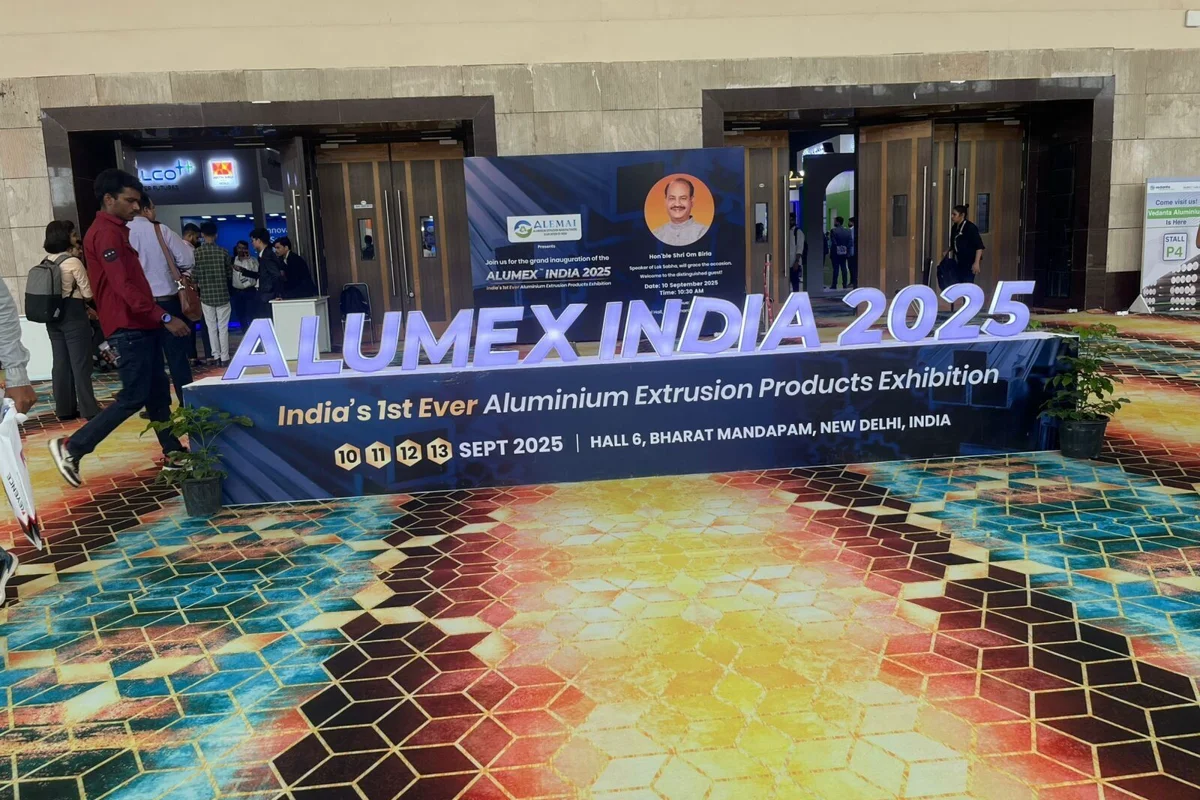
September 10, 2025, New Delhi: India’s first-ever exhibition dedicated solely to aluminium extrusions ‘ALUMEX India 2025’, organised by ALEMAI (Aluminium Extrusion Manufacturers Association of India), has begun at the Bharat Mandapam Convention Centre in the capital city of India and will continue to host more than 200 exhibitors and thousands of business visitors until September 13.
Through this four-day event, ALEMAI aims to showcase and position India’s highly promising aluminium extrusion industry at the forefront. Currently, India has 3 million tonnes of aluminium extrusion production capacity, which by 2047 is expected to grow six-fold, as underlined by Rajiv Kumar, CEO of Vedanta Aluminium, during the inauguration today.
But despite having an installed capacity of 3 million tonnes, India is only producing 1.2 to 1.3 million tonnes of aluminium extrusions, while importing 1.5 million tonnes to meet the domestic demand. This shows that the country’s demand for extrusions matches its production capacity, but underutilisation of that capacity has left it dependent on imports.
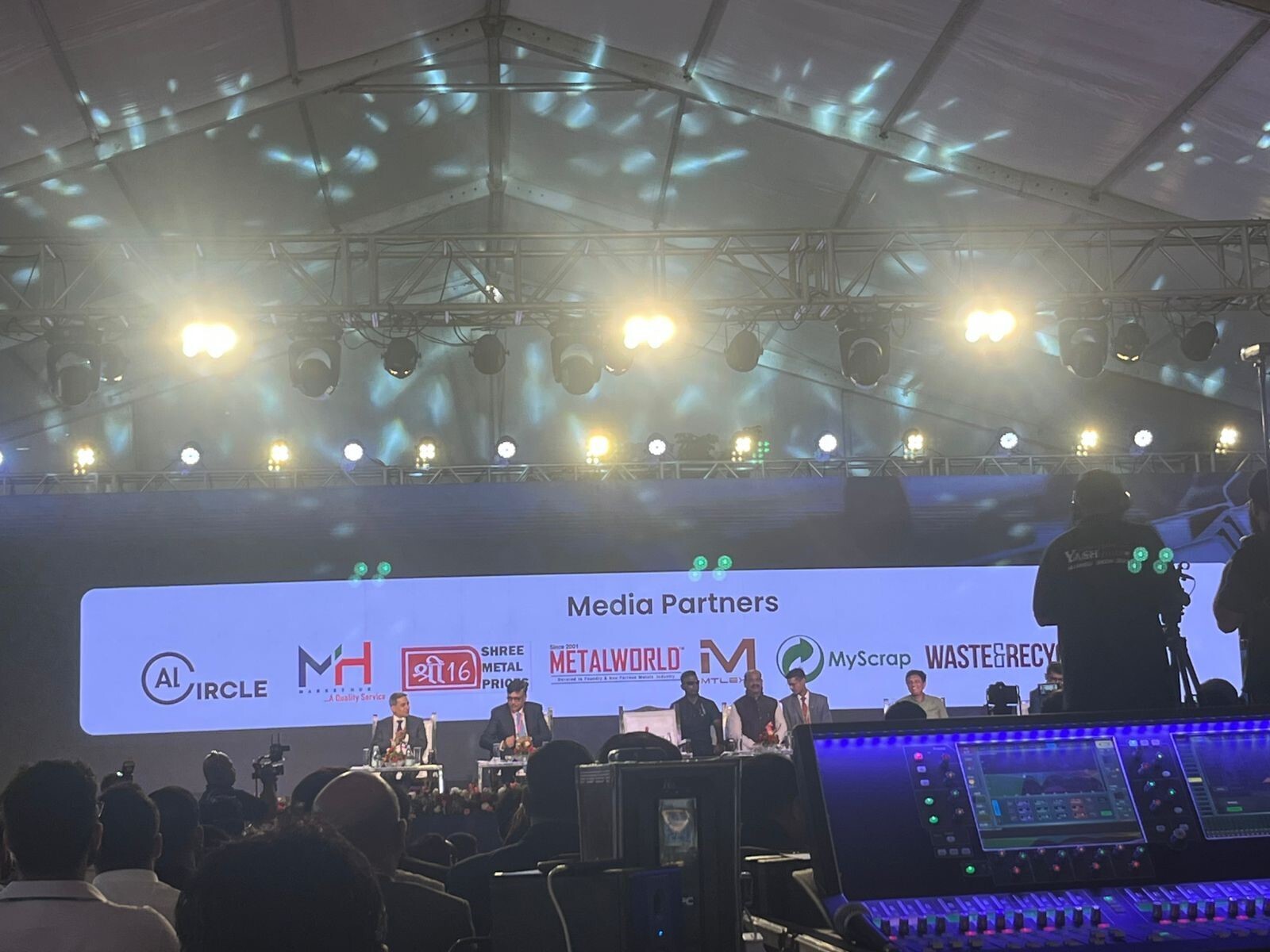
This imbalance is the main concern of ALEMAI. Mr Jitendra Chopra, President of ALEMAI, has highlighted enough in his talks, including in an exclusive interview with AL Circle that India must increase its domestic consumption not only to curb imports but to drive the country’s broader economic growth. Echoing his view, Om Birla, Honourable Speaker of the Lok Sabha, has noted at the inauguration of ALUMEX India that India’s economic strength and employment opportunities are closely tied to the progress of its aluminium extrusion sector.
Why India depends on imports and how to curb?
The reasons behind India’s dependence on imports are complex. A widening demand-supply gap, coupled with low capacity utilisation, pushes manufacturers to source from China and ASEAN countries such as Vietnam, Malaysia, Indonesia, and Cambodia. Moreover, free trade agreements, price disparities, and global trade dynamics further accelerate the influx of cheap imports, undermining local producers.
To address this, ALEMAI has been strongly urging for tariffs on low-quality aluminium extrusion imports and advocating stronger trade policies. According to Mr Chopra, if tariffs and right trade policies come in place, India will be able to curb imports and increase its domestic consumption. The urgency for this is also clear from the fact that India’s per capita aluminium consumption stills stands at just 3–4 kg, compared to 28 kg in China and 15–18 kg in the United States. On the other hand, with the aluminium extrusion industry projected to grow at a CAGR of 8 per cent, the stakes are high.
Mr Chopra points out that the sector’s economic contribution is already significant, with an estimated INR 1 billion in value addition and the creation of 3 to 4 lakh jobs, both direct and indirect. So, by expanding domestic capacity utilisation, the industry can grow manifold.
Live feedback captured by AL Circle
Early feedback from the exhibition suggests strong optimism. RAMCO Extrusion Pvt Ltd shared with AL Circle that the very first day brought a flurry of enquiries, signalling promising business opportunities. A representative shared he expects up to 30 per cent growth in the Indian aluminium extrusion industry this year, given that Indian extruders are producing at far higher quality levels today than a decade ago.
Extru-Tech, a service provider to extrusion companies, echoed the sentiment, pointing out that this event is first-of-a-kind, bringing the entire aluminium extrusion supply chain under one roof. This convergence, he believes, will create new avenues for both domestic and international business, reinforcing projections of 6–9 per cent CAGR growth in the years ahead.












_md.webp)
_md.webp)
_md.webp)