Canyon Resources Limited, the Australian miner behind the Minim Martap project in Cameroon, has rolled out a funding package to support the launch of the large-scale bauxite development. The fund aims to raise AUD 215 million (USD 140 million), subject to shareholder approval, under the management of Cameroonian banking group Afriland and Canyon’s majority shareholder, Eagle Eye Asset Holdings (EEA).
The package comprises a two-tranche placement worth AUD 205 million (USD 134.5 million) and an additional AUD 10 million (USD 6.6 million) from EEA. Institutional investors will provide AUD 36 million (USD 23.62 million) in the first tranche, while EEA will commit AUD 100 million (USD 65.6 million) in the second, raising its stake in Canyon to 56.5%.
These funds will be combined with Canyon’s existing cash reserves and directed towards the construction of the Minim Martap mine and increase the company’s stake in Camrail from the current 9.1 per cent, in order to have greater control over the transport and logistics network.
The reported investment planning shows about AUD 206 million (USD 135 million) will be allocated to mine development, AUD 46 million (USD 30 million) will be invested in Camrai, and AUD 14 million (USD 9.19 million) will be used for general administration and corporate costs.
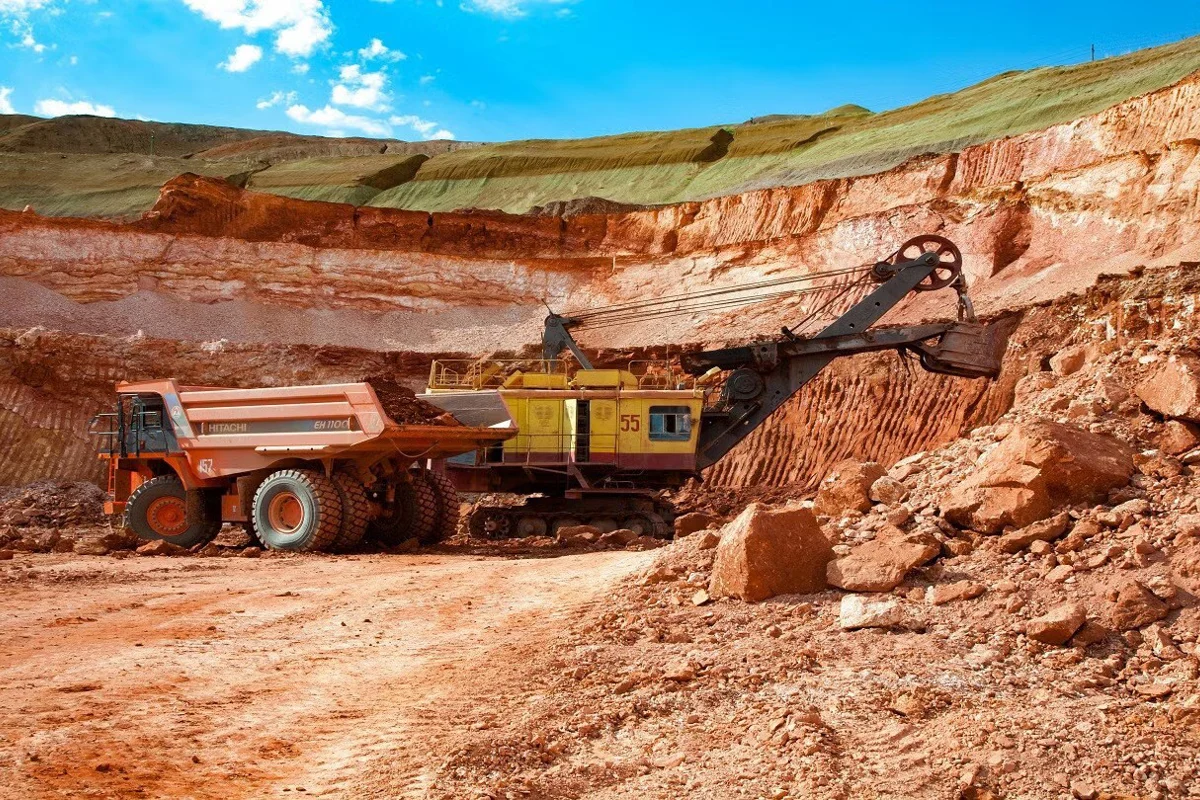
Located in central Cameroon, Minim Martap is one of the world’s richest bauxite deposits, with 1.1 billion tonne resource and 144 million tonnes reserve having 51.2 per cent alumina and 1.7 per cent silica content.
The first stage of production is planned for Q1 2026 and the first shipment for H1 2026, with a capital expenditure of USD 96 million. In stage 1 of the first year, the production target is for 1.2 million tonne wet bauxite per annum, which is planned to be expanded to 6 million tonnes wet bauxite per annum and to 10 million tonnes wet bauxite per annum by the sixth year (2032).
To be noted, the stage 2 production is scheduled around PQ2 rail upgrade. Furth expansion above 10 million tonnes will be reviewed post PQ2 rail upgrade.
CAPEX planned for the production of 2.1 million tonnes of wet bauxite in year 2 is an additional USD 63 million, CAPEX for 6.5 million tonnes of production target is USD 187 million, and CAPEX for 10 million tonnes of output target (year 7) is USD 101 million.
The operation costs planned for stage 1 include USD 3.63 million for mining, USD 4.15 million for haulage & IRF, USD 16.68 million for rail, and USD 10.24 million for port.
In mid-July, Canyon announced the construction of the Inland Rail Facility at Makor, which will serve as a key loading station to transfer bauxite from road transport to rail wagons.
During the same period, Canyon Resources also announced the appointment of Ms Adjou Ait Bin Idir as Non-Executive Director for Minim Martap Bauxite Project. Prior to it, the company announced the appointment of Mr Peter Secker as Chief Executive Office, who is also responsible for optimising the development of Minim Martap bauxite.
Overall bauxite dynamics in Africa
Africa is already dominating the world bauxite market, with the highest production and exports, surpassing Australia. Thanks to Guinea, where bauxite production was 145 million tonnes in 2024, Africa has emerged as a leader. Added to it, Ghana and Cameroon are becoming two important bauxite mining hubs, having reserves of 900 million tonnes and 1.1 billion tonnes.
Although recently, Emirates Global Aluminium had to exit Guinea due to licence revocation, yet it stayed back in west Africa. In June 2025, EGA entered into an agreement with the Ghana Integrated Aluminium Development Corporation (GIADEC) to assess the feasibility of bauxite exploration in the West African country. Despite having 900 million tonnes of reserves, Ghana currently mines only 1.5 million tonnes, meaning about 898.5 million tonnes of bauxite reserves is untapped.
By 2025-end, Ghana Bauxite Company Limited (GBC), jointly owned by Ofori-Poku Company Limited (OPCL) and the Government of Ghana, aims to achieve 6 million tonnes of bauxite production a year by investing USD 122.97 million in acquiring a robust fleet of equipment, including surface miners, haulage trucks, dump trucks, excavators, and retooling of existing plant and machinery, to enhance its infrastructure and operation capabilities.
Moreover, by the next six years, Minim Martap project in Cameroon is planning to produce 10 million tonnes of bauxite.
Why Africa, not Australia?
Canyon’s choice of Africa over its home turf is rooted in economics and logistics. The continent holds 7.4 billion tonnes of bauxite reserves, much of it is untapped. The cost-effectiveness of surface mining methods and simple processing makes Africa an attractive hub for mining bauxite. Africa also has lower cost of mineral extraction in many areas. Land access, labor, regulatory hurdles are often lower (though not always) compared to developed countries. Moreover, close proximity to shipping routes to Asia gives cost advantages.
In Australia, particularly, labour and operational costs are high. The continent also has stricter environmental regulations. And as demand from Asia is rising, global bauxite miners are concentrating on Africa, given the improved trade routes between Africa and Asia, led primarily by maritime and facilitated by large cargo ships like Capesize vessels that are well-suited for bulk cargo like bauxite.












_md.webp)
_md.webp)
_md.webp)







