On Tuesday, September 30, Alcoa Corporation, a global industry leader in bauxite, alumina, and aluminium products, confirmed the permanent closure of its Kwinana alumina refinery in Western Australia. This decision has been taken after a year of cease in operation and gradual phase-wise curtailments. Since January 2023, the 60-year old refinery has been operating at around 80 per cent of its capacity.
Already the curtailment of production caused a few hundreds of job loss, from approximately 800 employees to around 250. Now, the permanent shutdown will affect the rest, as part of the initial plans where the company mentioned that job cuts would continue till a point employee numbers are scaled down to about 50.
After exploring many ways to restart the refinery’s production, Alcoa finally confirmed they could zero down on no sustainable path.
Matt Reed, Executive Vice President and Chief Operations Officer for Alcoa, explained, “Alcoa operated the Kwinana refinery for a number of years in a challenging environment and made the difficult decision to permanently close the facility after unsuccessfully exploring multiple options for a sustainable path to restarting. We appreciate the dedication and support of our Kwinana employees, contractors and suppliers who have made a major contribution to Western Australia's economic development and prosperity over more than six decades.”
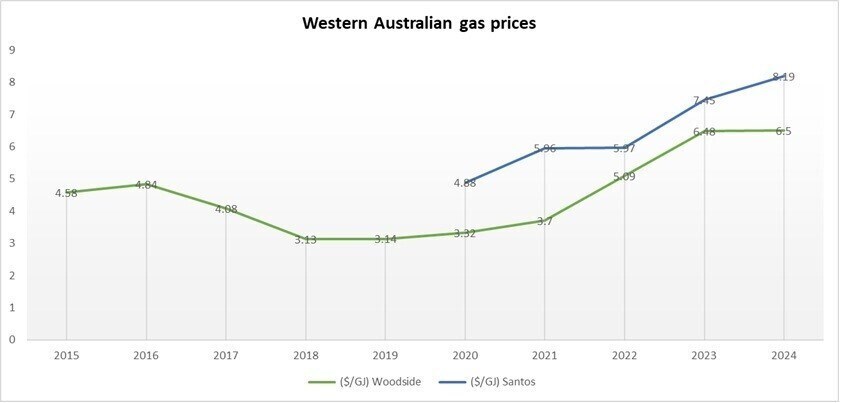
Mr Reed also cited that winding down production in 2024 and now the permanent shutdown is mainly because of operating costs and market conditions, given the ongoing gas crisis in Western Australia. With wholesale gas prices more than doubling since 2019 and Woodside and Santos prices up by 96 per cent and 68 per cent respectively since 2020, refineries that rely on gas for the energy-intensive Bayer process face a steep rise in operating expenses.
Since the industry is heavily dependent on gas, even a few dollars more per gigajoule translates into hundreds of millions in additional annual costs, potentially adding a staggering amount to the sector's energy bill. Due to the same reason, Alcoa’s Kwinana refinery had to slash output at its Kwinana refinery by 30 per cent. The facility switched from boilers to diesel to keep the operation going.
However, out of the accountability and commitments towards Western Australia, Alcoa has promised to carry out the closure activities in responsible way, ensuring relevant stakeholders are taken care of and the associated residue storage areas are being efficiently closed.
That’s not all, Alcoa has also committed to preparing the refinery for new economic development opportunities and working with the Western Australian State Government on land use options. However, only the Kwinana refinery of Alcoa is going on shutdown, while the other two – Pinjarra refinery and Wagerup refinery will continue to operate. Even Alcoa’s port and associated rail facilities at Kwinana will remain operational.
Now the key question arises – amidst the energy crisis, are Pinjarra and Wagerup refineries not affected at all? In December 2024, Alcoa’s Pinjarra refinery had to halt alumina production for about a week due to gas supply disruption, resulting in numerous spills of caustic liquid at the refinery. Over all, due to the gas crisis in Western Australia, alumina production there is likely to see a drop in FY2026, from 16.39 million tonnes in FY2025 to 16.28 million tonnes.
Potential impact on economy and supply chain
More than supply chain, Kwinana refinery’s closure will affect the domestic economy. According to economic experts, the closure of Alcoa Kwinana refinery will affect roughly USD 650 million of state’s economy per year. It will axe 750 jobs and affect the employment of another few hundred contractors by late 2025.
In 2022, Alcoa estimated the Kwinana plant was injecting USD 161 million in salaries, wages and benefits into the WA economy.
In terms of supply chain, Alcoa’s Pinjarra refinery and Wagerup refinery have 4.7 million tonnes and 2.9 million tonnes of alumina production capacities, compared to 2.2 million tonnes of Kwinana. There will be a drop in annual out but about 0.67 per cent in FY2026, as mentioned earlier.
Moreover, Australia is increasing its ore imports. From January to June, the country imported 76,000 tonnes of alumina valued at AUD 47million, which during July-December increased to 102,000 tonnes valued at AUD 83 million.
Alcoa’s economic and production outlook
Alcoa’s outlook for total spend in 2025 for asset retirement obligations and environmental reserves is expected to increase by USD 20 million to approximately USD 260 million. This figure includes the spend related to the closure of the Kwinana refinery. For 2026, asset retirement obligation and environmental total spend is expected to be USD 300 million.
Alcoa’s global consolidated refining capacity is likely to come in at 11.7 million tonnes after the closure of Kwinana’s 2.2 million tonnes of annual capacity.
Based on recent pricing, the Company expects its third quarter 2025 operational tax expense to approximate USD 100 million, up by $30 million from the previous estimate due to the impact of the restructuring charge for the Kwinana refinery closure.













_md.webp)
_md.webp)
_md.webp)







